 Platinum trusted service award
Table of Contents
- Why the bedroom matters for allergies
- Wash bedding more often, and at the right temperature
- Choose bedding materials that work with you
- Why weave and thread count matter as much as fibre
- Protect the mattress and pillows underneath
- Refresh your pillows on a sensible schedule
- Deep clean the room, not just the bed
- Keep pets out of the bedroom at night
- Allergy-proof bedroom FAQs
Spring should be one of the better sleep seasons. Longer evenings, milder nights, the feeling of the year opening up. For allergy sufferers, it often arrives with the opposite: itchy eyes, a blocked nose, and a bedroom that feels less restful than it should.
The Sleep Charity estimates that around a quarter of people in the UK live with hay fever, and more than one in ten experience asthma-related symptoms. Pollen, dust mites, pet dander and mould spores all gather in the one room where the body most needs to switch off, which is why allergy management so often starts with the bed itself.
The advice below is drawn from Allergy UK, the NHS, and forty years of working with bed linen from our base in Manchester. None of it is complicated. Most of it comes down to fabric, temperature, and how often things get washed.
Why the bedroom matters for allergies
A bed is warm, slightly humid, and full of the shed skin cells that dust mites feed on. That makes the mattress, pillows and bedding one of the most hospitable environments in the home for the triggers that drive rhinitis, eczema and asthma symptoms.
Pollen adds a seasonal layer on top. It travels indoors on hair, clothes and open windows, and settles into soft surfaces: curtains, rugs, the duvet cover. Between May and July, when UK pollen counts peak, bedrooms can quietly accumulate far more allergen than their occupants realise.
The aim is not a sterile room. It is a bedroom that gives the body fewer things to react to overnight, so sleep can do its work.
Wash bedding more often, and at the right temperature
Sheets and pillowcases sit directly against the skin for around a third of every day. Dust mite allergen and airborne pollen build up quickly on both, which is why washing frequency matters as much as anything else in the room.
Allergy UK recommends washing any bedding that is not encased in a barrier cover every week. A 40°C wash will rinse allergen away temporarily, but it will not kill the mites themselves. For that, a 60°C wash is the benchmark: at that temperature, research shows mites are reliably killed, along with most of the allergen they leave behind.
Not every fabric is built for weekly 60°C washing, which is worth thinking about at the point of purchase. A well-made cotton sheet will handle those temperatures for years. Delicate finishes and cheaper blended fabrics often will not.
During peak pollen season, drying sheets indoors rather than on the line helps keep the allergen count in the bedroom low. It is a small change that makes a surprising difference by the end of May.
For more on getting the best from each wash, our bedding care guide covers temperatures, detergents and drying in more detail.
Choose bedding materials that work with you
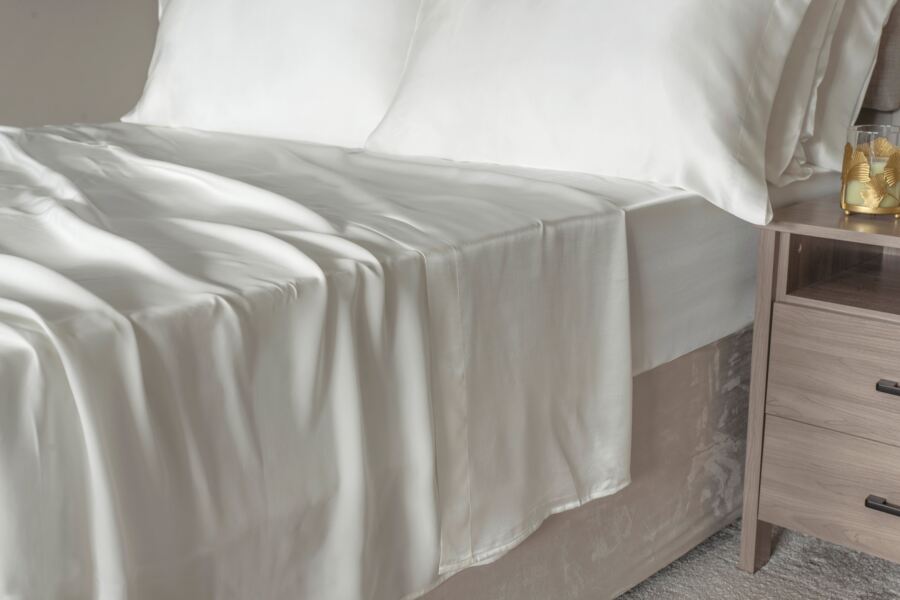
Fabric choice is the quietest but most effective allergy adjustment most people can make. Natural fibres, cotton, bamboo and silk, tend to breathe well and release moisture rather than hold onto it. That matters because dust mites thrive in humid conditions, and a drier bed is a less welcoming one.
Long-staple cottons, including Egyptian and Pima, weave into smoother, more uniform fabric with fewer loose fibre ends for allergens to catch on. They also tolerate the higher wash temperatures that allergy sufferers need, which is why they tend to outlast cheaper alternatives in allergy-prone households.
Bamboo has become popular for a reason. It wicks moisture well, feels cool against the skin, and washes cleanly. For sleepers who run hot or who find cotton a little heavy in warmer months, it is a sensible alternative that keeps the sleep environment drier.
Synthetic fabrics are not automatically a problem, but they behave differently. Microfibre duvets and pillows filled to anti-allergy specifications are designed to actively block or neutralise allergens, which can suit some sufferers well. Cheaper polyester sheeting, on the other hand, tends to trap moisture and does not breathe in the way natural fibres do.

Why weave and thread count matter as much as fibre
The structure of a fabric is as important as what it is made from. A tight weave leaves smaller gaps between the threads, which physically restricts how easily dust mites and their allergen can work their way into, or out of, the fabric.
This is where thread count becomes useful, though it is often misunderstood. Thread count measures how many threads are woven into a square inch of fabric. A higher count does not automatically mean a better sheet, but in the context of allergies, it reflects a denser weave with fewer gaps.
In practical terms, a well-made 200 thread count cotton sheet or a 400 thread count Egyptian cotton sateen strikes a useful balance: dense enough to slow the movement of allergens, breathable enough to keep the bed feeling fresh. Very high counts, 800 and above, can feel beautiful but sometimes trade a little of that breathability for weight.
For allergy sufferers specifically, the fibre quality, weave tightness, and washability of the fabric matter more than chasing the highest number on the label.
Protect the mattress and pillows underneath
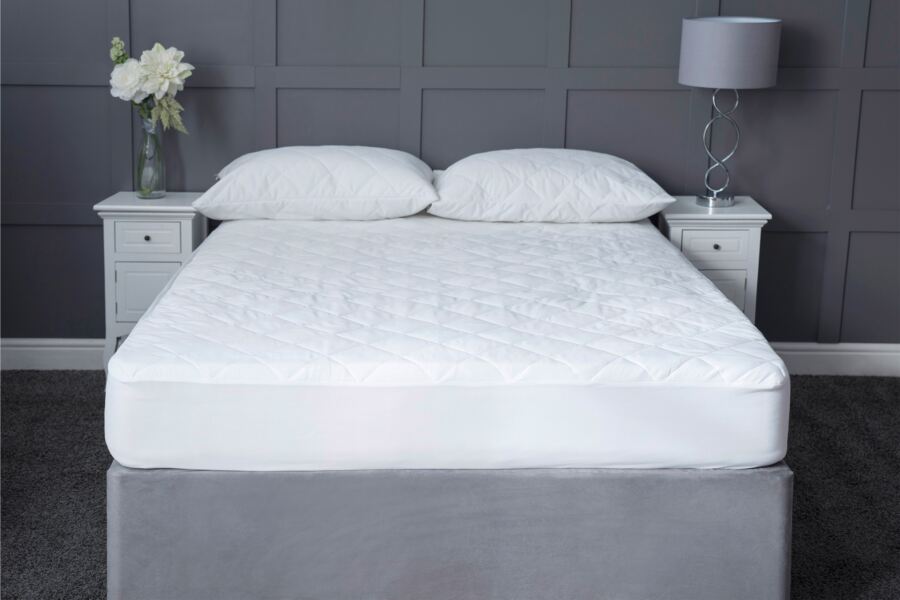
A mattress is the largest soft furnishing in the house and, left uncovered, one of the hardest to clean. Over time, skin cells, moisture and dust mite allergen accumulate in the layers beneath the sheet, where no amount of bedding washing can reach them.
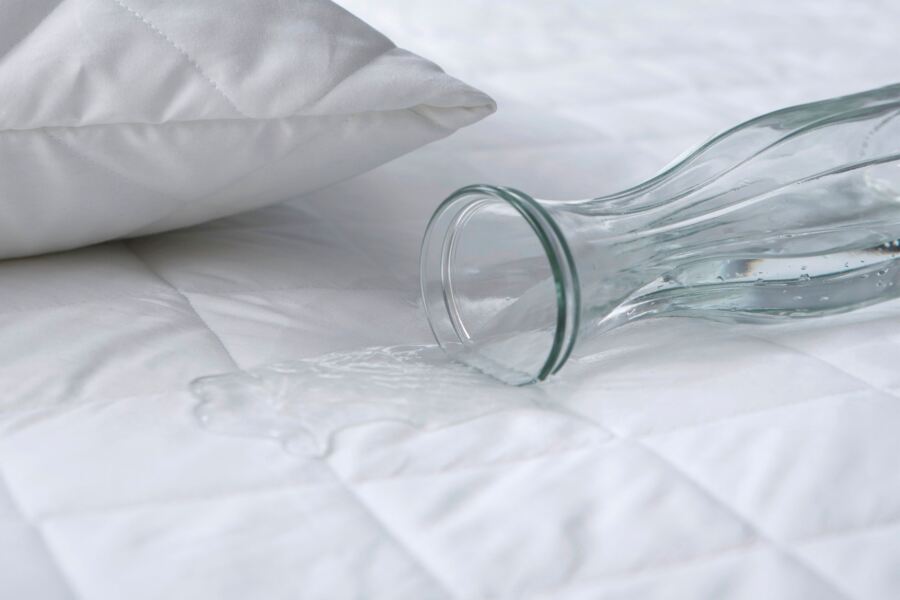
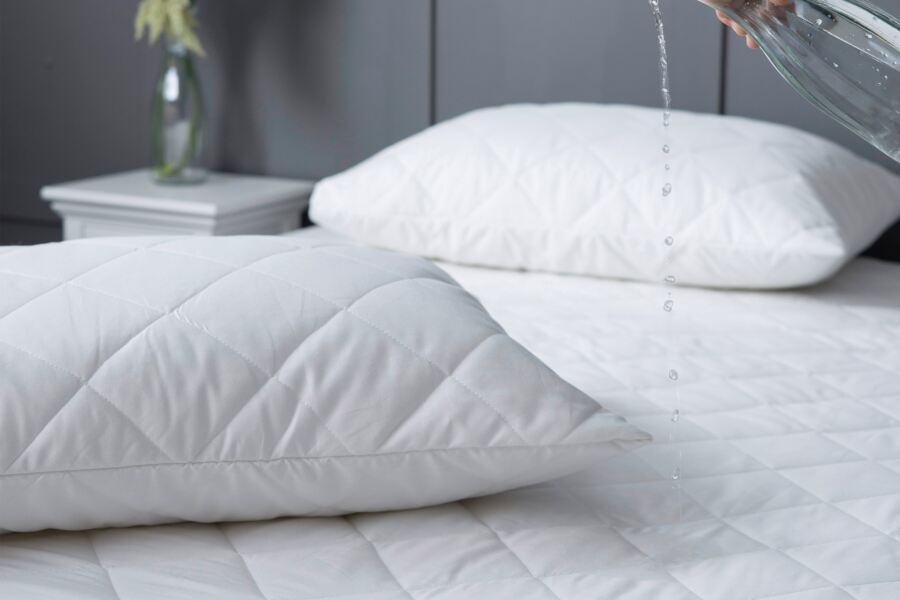
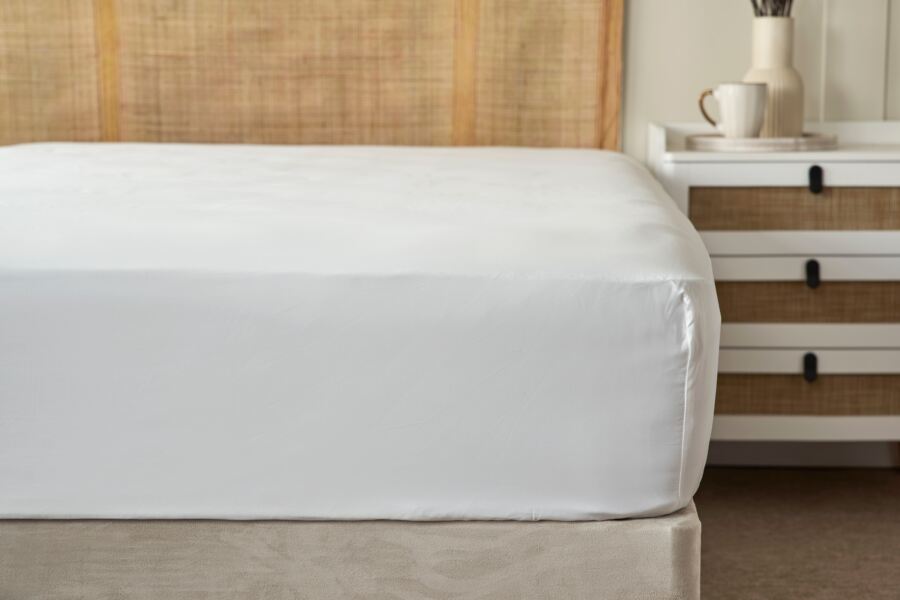
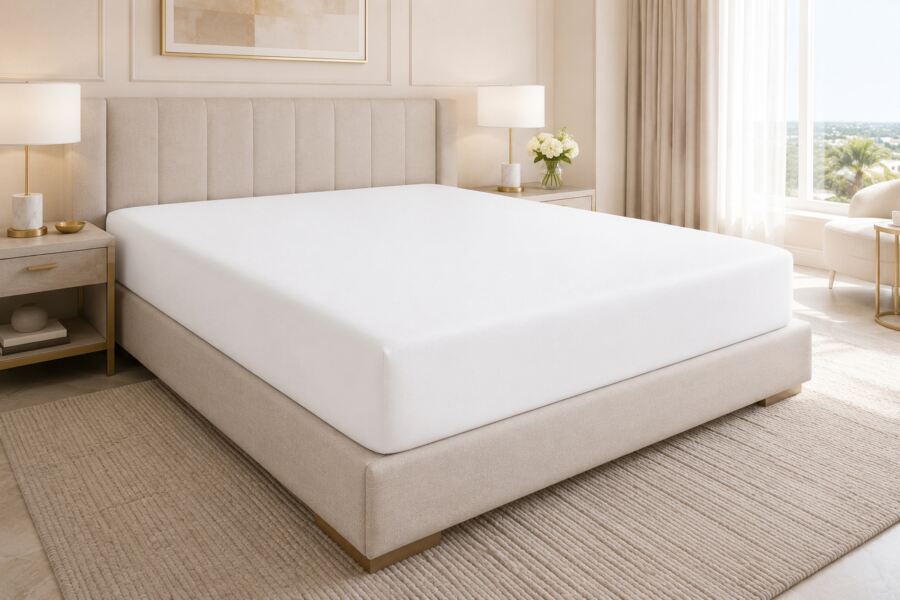
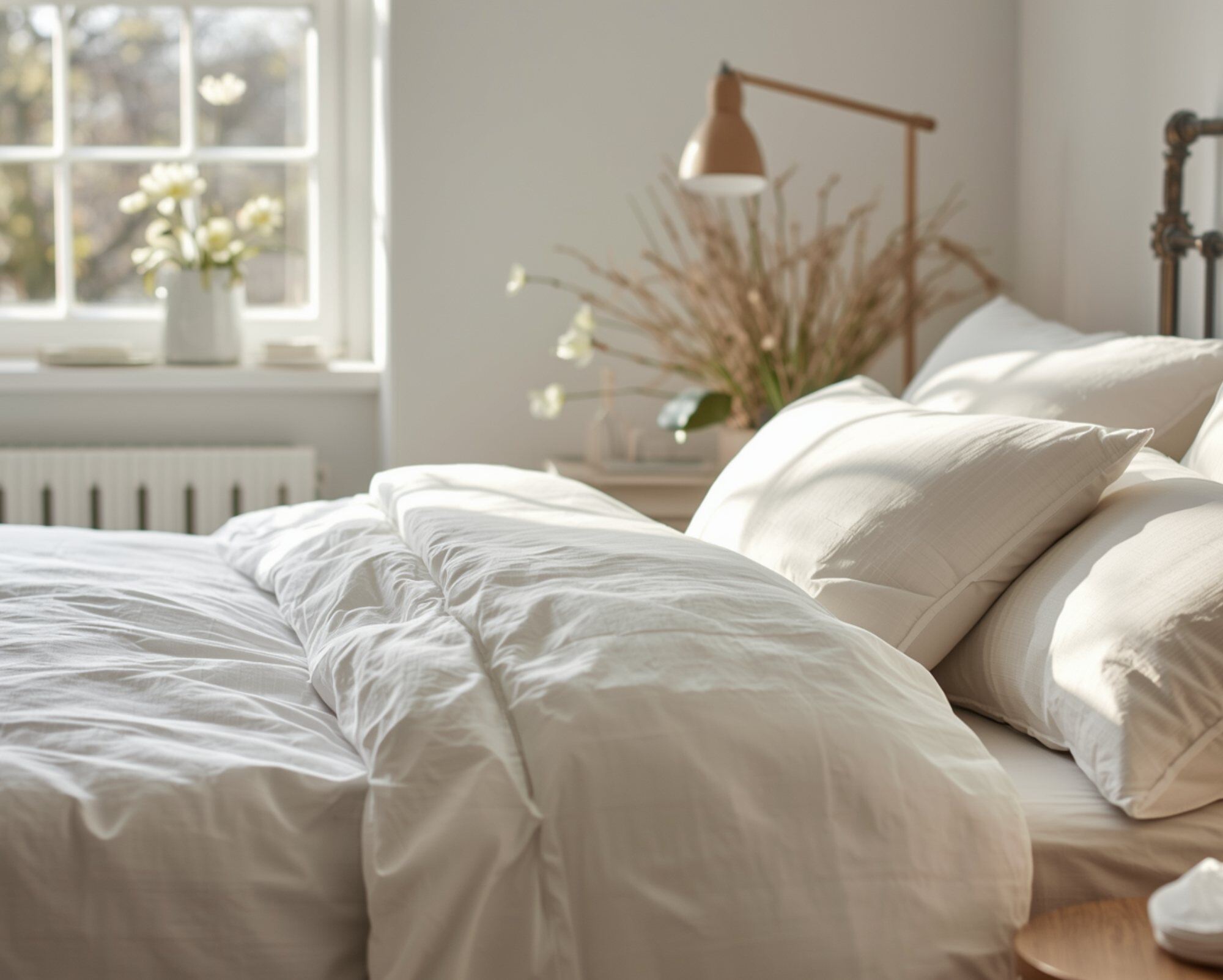
A good anti-allergy mattress protector solves this quietly. Tightly woven cotton percale protectors act as a physical barrier, keeping allergen inside the mattress rather than letting it work its way through to the sheet above. They wash easily at the temperatures Allergy UK recommends, which means the mattress itself needs far less attention.
Pillow protectors do the same job on a smaller scale and are often the more impactful of the two, given how close a pillow sits to the airways overnight.
Refresh your pillows on a sensible schedule
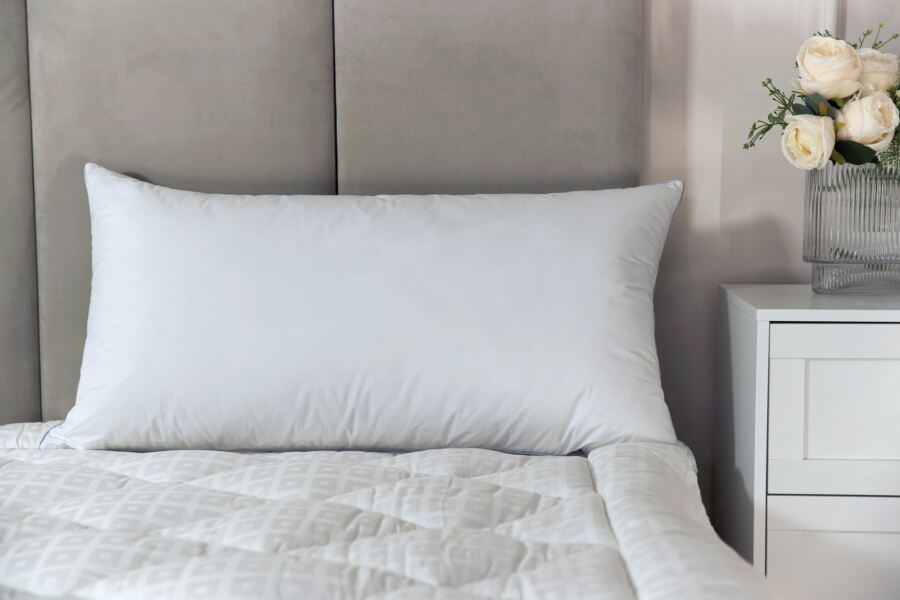
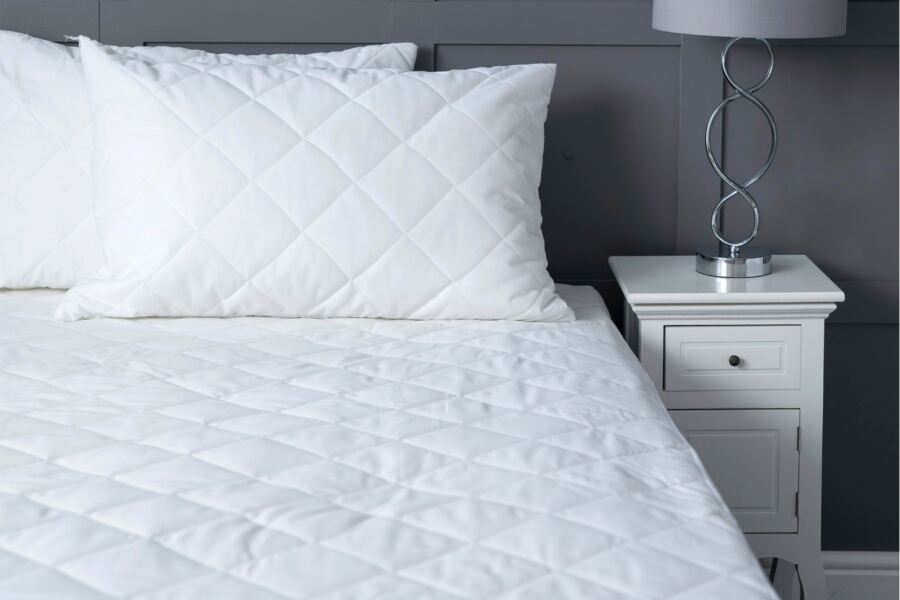
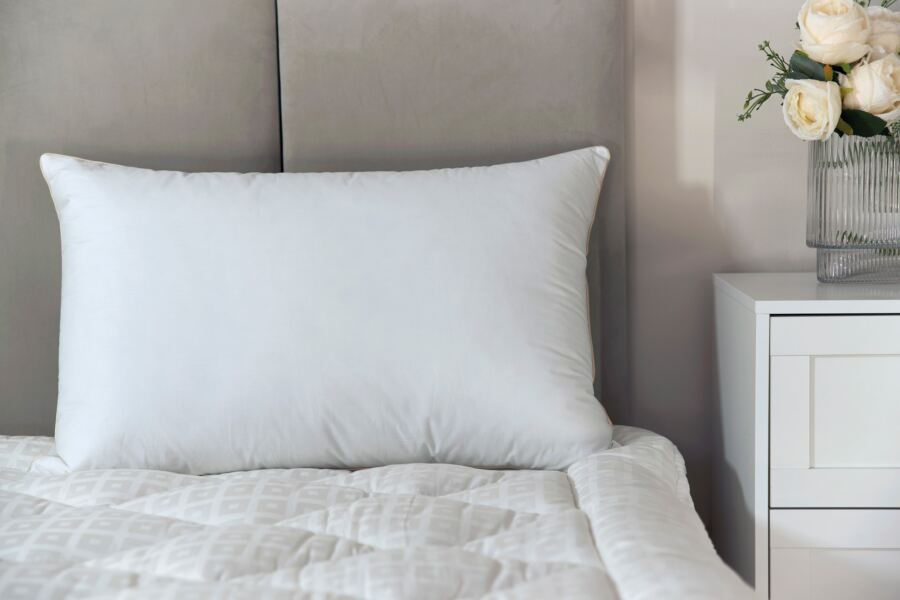
Pillows are the part of the bed most in need of replacing, and the part most people forget about. A pillow that has lost its loft no longer supports the neck properly, and by the two-year mark it will also be carrying a meaningful amount of skin cells and dust mite allergen.
For allergy sufferers, replacing pillows every one to two years is a reasonable rhythm. Hypoallergenic fillings, including microfibre and mulberry silk, are easier to keep clean than traditional down or feather fillings, and they hold their shape well through regular washing.
Adding a pillow protector underneath the pillowcase extends the life of the pillow and keeps allergen from working its way into the filling in the first place. It is one of the least visible changes to the bed, and one of the most effective.
Deep clean the room, not just the bed
Bedding does a lot of work, but the room around it matters too. Carpets, rugs, curtains and soft furnishings all hold onto dust, pollen and dander, and release them back into the air every time someone walks past.
The NHS recommends damp dusting and vacuuming at least once a week for allergy sufferers, ideally with a HEPA filter vacuum that traps the smaller particles a standard vacuum will miss. Damp dusting is important, a dry cloth tends to move dust around rather than remove it.
Worth paying attention to the places that rarely get cleaned: under the bed, along skirting boards, the tops of wardrobes, and the edges of curtains. Steam cleaning carpets and rugs twice a year handles the allergen that weekly vacuuming cannot reach.
Curtains and blinds are often overlooked. Washing lighter curtains on a 40°C to 60°C cycle once a season, or wiping down blinds with a damp cloth, makes a noticeable difference by the time hay fever arrives.
Keep pets out of the bedroom at night
Pet dander, the fine flakes of skin shed by cats and dogs, is one of the more persistent indoor allergens. It clings to fabric, becomes airborne when the bed is disturbed, and does not wash out easily once it is in the mattress.
For allergy sufferers, the simplest change is the hardest one: keeping pets out of the bedroom, and ideally off the bed entirely. A comfortable bed for them elsewhere in the house, and a closed door at night, will keep the sleep environment meaningfully cleaner.
If that is not a change you are willing to make, more frequent washing of the duvet cover and a good mattress protector become non-negotiable rather than optional.
None of this is dramatic. Allergy-proofing a bedroom is mostly about small, repeatable habits: wash at the right temperature, choose fabrics that breathe and tolerate cleaning, protect the layers underneath the sheet, and keep the room around the bed as clean as the bed itself.
Done together, these changes turn the bedroom back into what it should be in allergy season: a quiet room where sleep happens without interruption.
Allergy-proof bedroom FAQs
What is the best bedding for hay fever sufferers?
The most helpful bedding for hay fever sufferers is made from naturally breathable fibres such as long-staple cotton, bamboo or silk, with a tight enough weave to slow the movement of allergens into the fabric. Durability matters too, because allergy-prone households tend to wash bedding more frequently and at higher temperatures. Fabrics that can handle a 60°C wash without losing their softness are worth the initial investment.
How often should I wash my bedding if I have allergies?
Allergy UK recommends washing sheets, pillowcases and duvet covers every week if they are not protected by a barrier cover. Duvets, pillows and mattress protectors should be washed every three to six months, and more often during peak pollen season between May and July. Washing at 60°C or above is the temperature at which dust mites are reliably killed rather than simply rinsed away.
What does OEKO-TEX certification mean on bedding?
OEKO-TEX STANDARD 100 is an independent certification that tests every component of a fabric, including threads, dyes and finishes, against strict limits on harmful substances. For allergy sufferers and anyone with sensitive skin, the label offers reassurance that the bedding has been tested for chemical residues that could irritate the skin or airways. It is a sensible mark to look for when buying new bed linen.
Does a higher thread count help with allergies?
A higher thread count generally means a denser weave, which can make it harder for dust mites and allergens to move through the fabric. That said, the relationship is not straightforward. Thread counts between 200 and 600 on well-made long-staple cotton tend to offer the best balance of dense weave and breathability for allergy sufferers. Very high counts on shorter-staple cotton can feel heavy without offering any additional benefit.
Are anti-allergy mattress protectors worth it?
For anyone with a dust mite allergy, yes. A tightly woven anti-allergy mattress protector creates a physical barrier between the sleeper and the mattress, preventing allergen from working its way up into the sheet and pillowcase. It also makes the mattress itself far easier to keep clean, because the protector can be washed at 60°C on a regular schedule while the mattress stays protected underneath.
Can I allergy-proof my bedroom without replacing all my bedding?
Yes, and for most sufferers the highest-impact changes are the smallest ones. Washing existing bedding weekly at 60°C, adding a mattress and pillow protector, vacuuming with a HEPA filter and keeping pets out of the bedroom will substantially reduce allergen levels without replacing anything. Changes to the bedding itself are best made gradually, starting with the pillows and the mattress protector.
The Sleep Charity, Allergies and Sleep
Allergy UK, House Dust Mite Allergy Factsheet
NHS (Cambridge University Hospitals), Dust mites in your home