Platinum trusted service award

Table of Contents
- Does Lavender Help You Sleep?
- Why a Bedtime Scent Can Help
- How to Use Pillow Spray
- Other Things That Help You Sleep
- Is a Lavender Pillow Spray Worth Trying?
- FAQs
A lavender pillow spray may help you feel calmer at bedtime, but the research behind it is still fairly modest. Instead, it works best as one part of a relaxing wind-down routine rather than a quick fix for poor sleep.
A lot of people reach for a pillow spray when they're struggling to switch off at night. A light lavender-scented mist on your pillow not only smells lovely, but can make your bedroom feel inviting, and using it only takes a few seconds.
But does lavender actually make a difference to your sleep? Let's look at what the research says, why a bedtime scent might help, and how to make pillow spray part of your evening routine.
Does Lavender Help You Sleep?
Lavender may help some people sleep a little better, but the evidence isn't strong enough to call it a sure thing. Lavender oil is one of the most popular essential oils for sleep, yet most of the studies so far have been small, and the results vary quite a lot from one study to the next.
What the studies found
Lavender gets its scent mainly from two natural compounds: linalool and linalyl acetate. Researchers think these play a part in the calming effect many people notice when they smell it.
A 2012 systematic review looking at lavender scent and sleep found that it may offer a "small to moderate" benefit. The authors also pointed out that most of the studies were small and had weaknesses in how they were run, so the results should be read with caution.
More recently, a 2025 review pulled together 27 trials of inhaled aromatherapy (many of which used lavender). People who used aromatherapy reported better sleep quality on average. Even so, the researchers said the trials varied greatly, and that better-quality studies are still needed.
Another 2025 review looked specifically at aromatherapy for menopausal women. It found no clear improvement in overall sleep quality, although a couple of the smaller studies suggested that people were able to fall asleep faster.
What we don't know yet
There's still a lot we don't know about lavender and sleep. Researchers haven't settled on how much scent works best or how long you need to use it, and results seem to vary from person to person.
It's also worth remembering that studies looking at lavender aromatherapy don't necessarily tell us how well a commercial pillow spray works. A pillow spray isn't a treatment for insomnia or any other health condition, so if poor sleep is affecting your day-to-day, it's worth speaking to your GP.
Why a Bedtime Scent Can Help
A bedtime scent may help because your brain can learn to link it with winding down and relaxing. If you spray your pillow at the same point in your bedtime routine each night, the smell becomes a cue that it's time to relax.
Over time, that familiar habit (and scent) can make getting into bed feel calmer and more inviting, especially after a busy day. It's similar to dimming the lights or reading a few pages of a book before turning in. On its own, the habit may seem small, but it gives your evening a clear signal that the day is done.
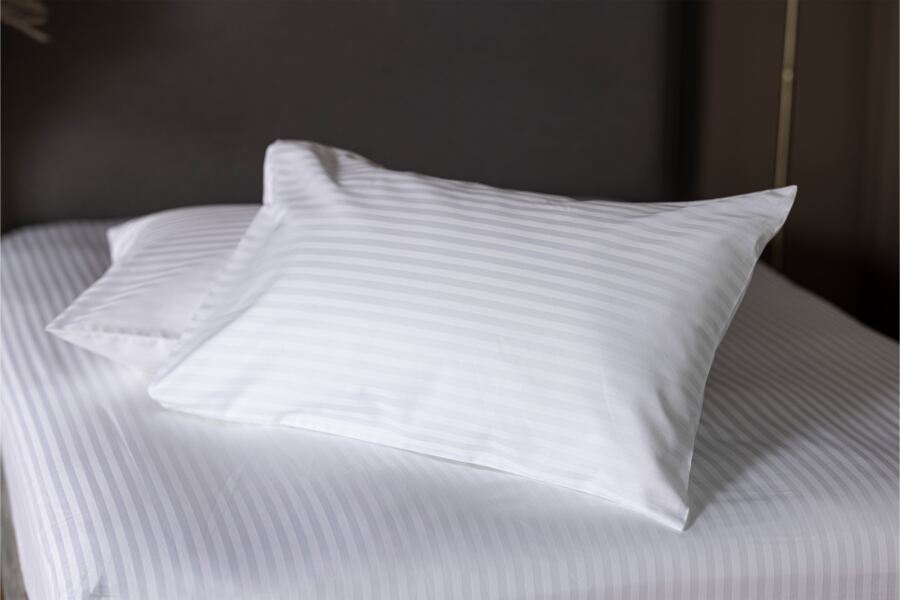
A pleasant smell can also help create a relaxing atmosphere in your bedroom. Fresh bed linen with a light lavender fragrance is a lovely thing to come back to at night, kind of like walking into a freshly made hotel room.
How to Use Pillow Spray
Using a lavender spray for sleep is simple, but a few small habits help you get the most out of it. The aim is to create a pleasant scent around your bed without making the fragrance overpowering.
Where and when to spray
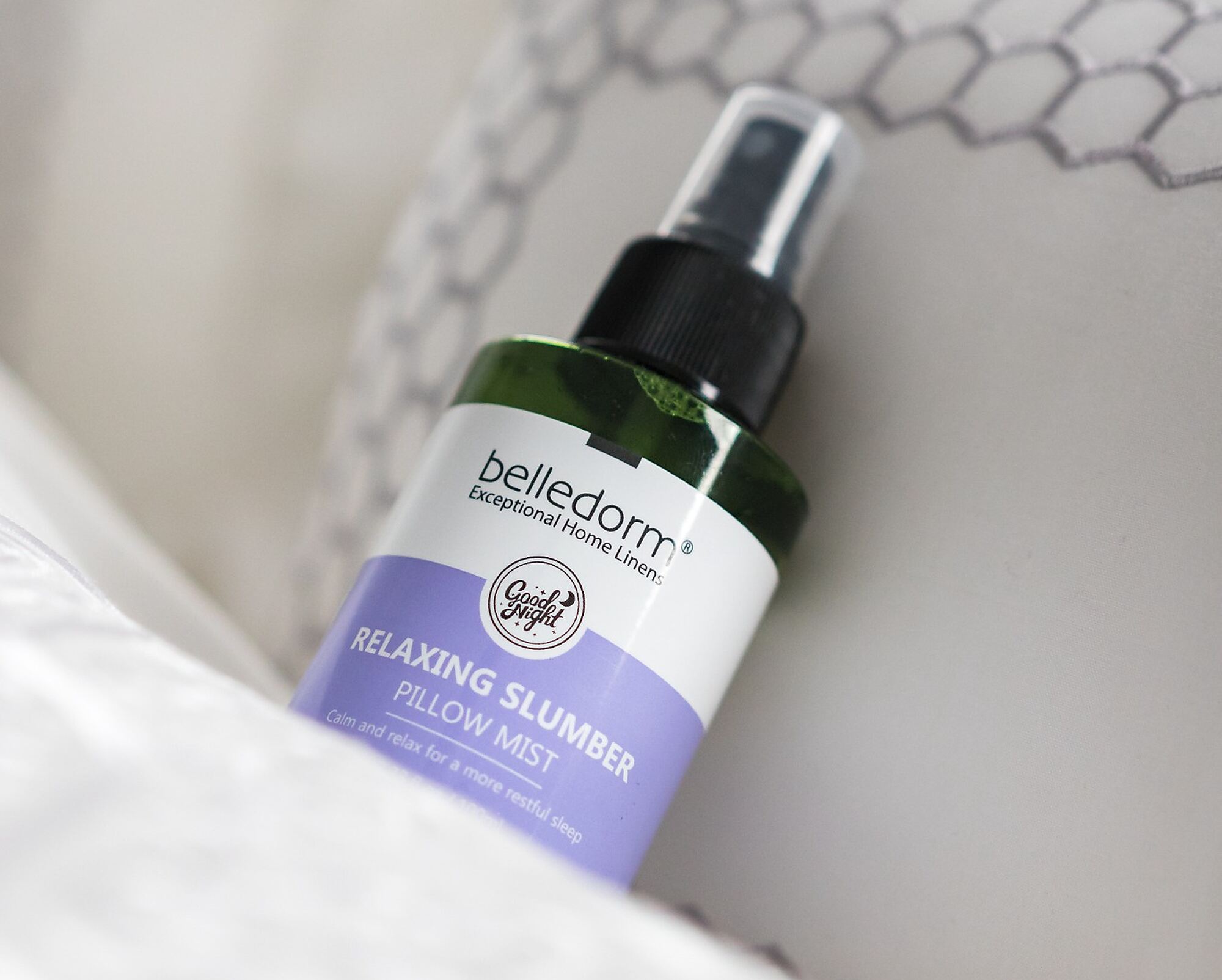
We recommend spraying a bit of lavender mist onto a clean, dry pillowcase, holding the bottle a short distance away, around 30cm, so the mist spreads lightly over the fabric.
For the best experience, start with a light mist and see how you find the scent. You can adjust how much you use depending on your preference.
A rough guide is to spritz your pillow 10 to 15 minutes before you go to bed. That gives it time to dry and lets the scent settle, so it smells soft rather than strong when you lie down. Wait until the spray has dried before you rest your head on it.
How much to use
Start with one or two sprays and see how you find it. You can always add a little more the next night, but too much fragrance close to your face can feel overpowering rather than relaxing.
A fresh pillowcase also makes a difference, as the scent sits better on clean fabric. Our guide on how often to wash your bed linen suggests changing pillowcases every 3 to 4 days.
Who might want to skip it?
A scented pillow spray doesn't suit everyone. If you're sensitive to fragrance or have a skin condition, it may be better to leave it out or test a small amount on your pillowcase first.
The same goes if you share your bed with someone who doesn't like the scent. Before you use any kind of pillow spray, always check the product label and stop using it if you notice any irritation.



Other Things That Help You Sleep
A pillow spray works best alongside the basics of a good night's sleep. The NHS recommends going to bed and waking up at the same time every day, keeping your bedroom dark and quiet, and giving yourself time to relax before bed.
The temperature of your room matters, too, as a bedroom that's too hot or too cold can disrupt your sleep. Bedding that suits the season helps here, with lighter layers in summer and warmer options in winter.
Giving yourself time to unwind before bed also helps, whether that's a warm bath, a good book, or even a few hours away from screens. For more ideas, be sure to take a look at our guides to creating a sleep-friendly bedroom and stress relief tips for better sleep.
Is a Lavender Pillow Spray Worth Trying?
A lavender pillow mist is worth trying if you enjoy the scent and want a simple way to mark the end of the day. The research suggests it may help some people feel calmer at bedtime, but it won't fix poor sleep on its own.
Used as part of a regular bedtime routine, it can make your bed feel more inviting and help you drift off into a deep sleep feeling relaxed. Our Lavender Pillow Mist is an easy way to add a soothing scent to your night.
FAQs
Does lavender pillow spray actually work?
It can help some people feel calmer at bedtime, but the evidence is modest. It works best as part of a regular wind-down routine rather than as a fix on its own.
Does lavender help you sleep?
It may help some people. Lavender’s scent comes from natural compounds called linalool and linalyl acetate, which are thought to play a part in its calming effect. Small studies suggest it can help improve sleep quality, especially as part of a regular bedtime routine.
How do you use pillow spray?
Spray lavender mist lightly onto a clean, dry pillowcase from a short distance away. Let it dry before you lie down, so the scent is gentle rather than too strong.
When should you spray it, and how much?
Mist your pillow around 10 to 15 minutes before bed. One or two sprays are plenty to start with, and you can add a little more if you'd like a stronger scent.
Is a pillow spray safe for fabric?
Pillow sprays are made to be used on bedding, but it's always worth checking the label first. If you're unsure, spray a little on a hidden corner of your pillowcase and let it dry before using it on the rest. A light mist with some space between the bottle and your pillow will also help you avoid damp patches on your pillow.