 Platinum trusted service award
Table of Contents
- Why does temperature matter for sleep?
- What is the ideal bedroom temperature in winter?
- How to choose winter bedding that works with your room
- How to protect your sleep as the nights draw in
- Making winter a season for better sleep
- Frequently asked questions
As the nights draw in, the instinct is to turn up the thermostat, swap to a heavier duvet and settle in for the season. Each of those makes sense on its own. Together, they can leave a bedroom far warmer than the body wants it to be at night, which is one of the more common reasons people sleep poorly through the winter months.
Winter is a good moment to look again at the bedroom and at the hour before bed. Getting the temperature right, choosing bedding that works with the room rather than against it, and keeping a steady wind-down routine can all make the colder months more restful.
Why does temperature matter for sleep?
Body temperature rises and falls on a daily rhythm. In the evening, core body temperature begins to drop, and that gentle fall is one of the signals that prepares the body for sleep. It carries on adjusting through the night as one moves between the different stages of sleep.
A bedroom that is too warm works against that natural cooling. A room that is too cold makes it hard to relax enough to drift off. Either way, the result tends to look the same: lying awake longer than expected, waking in the small hours too hot beneath the duvet, or kicking the covers off and then waking again feeling chilled.
The aim is not one perfect number, but a room that lets the body do what it is already trying to do.
What is the ideal bedroom temperature in winter?
The Sleep Charity's guidance is that a bedroom of around 16 to 18°C suits most adults for sleep, and that temperatures above 24°C are likely to cause restlessness. Comfort is personal, though, and the right figure depends on individual health, age and the bedding on the bed.
Why central heating can catch people out
A bedroom that feels pleasantly warm while getting ready for bed can become too warm an hour later, once one is tucked under a winter duvet in heavy pyjamas. Radiators on a timer can also switch on again before dawn and warm the room well before it is time to get up.
A simple room thermometer is worth having. It replaces guesswork with a number, and many people are surprised by how warm their bedroom actually is on a winter night.
Warm the bed, not the room
For many healthy adults, there is no need to keep the heating on all night if the bed itself is warm enough. Taking the chill off the room before bed, then letting the bedding do the rest, often gives a more comfortable night than heating the whole room until morning.
There is an important exception. NHS guidance advises that people aged 65 and over, those with limited mobility, and anyone with a health condition such as heart or lung disease should heat their home to at least 18°C, keeping the bedroom at that temperature through the night where possible. For these sleepers, staying warm enough comes first, and bedding should be chosen to suit a heated room rather than to replace the heating.





How to choose winter bedding that works with your room
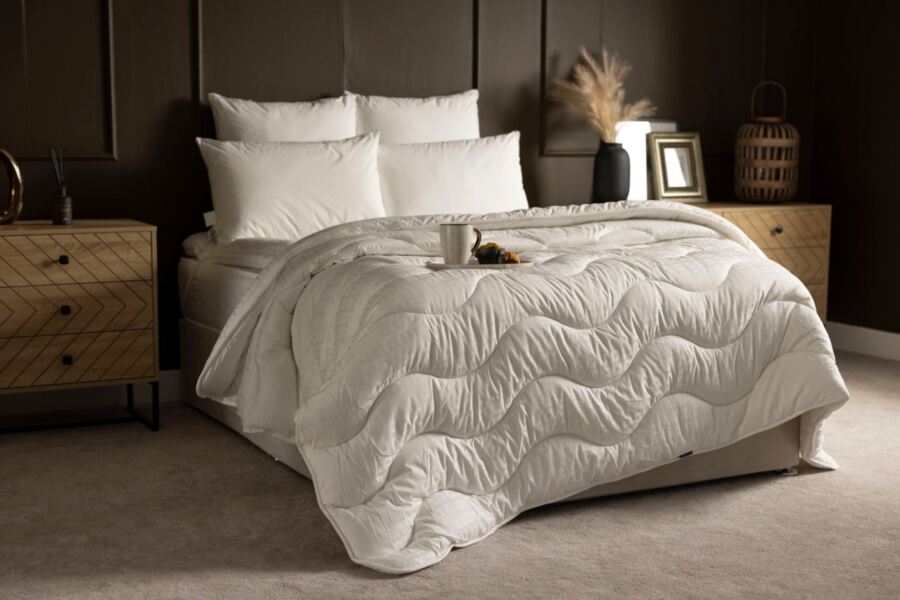
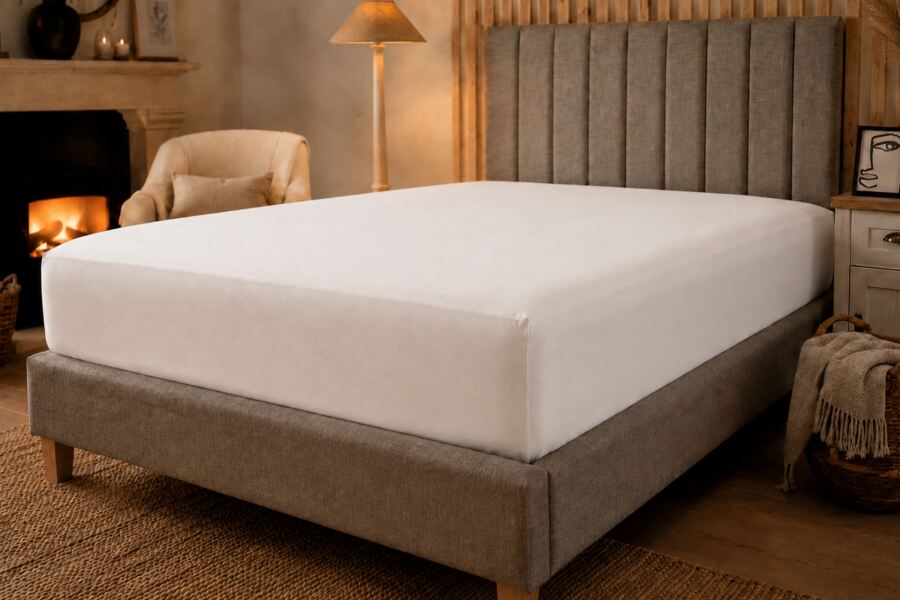
The right bedding helps the body stay comfortable as the temperature shifts overnight. It does not need to be the heaviest option available. For a fuller, layer-by-layer approach, our guide on how to layer bedding for winter goes into more detail.
Match the duvet tog to the room, not just the season
A tog rating measures how well a duvet holds heat: the higher the number, the warmer it is. A 13.5 tog duvet is the traditional British winter weight, and 15 tog suits colder, unheated rooms. In a well-insulated or heated bedroom, however, a 10.5 tog duvet is often enough right through winter, and anything heavier can simply hold on to more heat than the body needs. Our duvet tog guide explains each rating in turn.
Layer rather than rely on one heavy duvet
Layers give flexibility. A flat sheet, a medium-weight duvet and a throw at the foot of the bed can be added or taken away as the night requires, which is far harder with a single very warm duvet. Layering also helps couples who sleep at different temperatures, as one person can draw up an extra blanket on their side without overheating the other. All-seasons duvets, which pair two lighter duvets that fasten together, work on the same principle.
Choose fabrics that breathe
Bed linen sits closest to the skin, so the fabric matters. Natural fibres such as cotton allow moisture to move away from the body, which helps avoid that clammy feeling on waking warm. There is more on this in our piece on natural fabrics and sleep quality.
Brushed cotton, often called flannelette, has its surface gently raised to create a soft nap. Those raised fibres hold a little air close to the body, so the bed feels warm from the moment one gets in, without the room needing to be. For anyone who runs hot even in winter, a crisp cotton percale stays cooler against the skin.
Our own brushed cotton flannelette bedding is made from 100% cotton at a substantial 165gsm, then brushed for a soft, warm handle that is particularly welcome on cold nights. Paired with a duvet chosen to suit how warm the bedroom runs, it makes for a comfortable winter bed without the heating running until morning.
Think of nightwear as part of the bedding
Thick pyjamas under a heavy duvet in a heated room can add up to more warmth than expected. For anyone who regularly wakes too hot, changing one thing at a time, whether the nightwear, the duvet or the thermostat, makes it much easier to see what actually helps.
How to protect your sleep as the nights draw in
A comfortable bedroom is only part of the picture. Shorter days change daily habits too, and winter is a sensible time to revisit the routine that helps one wind down.
• Keep a consistent routine. Going to bed and getting up at roughly the same time each day, weekends included, supports the body's internal clock.
• Get daylight early. Natural light, particularly in the morning, helps keep the body clock on time. Time outdoors is worthwhile even on a cold, grey day, as daylight is still far brighter than indoor lighting.
• Ease through the clock change. When the clocks go back at the end of October, keeping to the usual wake time by the new clock, and getting outside in the morning, helps the body adjust.
• Make time to unwind. Reading, calming music or a warm bath can ease the move from the busyness of the day into bedtime. A warm bath an hour or two before bed is especially useful in winter: it draws heat to the skin, and the cooling that follows mirrors the body's natural drop in temperature before sleep.
• Keep the bedroom dark, quiet and comfortable. If the room feels cold, adjust the bedding before reaching for the thermostat.
• Notice the pattern. If waking too hot or too cold happens regularly, look at what might be contributing. Small changes to room temperature, duvet or nightwear often find a more comfortable balance.
Making winter a season for better sleep
Colder weather need not mean broken nights. A bedroom kept at a sensible temperature, bedding chosen to suit the room, and a steady wind-down routine go a long way towards comfortable, restful sleep through the winter.
There is no single perfect setup for everyone. The aim is to find what works, and to make small, manageable changes that support sleep over time.
If sleep difficulties persist or begin to affect everyday life, it is worth speaking to a GP. The Sleep Charity also offers advice and support to help people understand their sleep and find ways to improve it.
Frequently asked questions
What is the best bedroom temperature for sleep in winter?
The Sleep Charity recommends a bedroom temperature of around 16 to 18°C for most adults, with temperatures above 24°C likely to cause restlessness. The same range applies in winter as in any other season. Older adults and those with certain health conditions are advised by the NHS to keep the bedroom at no less than 18°C overnight. A room thermometer is the most reliable way to check.
Should the heating be left on overnight in winter?
For most healthy adults, it is not necessary to leave the heating on all night, provided the bedding is warm enough for the room. Many people sleep better by warming the room slightly before bed and allowing a suitable duvet and bed linen to maintain comfort. However, NHS guidance advises those aged 65 and over, people with limited mobility and anyone with heart or lung disease to keep the bedroom at 18°C through the night where possible.
What tog duvet is best for winter?
A 13.5 tog duvet is the traditional choice for a British winter and suits most bedrooms that are not heated overnight. A 15 tog may suit particularly cold or unheated rooms. In a well-insulated or centrally heated bedroom, a 10.5 tog is often sufficient and less likely to cause overheating. An all-seasons duvet offers the flexibility to adjust warmth as conditions change.
Why do I wake up hot at night in winter?
Waking hot in winter is often the result of several sources of warmth combining, such as central heating, a heavy duvet and thick nightwear. Radiators on a timer can also warm the room before morning. Because the body naturally cools during sleep, a bedroom that is too warm can interrupt that process and lead to waking. Changing one element at a time helps identify the cause.
Is brushed cotton bedding warmer than regular cotton?
Brushed cotton, also known as flannelette, feels noticeably warmer than standard cotton bed linen. Its surface is brushed to raise the fibres, creating a soft nap that holds a layer of air close to the body. This means the bed feels warm quickly, even in a cooler room. Because it is still cotton, it remains breathable and comfortable through the night.
How can I keep warm in bed without turning the heating up?
The most effective approach is to warm the bed rather than the room. Layering a flat sheet, duvet and throw allows warmth to be adjusted easily, while brushed cotton sheets feel warm from the moment one gets into bed. The Sleep Charity also suggests a hot water bottle or bed socks for cold feet. Choosing a duvet tog suited to the bedroom completes a warm, comfortable bed.