 Platinum trusted service award
Table of Contents
- The layering order, explained
- Layer 1: mattress protector or topper
- Layer 2: the fitted sheet
- Layer 3: the flat sheet
- Layer 4: the duvet
- Layer 5: the throw, blanket or bedspread
- Seasonal layering at a glance
- A note on pillows and accessories
- Bed layering FAQs
UK weather does not commit to one temperature for long, and neither should a bed. A single thick duvet works well enough in the depths of January, but spend the other eight months relying on the same setup and the result is a cycle of overheating, kicking covers off, and waking at three in the morning to pull them back.
Layering solves this. Rather than one heavy layer doing all the work, a layered bed distributes warmth across several lighter ones. Each can be removed or added back without fully waking, which is the practical point of the whole exercise: a bed that adjusts with you, not against you.
The order of those layers matters, and so does the fabric. What follows is the formula, from mattress to throw, with seasonal adjustments built in.
The layering order, explained
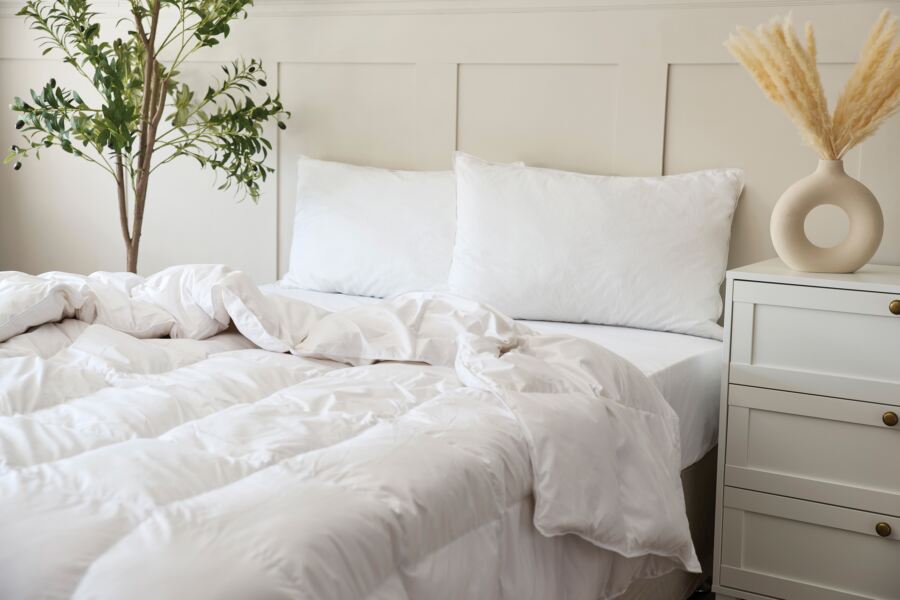
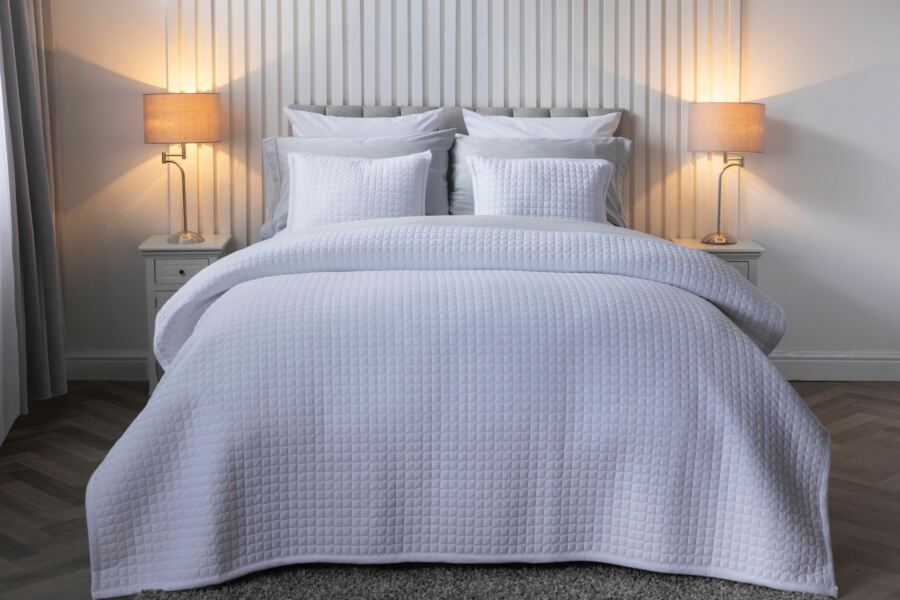
Every well-made bed follows the same basic structure, whether it belongs to a hotel in Edinburgh or a family home in Surrey. From the mattress up, the order runs: protector or topper, fitted sheet, flat sheet, duvet, throw or blanket. Each layer has a job: protecting, smoothing, regulating, warming, or finishing. Getting the order right means each layer does its work without interfering with the one above or below it.
Layer 1: mattress protector or topper
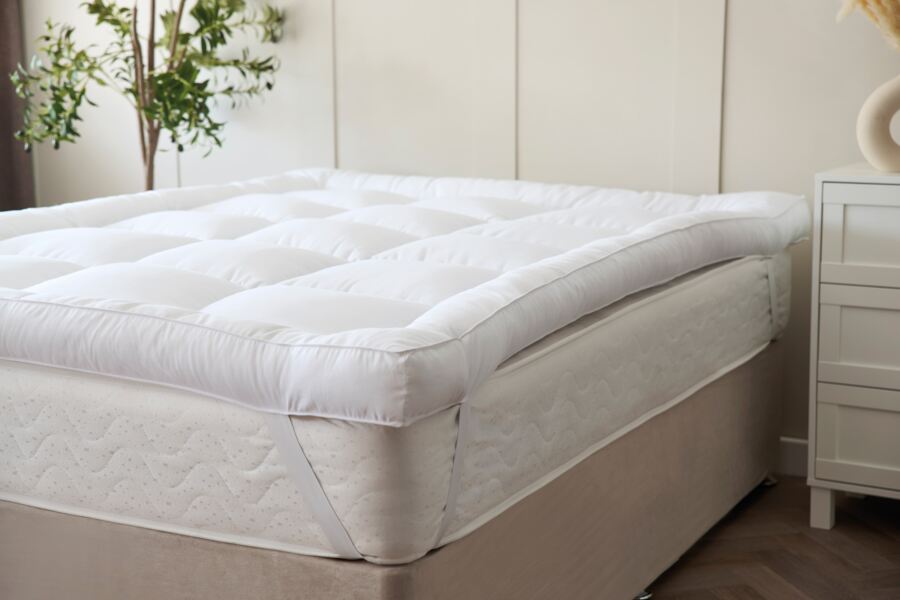
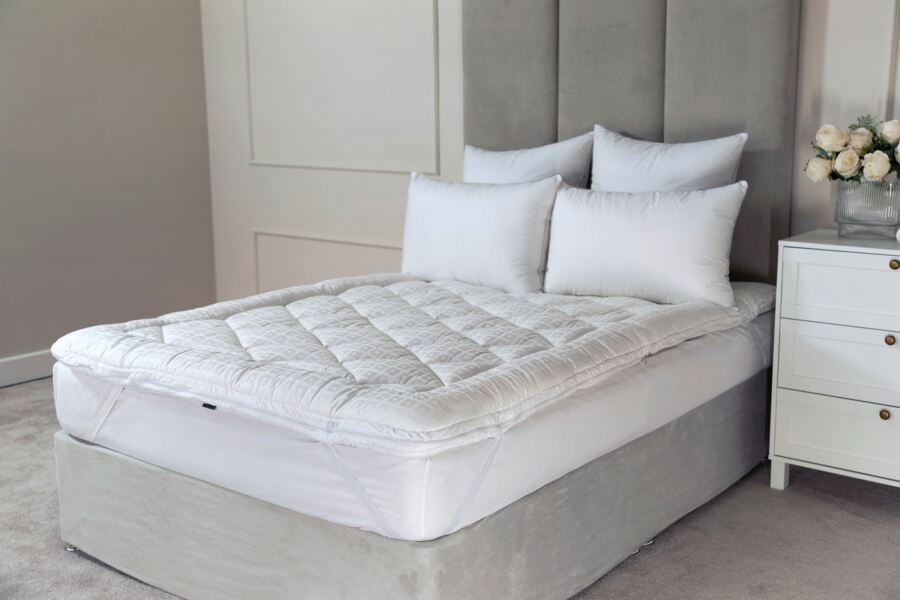
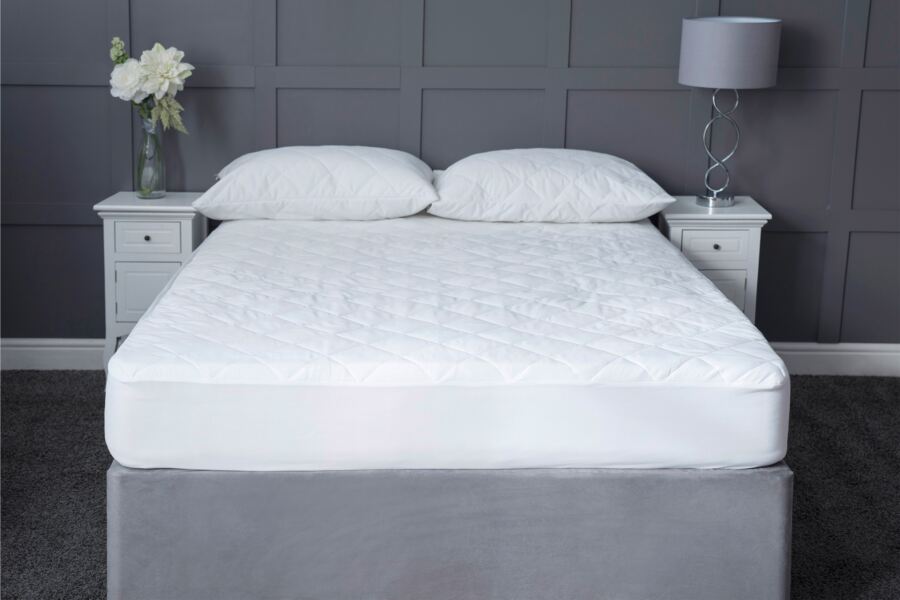
The first layer sits between the mattress and everything above it. A mattress protector guards the mattress against moisture, allergens and general wear, which extends its life considerably and keeps the sleep surface hygienic. A mattress topper does the same job while adding a layer of softness or support on top.
For allergy sufferers, the protector is doing quiet but important work. A tightly woven cotton percale protector acts as a physical barrier, keeping dust mite allergen inside the mattress rather than letting it migrate upwards into the bedding.
Most sleepers benefit from a protector at a minimum. A topper is worth adding if the mattress is ageing, if it is firmer than you would like, or if you want an extra buffer of insulation underneath the sheet.

Layer 2: the fitted sheet
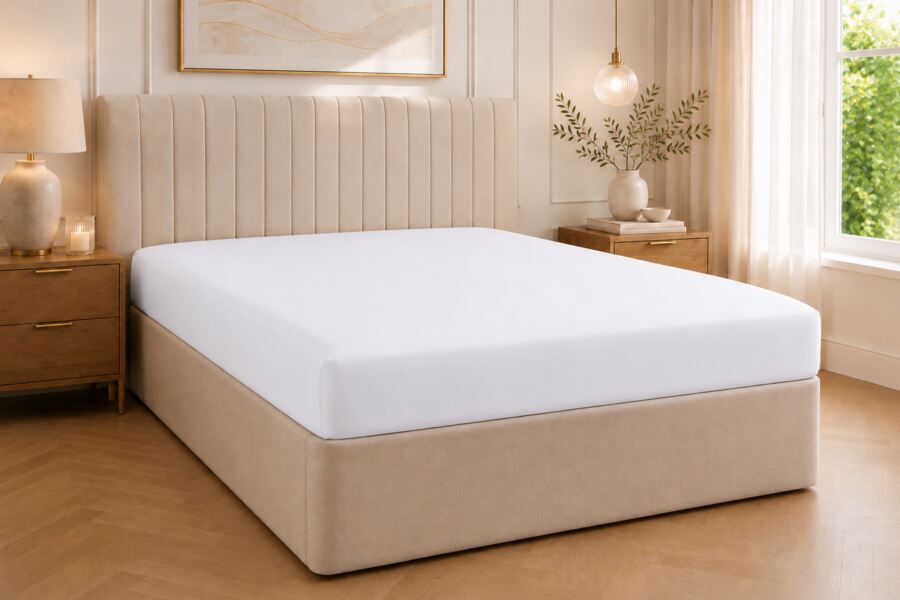
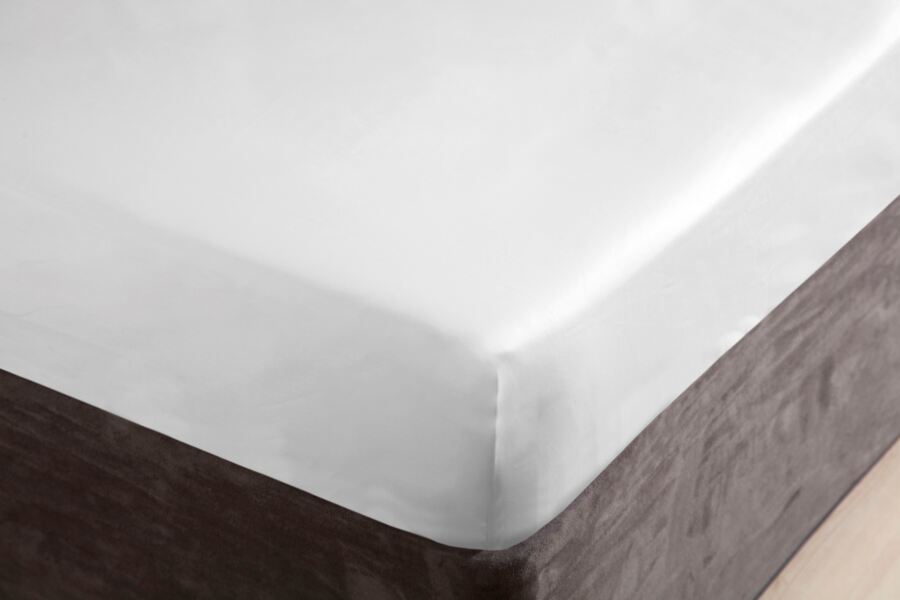
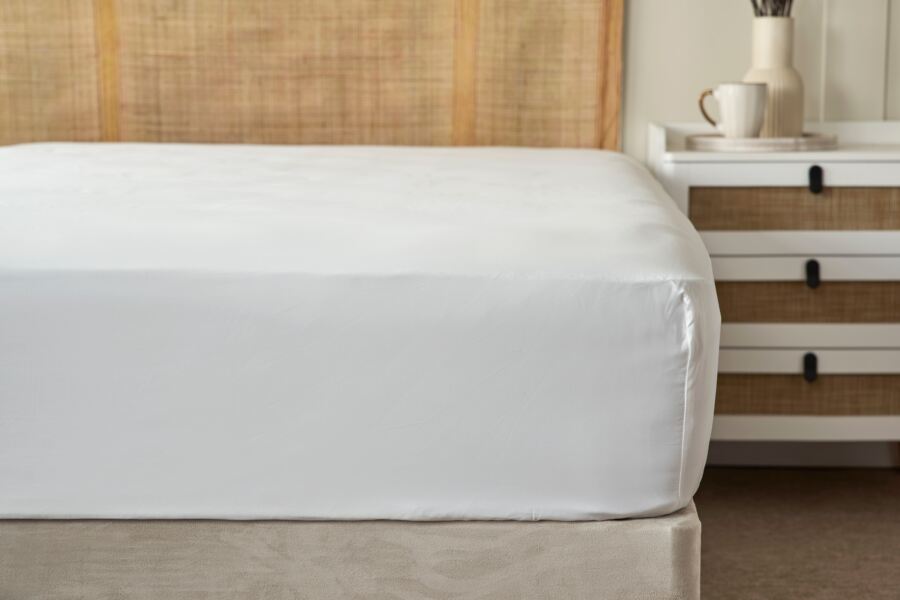
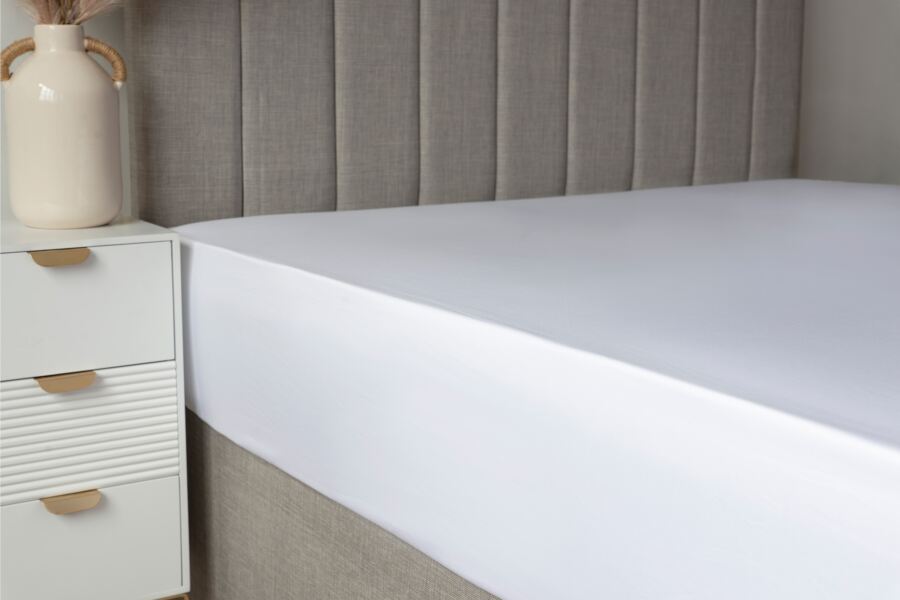
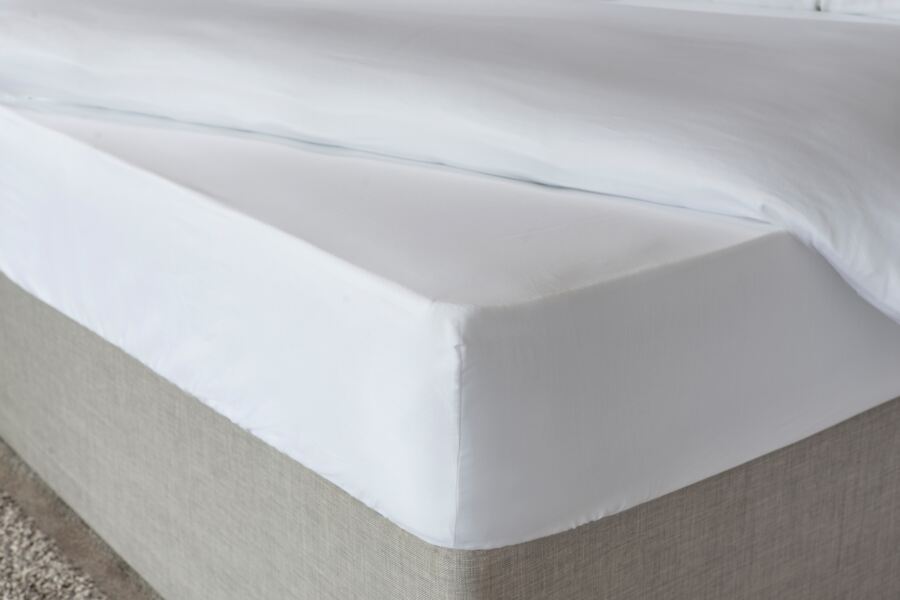
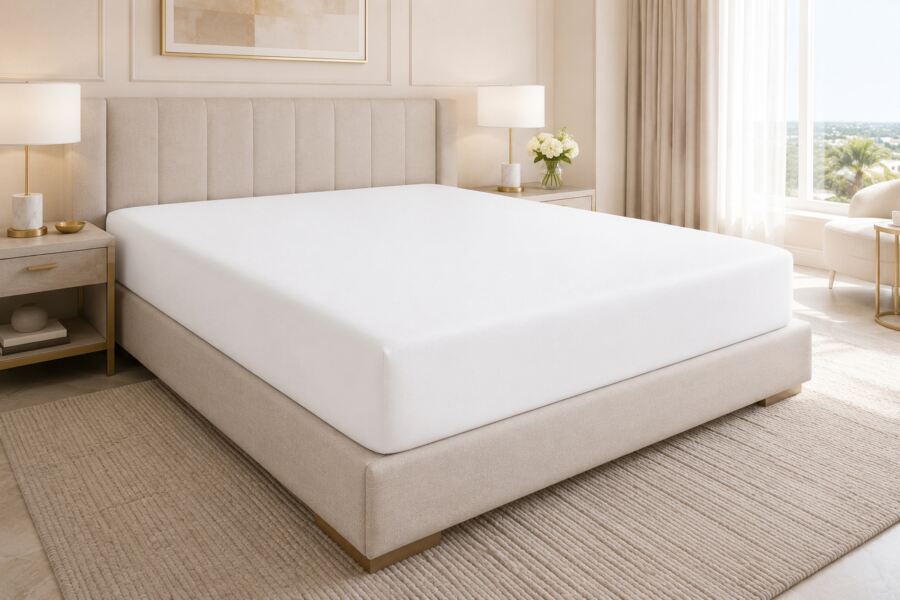
The fitted sheet is the base fabric against the skin, so its choice matters more than most people give it credit for. A well-fitting sheet sits flat against the mattress without riding up at the corners, which is as much about getting the right depth as the right size.
Fabric choice here is seasonal. In cooler months, a cotton sateen or brushed cotton fitted sheet holds a little more warmth against the body. Sateen has a smooth, dense finish that feels substantial; brushed cotton (sometimes called flannelette) has a raised, slightly napped surface that traps a fine layer of warm air.
In warmer months, a cotton percale or bamboo viscose fitted sheet is the better starting point. Percale has a crisper, cooler hand-feel from its one-over-one weave, and bamboo viscose sits cooler still, wicking moisture away from the skin more readily than cotton.
Layer 3: the flat sheet
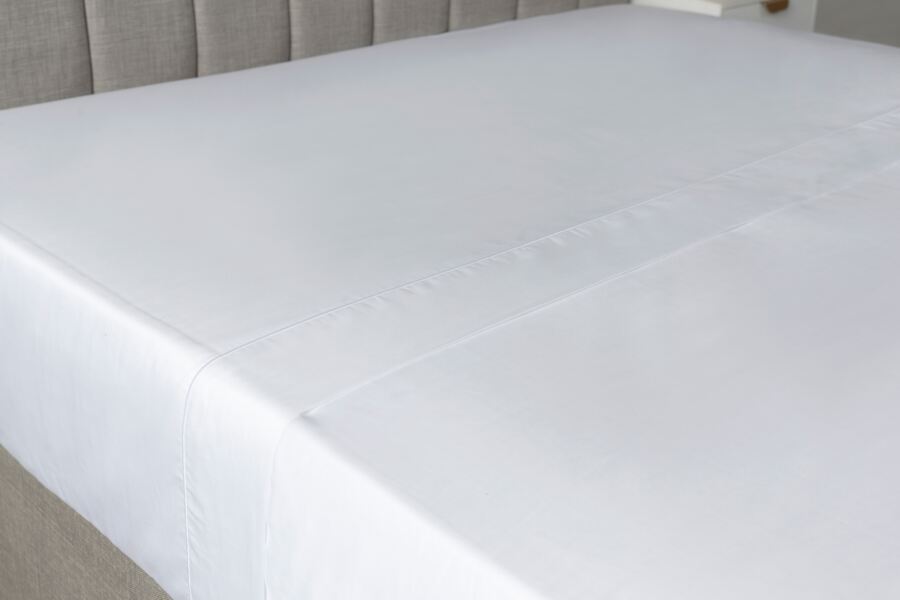
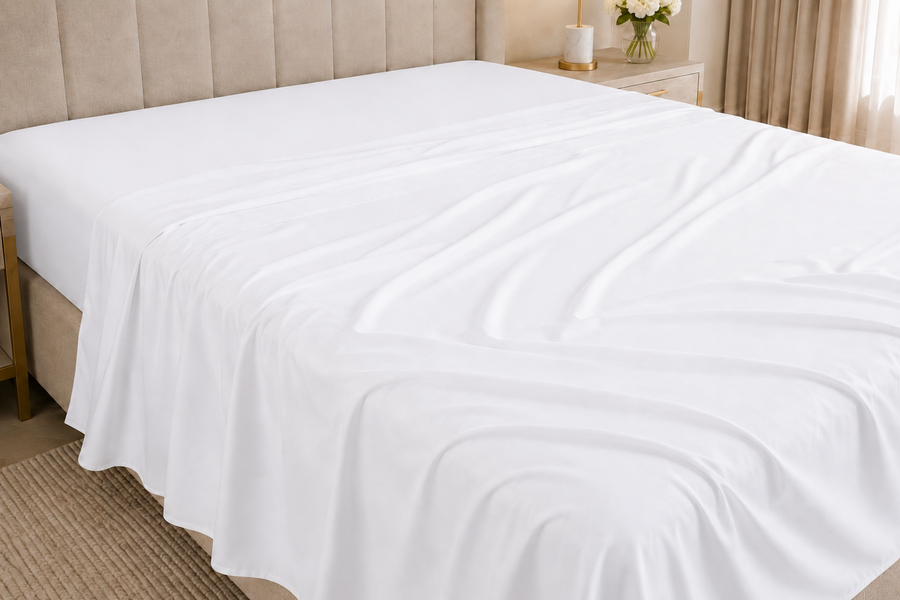
The flat sheet is the layer hotels rely on and many UK households have quietly abandoned. It sits between the sleeper and the duvet, and it earns its place in two ways.
First, it adds a thin, adjustable layer of temperature control. On a mild night, a flat sheet and a light throw may be all that is needed, with the duvet folded back entirely. On a cooler night, the flat sheet adds warmth without adding bulk, because it traps a layer of still air between the body and the duvet above.
Second, it protects the duvet cover. A flat sheet absorbs the moisture and oils that would otherwise go straight into the duvet, which means the cover stays fresher for longer between washes. Given that washing a duvet cover is more effort than washing a flat sheet, this is a practical advantage that compounds over time.
Match the fabric to the season: linen or percale in summer for coolness, cotton sateen in winter for warmth, bamboo viscose year-round for moisture management.
Layer 4: the duvet
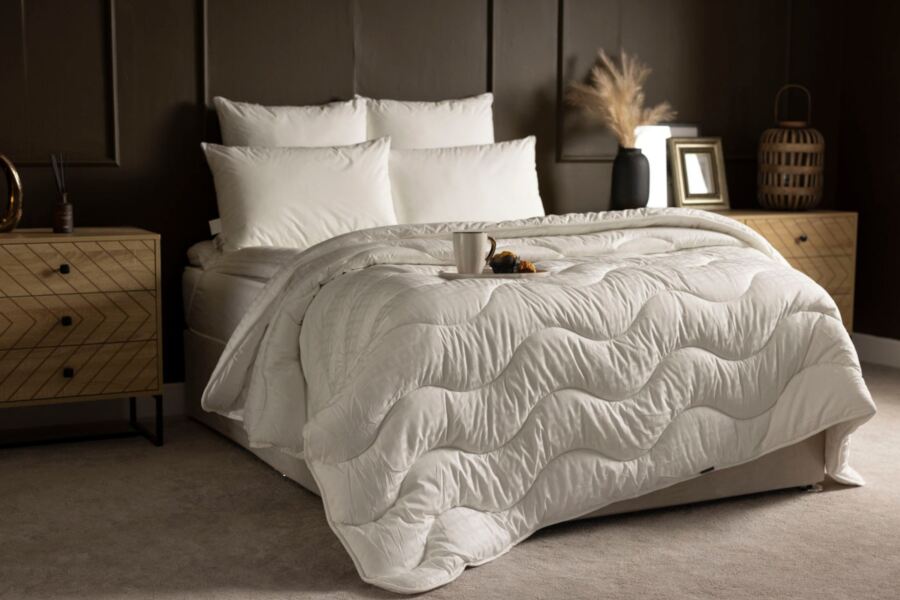
The duvet provides the bulk of the warmth, and tog rating is the guide to how much. Tog measures thermal resistance, not weight, so a high-tog duvet is not necessarily heavy, it simply retains more body heat.
Belledorm's range runs from 1.5 tog through to 13.5 tog, and a practical approach is to own two: a 4.5 tog for the warmer months and a 10.5 tog for autumn through spring. Some sleepers prefer a single 10.5 tog year-round, adjusting with sheets and throws rather than swapping the duvet itself. For the coldest weeks of winter, a 13.5 tog provides the most insulation.
Filling matters alongside tog. Natural fillings, including wool, down and silk, tend to regulate temperature more responsively than synthetic alternatives. Synthetic microfibre fillings are lighter, easier to wash, and better suited to allergy-prone households. Both do the job; the choice is one of preference and practicality.
The duvet cover itself is worth a thought at this stage. A sateen cover adds a little warmth and weight; a percale or linen cover keeps things lighter. The cover is also the largest visible surface on the bed, so its colour and texture set the visual tone of the room.

Layer 5: the throw, blanket or bedspread
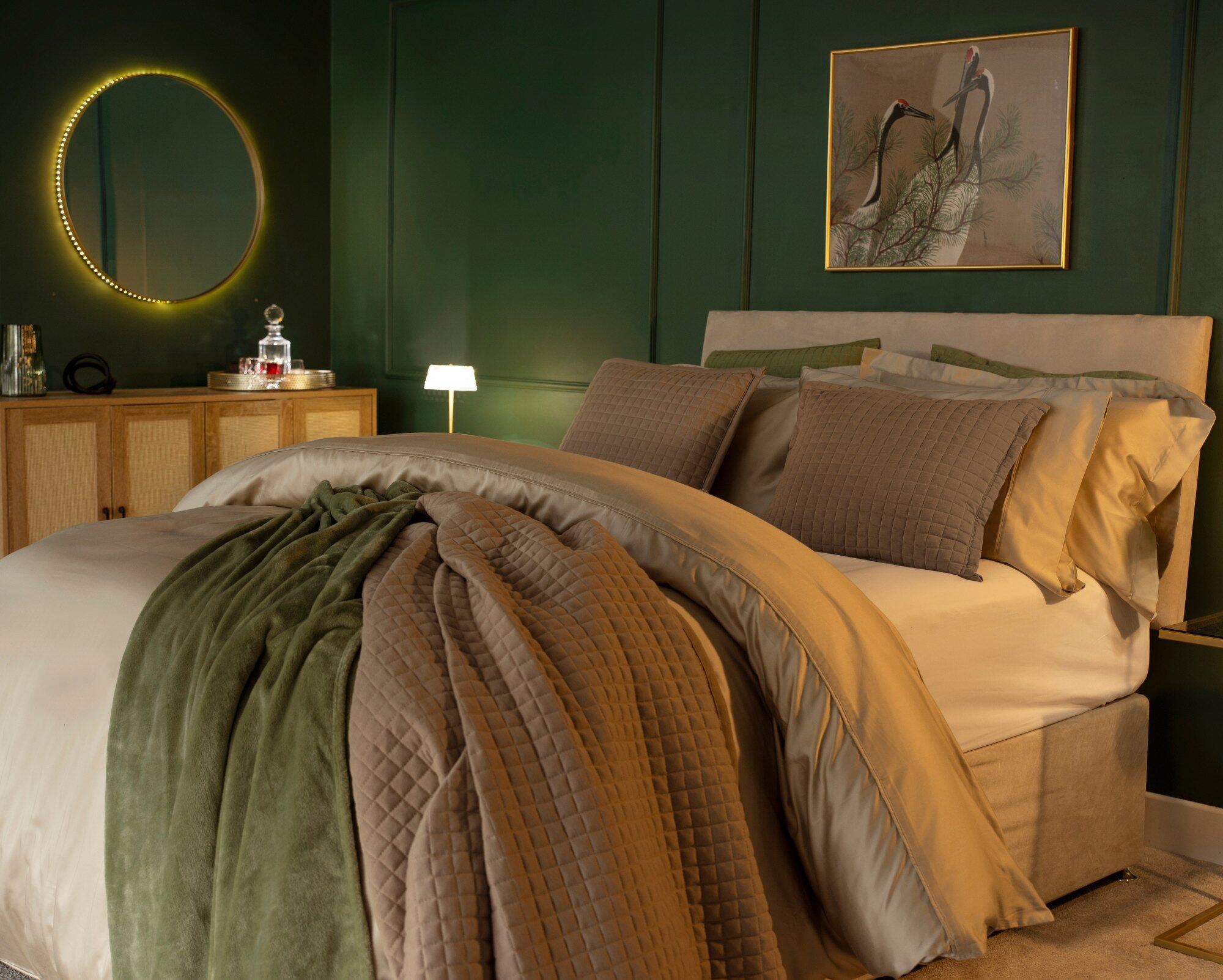
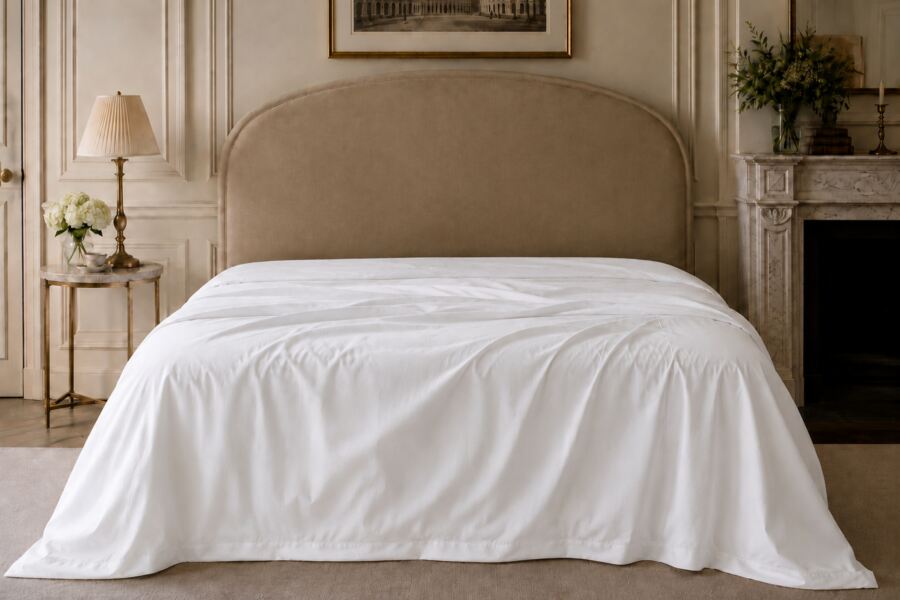
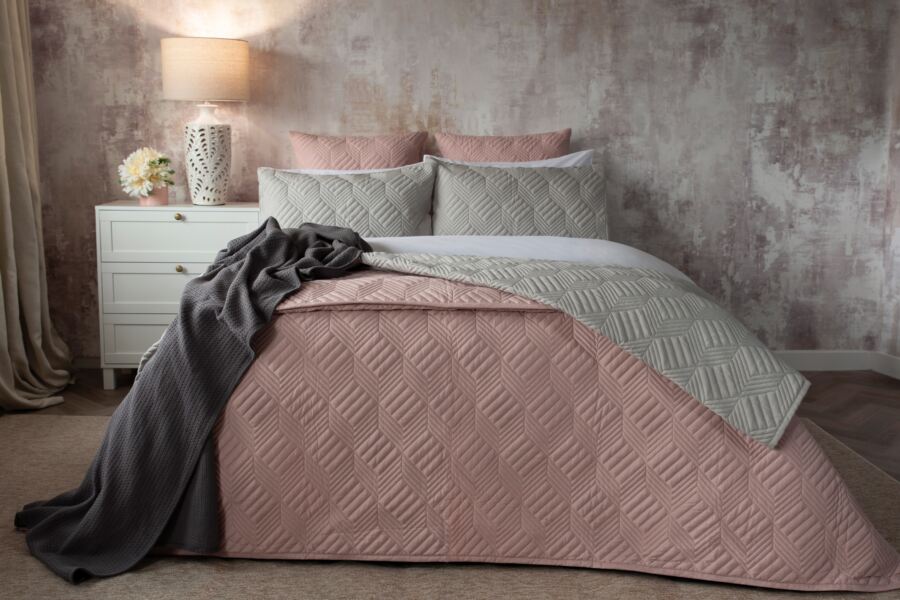
The final layer is the one that ties the bed together visually and gives the sleeper one last adjustment for the night. A throw or blanket folded at the foot of the bed can be pulled up on a cooler night or left where it is on a warmer one. A bedspread covers the entire bed during the day and folds back at night, protecting the duvet and giving the room a finished, made look.
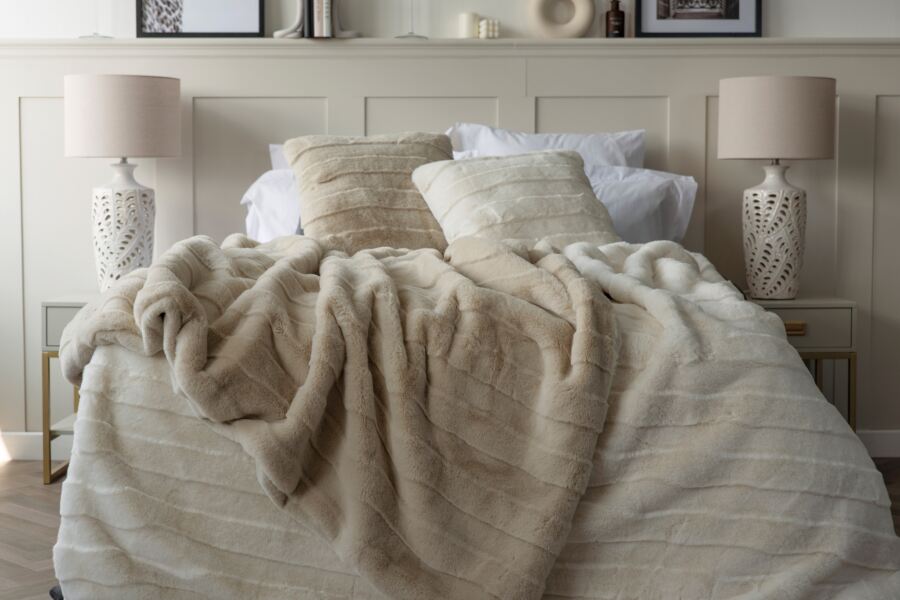
The throw is where texture contrast does the most work. A waffle-knit cotton throw over a smooth sateen duvet, or a quilted bedspread over a linen cover, adds visual depth without adding another colour. It is also the layer most easily swapped with the seasons: a heavier knit in winter, a lighter cotton or linen in summer.
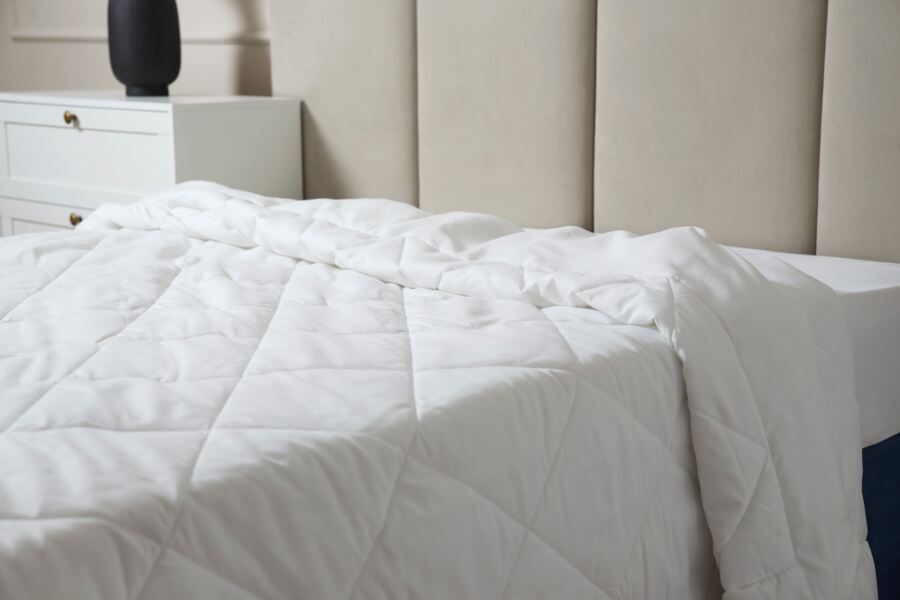
Seasonal layering at a glance
The table below maps each layer to the season. Adjust according to how warm or cool your bedroom runs, and how warm or cool you tend to sleep.
|
Season |
Base layers |
Middle layer |
Top layers |
|
Spring |
Mattress protector Percale or bamboo fitted sheet |
Percale or bamboo flat sheet |
10.5 tog duvet Lightweight throw |
|
Summer |
Mattress protector Percale, linen or bamboo fitted sheet |
Linen or bamboo flat sheet |
4.5 tog duvet (or flat sheet alone on the warmest nights) Thin quilt or cotton throw |
|
Autumn |
Mattress protector Percale or sateen fitted sheet |
Cotton flat sheet |
10.5 tog duvet Midweight throw or quilted bedspread |
|
Winter |
Mattress topper Sateen or brushed cotton fitted sheet |
Brushed cotton flat sheet |
13.5 tog duvet Heavier throw or blanket |
For a closer look at winter layering specifically, our guide to layering your bed for winter covers heavier fabrics, tog choices, and cold-weather accessories in more detail.
A note on pillows and accessories
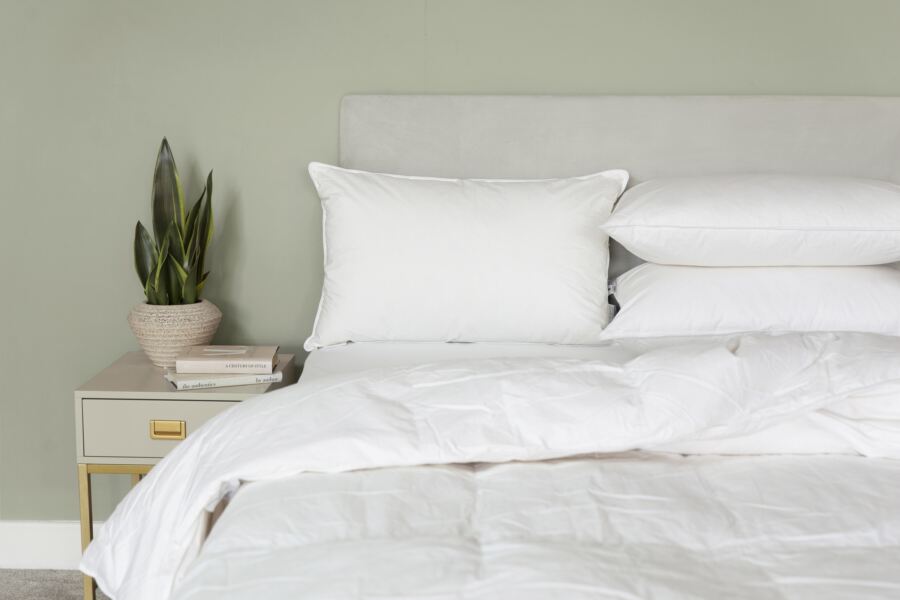
Pillows sit outside the layering formula but complete the bed. Two sleeping pillows, chosen for the way you sleep (firmer and thicker for side sleepers, flatter for back sleepers), form the functional layer. A pair of larger Continental square pillows propped behind them, with a smaller cushion in front, adds visual depth and a sense of the bed being properly dressed.
Base wraps cover the divan base and give the bed a clean, finished look from every angle. A bed runner adds a strip of colour or texture across the foot of the bed, which works well in rooms where the bedding itself is kept neutral.
Cushions and accessories in contrasting textures, a velvet cushion against a cotton duvet, a knitted throw beside a smooth bedspread, bring the layered look together without complicating the formula.
A layered bed is not a complicated bed. It is five layers, chosen for the season, arranged in the right order, and adjusted through the night as the body needs. The formula stays the same year-round. What changes is the weight, the fabric, and the tog, and those three decisions, made twice a year, are enough to keep the bed comfortable through whatever the weather does next.
Bed layering FAQs
What is the correct order for layering a bed?
From the mattress up: protector or topper, fitted sheet, flat sheet, duvet, then a throw, blanket or bedspread on top. This order ensures each layer does its job properly, with protection at the base, temperature regulation in the middle, and warmth and styling at the top. The flat sheet between the sleeper and the duvet is the layer most often missed in UK households, but it adds meaningful temperature control and keeps the duvet cover cleaner.
What is hotel bed layering?
Hotels follow the same five-layer formula but with particular attention to tucking, folding and finishing. The flat sheet is tucked tightly at the foot and sides, with a hospital corner fold for a crisp finish. The duvet sits on top of the flat sheet, and a throw or bedspread is folded across the foot third of the bed. Pillow stacking, usually two sleeping pillows laid flat with two larger Continental pillows propped behind, completes the look.
What is the best fabric for each layer?
The fitted and flat sheets do the most temperature work, so fabric choice matters there. Cotton percale and bamboo viscose are the cooler options for spring and summer. Cotton sateen and brushed cotton are warmer for autumn and winter. Linen works beautifully as a flat sheet or duvet cover in the warmer months. The throw is the most flexible layer and can be chosen for texture and weight rather than strict fabric properties.
What tog duvet should I use in each season?
As a starting point: 4.5 tog for summer, 10.5 tog for spring and autumn, and 13.5 tog for winter. These are guidelines rather than rules. Sleepers who run warm may prefer a lighter tog year-round, adjusting with an extra throw or blanket on colder nights. Those who run cold may want the 10.5 tog through summer, with the flat sheet providing fine-tuning. Room temperature and central heating habits also play a part.
Do I really need a flat sheet?
Strictly speaking, no, but it is the most useful single addition most sleepers can make to their bed. A flat sheet traps a thin layer of still air between the body and the duvet, which improves temperature regulation in both directions. It also absorbs moisture and oils overnight, which keeps the duvet cover fresher for longer between washes. On the warmest summer nights, a flat sheet on its own may be all the covering that is needed.
How do I stop my fitted sheet coming off the mattress?
The most common cause is a sheet that is too shallow for the mattress. Modern mattresses, particularly those with memory foam layers or added toppers, are often deeper than the 28cm a standard fitted sheet is designed for. Measuring the mattress depth from the bed base to the top surface, including any topper, and choosing the corresponding sheet depth, whether standard, extra deep or ultra deep, will solve the problem in most cases.