 Platinum trusted service award
Table of Contents
- What Is a Duvet?
- What Is a Comforter?
- Duvet vs Comforter: The Key Differences
- Which Should You Choose?
- Duvet vs Comforter FAQs
The short answer is this. A duvet is a soft, filled insert that slips inside a separate, washable cover. A comforter is a single quilted layer, filled and stitched as one piece, usually sold as part of a matching set. So a duvet versus comforter decision is really a choice between a two-part system you can wash and restyle with ease, and an all-in-one that stays exactly as it is. For UK sleepers, the duvet tends to win on most counts.
What Is a Duvet?
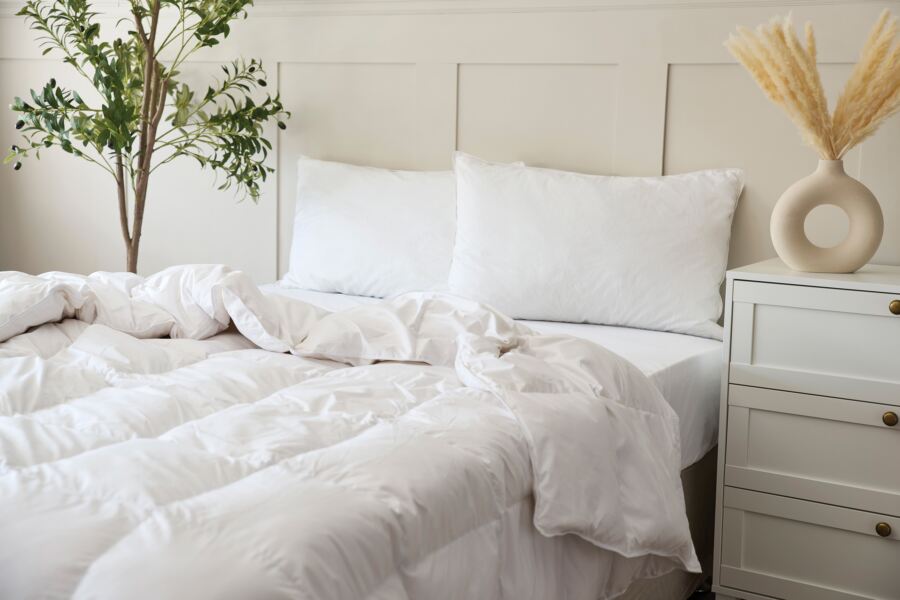
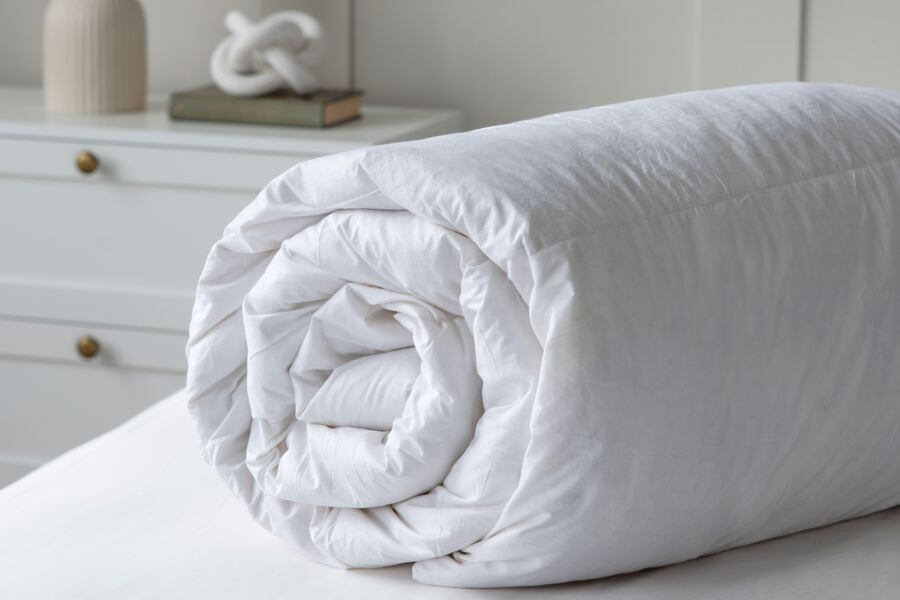
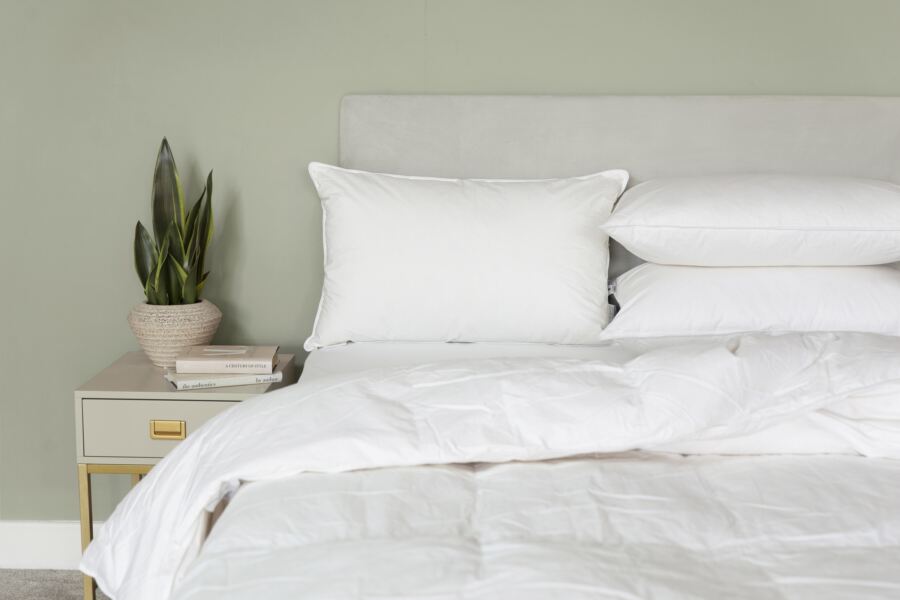
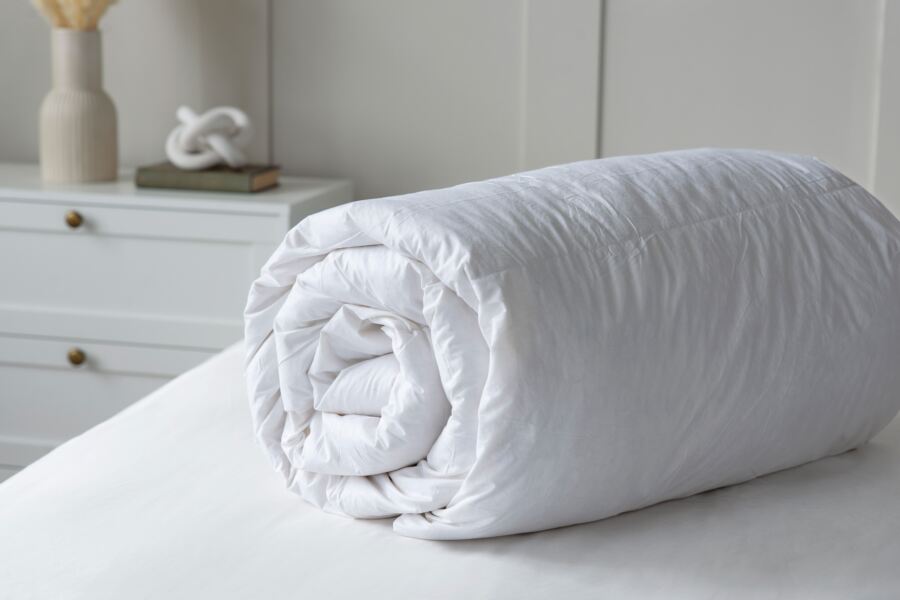
A duvet is the filled part of the bed: a quilted insert holding down, feathers, wool, silk or a synthetic fibre such as microfibre. It is made to be used inside a removable cover rather than on its own. The word comes from the French for down, the soft underlayer of feathers that gave the first duvets their warmth.
Warmth is measured in tog, a rating of how well the filling traps heat rather than how heavy it feels. A 4.5 tog suits summer, 10.5 covers spring and autumn, and 13.5 is a typical winter weight. If you are unsure which to choose, our guide to duvet tog ratings explains how to match warmth to the season.
Because the cover comes off, a duvet is straightforward to keep clean. You wash the duvet cover along with the rest of your bedding, and launder the duvet itself far less often. It also means a single duvet can change its whole appearance with a fresh cover, which is why most British beds pair one duvet with a wardrobe of covers.
What Is a Comforter?
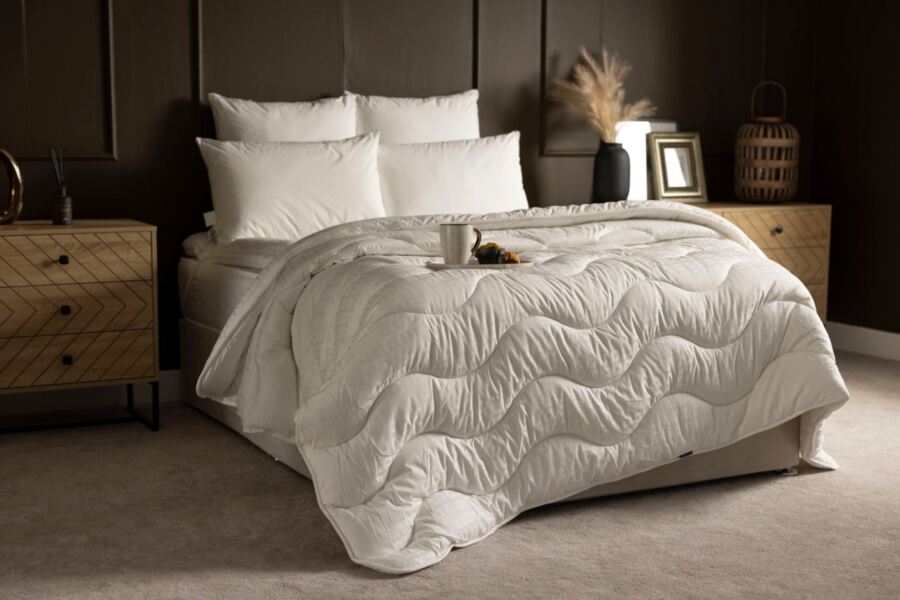
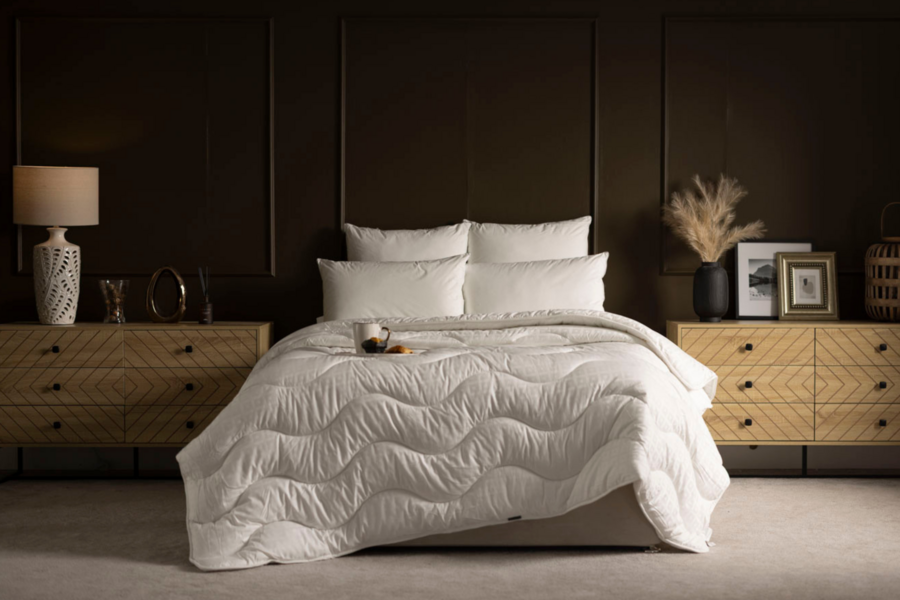
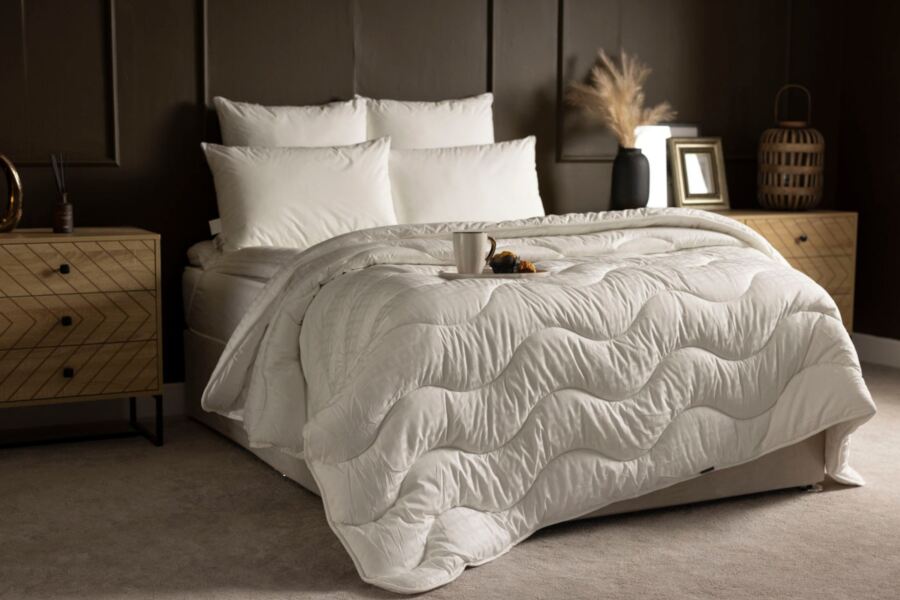
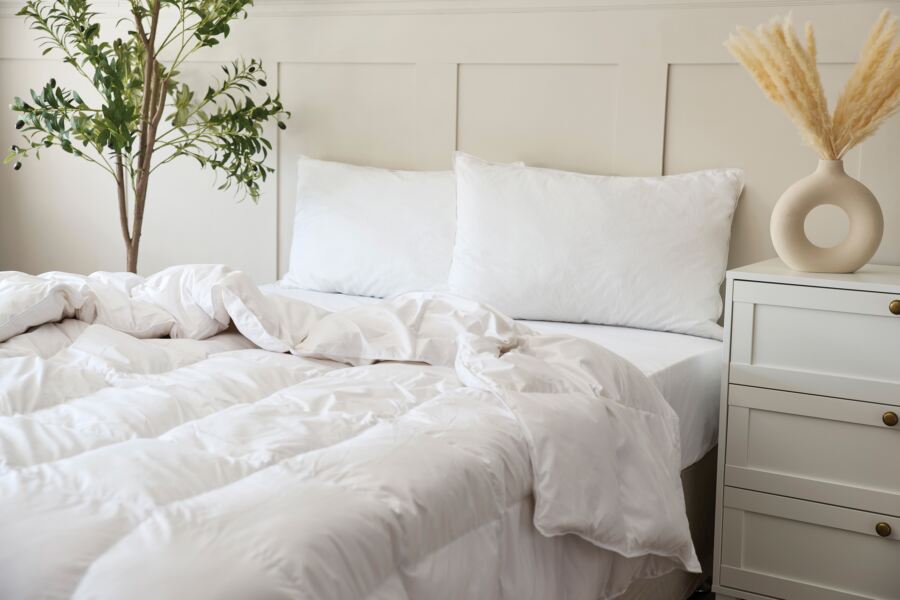
A comforter is a single quilted layer, filled and stitched closed, with its decorative fabric on the outside. There is no separate cover. It sits on top of the bed, usually over a flat sheet, and is often sold as a coordinated set with matching shams and a bed skirt. The term is American, which is why UK shoppers who come across it are usually reading US-written content or browsing imported ranges.
Comforters are generally flatter and less lofty than a high-tog duvet, and their warmth is described by fill weight or fill power rather than tog. Without a removable cover, the whole comforter goes in the wash, or to a dry cleaner if it is large or down-filled. That makes everyday laundering more of a task than simply slipping a cover off.
Duvet vs Comforter: The Key Differences
Both keep you warm at night. The difference is in how they are built, washed, styled and sold.
|
|
Duvet |
Comforter |
|
Warmth |
Rated in tog, from 4.5 to 13.5, so it is easy to match to the season |
Set by fill weight or fill power, usually one fixed level of warmth |
|
Cover |
Used inside a separate, washable cover |
All-in-one, with no separate cover |
|
Washing |
Wash the cover often, the duvet itself rarely |
Wash or dry clean the whole piece |
|
Restyling |
Change the look with a new cover |
Buy a new comforter or set |
|
Feel |
Loftier, drapes softly around the body |
Flatter and quilted, sits on top of the bed |
|
UK availability |
The standard, widely stocked in UK sizes |
Less common, often imported in US sizes |
Which Should You Choose?
For most UK bedrooms, a duvet is the more practical choice. The tog system lets you match warmth to the season, swapping a 4.5 tog in summer for a 13.5 tog in winter, and the removable cover keeps laundry simple. Couples who run at different temperatures can size up or layer, and anyone who likes to refresh a room can do it with a cover rather than a whole new set.
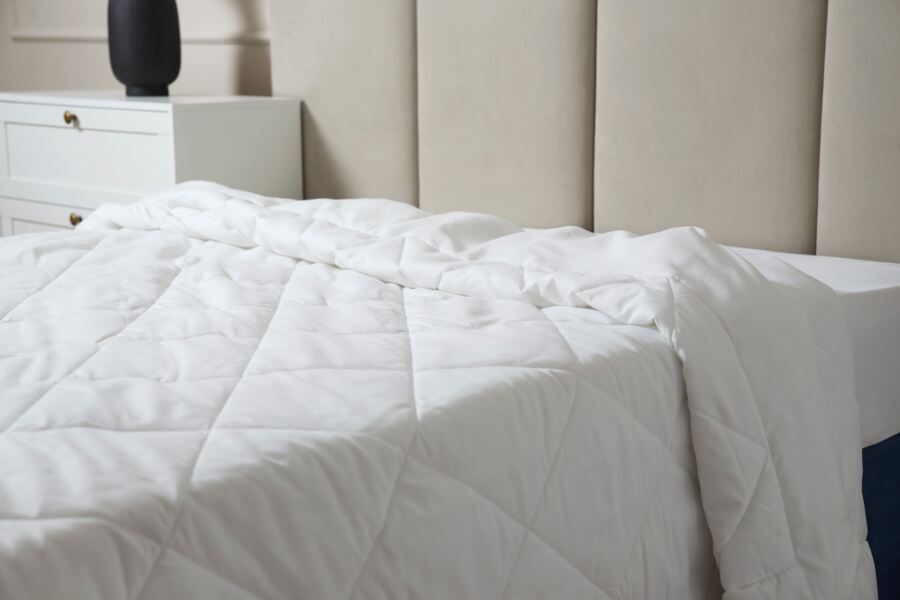
A comforter can suit a guest room or a bed you want to style once and leave, since the look is fixed and there is nothing to assemble. If you like the idea of an all-in-one but want it to fit UK sizing and washing, a coverless duvet is the closest equivalent. It carries a proper tog rating and a finished outer fabric, so it behaves like a comforter while still fitting the British bed it was made for.
Warm sleepers should look at filling and tog before format. A breathable natural filling at a lower tog will sleep cooler than a dense synthetic at the same number, whichever style of cover sits on top.
Belledorm duvets come in natural duck feather and synthetic microfibre fillings across tog ratings for each season, all made to standard UK bed sizes. Pair one with a cover from our duvet cover range and you have a bed that is easy to wash and simple to restyle whenever the mood, or the season, changes.
Duvet vs Comforter FAQs
Is a duvet warmer than a comforter?
Not automatically. Warmth depends on the filling and its rating, not the format. A high-tog duvet, such as a 13.5 tog, will usually be warmer than a standard comforter, while a 4.5 tog summer duvet will feel lighter. The advantage of a duvet is that the tog system makes its warmth clear and easy to match to the time of year.
Can you use a comforter without a cover?
Yes, and that is how a comforter is designed to be used. Its decorative fabric is on the outside, so it sits on the bed as a finished layer with no cover required. The trade-off is laundering, as the whole comforter has to be washed or dry cleaned rather than slipping off a cover, which is why many people add a separate top sheet underneath to keep it fresher for longer.
What is a comforter in the UK?
In the UK, the closest familiar product is a coverless duvet or an all-in-one quilt, since the word comforter is American. A comforter is a single quilted, filled layer used without a separate cover. UK shoppers most often meet the term when reading US content or buying imported bedding, where sizing follows American rather than British bed standards.
Do hotels use duvets or comforters?
UK hotels overwhelmingly use duvets with washable covers, because covers can be stripped and laundered quickly between guests. This is one reason a duvet and a crisp, well-finished cover give that hotel feel at home. Comforters are more common in North American hotels, where the all-in-one style suits their housekeeping routines.
Do you put a sheet under a duvet or a comforter?
With a duvet, a flat sheet is optional, as the washable cover already sits against the skin and is changed regularly. With a comforter, a flat or top sheet is usually recommended, because it gives you a layer to wash often while the comforter itself is laundered far less frequently. Either way, a fitted sheet stays on the mattress underneath.
Is a duvet or comforter better for the UK climate?
A duvet tends to suit the UK better. Changeable British weather makes the tog system genuinely useful, allowing a lighter duvet in summer and a warmer one in winter, and the removable cover makes regular washing easy. A comforter offers a fixed level of warmth, which is less flexible across our distinct seasons.