 Platinum trusted service award
Table of Contents
- Why Choose a Wool Duvet?
- Why Choose a Silk Duvet?
- Wool and Silk vs Feather and Down: Which Should You Choose?
- Caring for a Wool or Silk Duvet
- Wool and Silk Duvet FAQs
- The Natural Option Worth Considering
When people picture a natural duvet, they tend to think of feather and down. Yet two of the most capable natural fillings are neither. Wool and silk are long-established, entirely natural alternatives, and for allergy-conscious sleepers, or anyone who would rather avoid feather and down altogether, they are often the better choice.
Both do something feather and down cannot always manage as well: they regulate temperature and handle moisture in a way that keeps you comfortable through the night. This guide explains what each one offers, how they compare with feather and down, and how to decide which suits you. For the duck versus goose question, our feather and down duvets guide covers that in full.
Why Choose a Wool Duvet?
Wool is one of nature's quietly clever fibres. It has been used in bedding for centuries, and its appeal comes down to how well it manages the two things that most often disturb sleep: temperature and moisture.
Temperature regulation
Wool responds to your body rather than working against it. As you warm up, it draws heat and moisture away; as you cool, it holds warmth in. The effect is a steady, even temperature through the night, with fewer of the too-hot, too-cold swings that cause waking. It also creates a personal micro-climate, which is why couples who run at different temperatures often get on well with a single wool duvet.
Moisture wicking
We lose a surprising amount of moisture as we sleep. Wool absorbs it readily, often cited as up to around a third of its own weight, and releases it into the air rather than holding it against the skin. The result is a duvet that stays dry and fresh, which matters especially for anyone who tends to overheat or perspire at night.
Naturally resistant to allergens
Wool is naturally inhospitable to dust mites, mould and mildew, largely because it does not hold the damp warmth those allergens need. For allergy-conscious sleepers and those with asthma, that makes a wool duvet a sound, low-irritation choice without any chemical treatment.
Durability
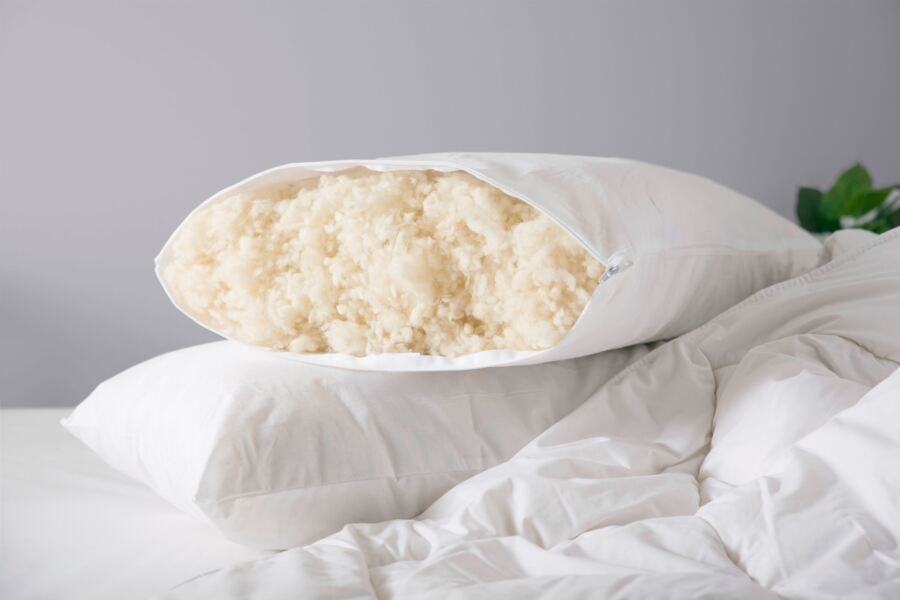
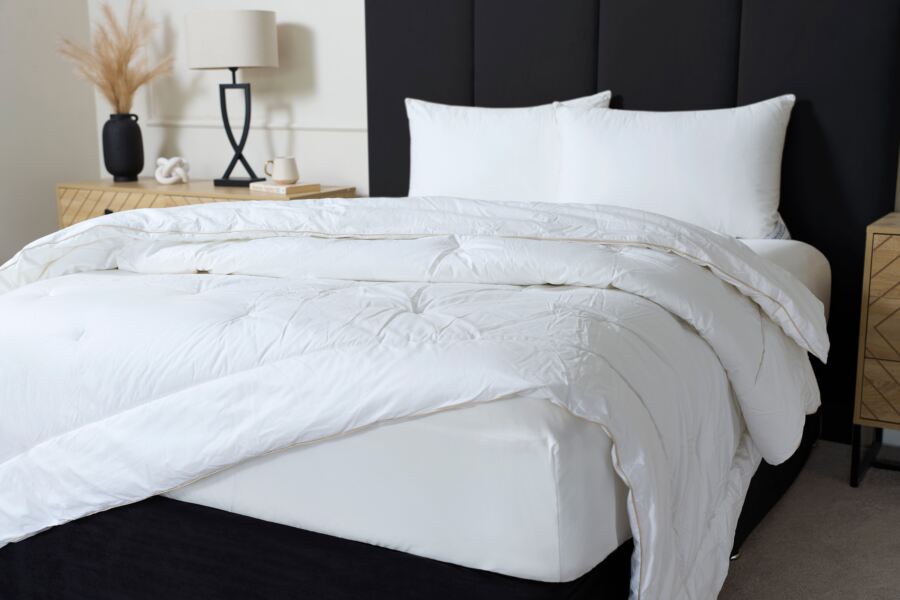
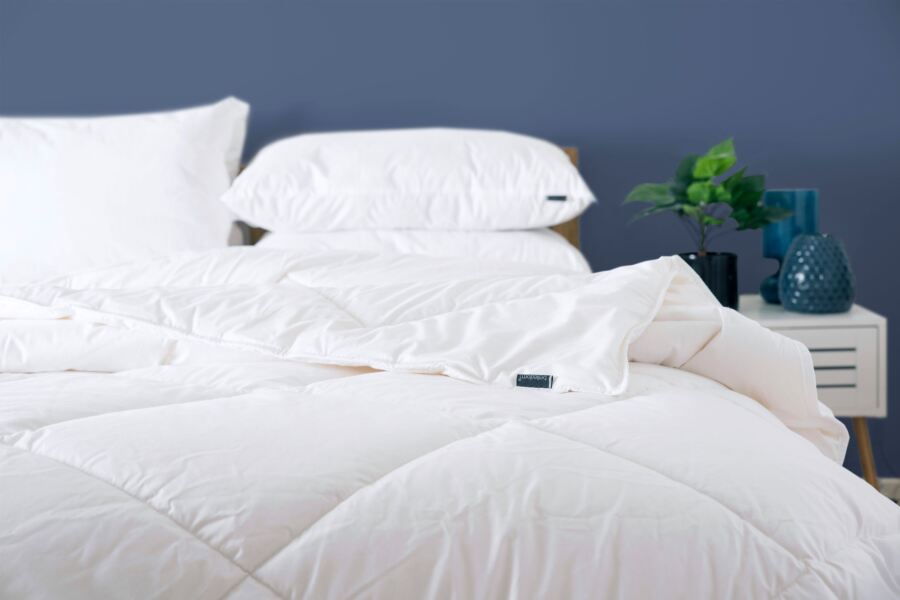
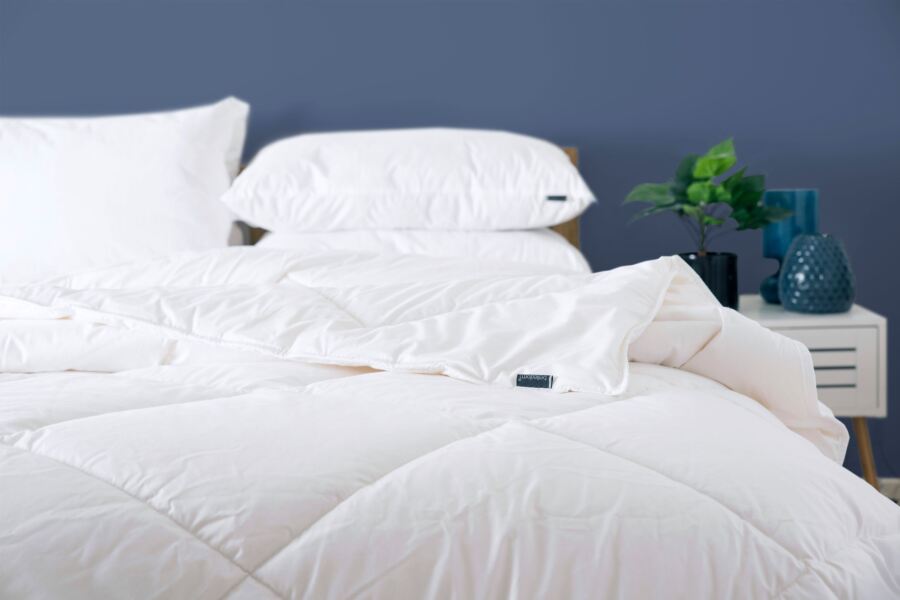
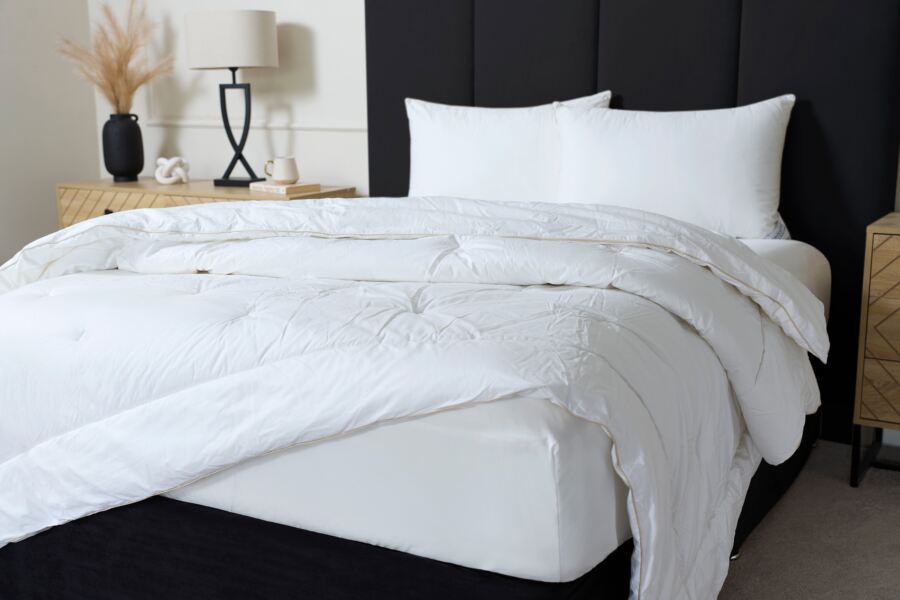
Wool is resilient. A well-made wool duvet, aired regularly and cared for properly, holds its loft and performance for many years, comfortably outlasting most synthetic fills. It is a considered purchase that rewards you over the long term. Belledorm offers wool in three weights, from a lightweight duvet for warmer months to a medium weight for year-round use, including a 100% Australian wool option.
Why Choose a Silk Duvet?
If wool is the all-rounder, silk is the lightweight specialist. Filled with natural silk fibres, a silk duvet offers warmth with almost no weight, which makes it feel quite different to sleep under.
Lightweight warmth
Silk is remarkably light for the warmth it gives. There is very little sensation of weight, just a soft, even layer that drapes closely over the body. For sleepers who find feather and down duvets too heavy or too warm, silk is often the answer.
Ideal for hot sleepers and summer
Silk breathes well and regulates temperature, trapping a little warmth when the room cools and releasing excess heat as it rises. That balance makes it a natural summer duvet and a good match for anyone who sleeps hot. Belledorm's 100% Mulberry silk duvet sits at 3 to 4.5 tog, a genuine warm-weather weight.
A more refined choice
Silk sits at the more refined end of the natural duvet range, both in feel and in the way it is made. Long-strand Mulberry silk, the type used in Belledorm's duvet, is valued for its smooth, even filling and natural sheen. It is also naturally hypoallergenic and resistant to dust mites, so the refinement does not come at the expense of practicality.
Wool and Silk vs Feather and Down: Which Should You Choose?
There is no single winner. The right filling depends on how you sleep and what matters most to you.
- Choose wool if you want year-round temperature regulation, strong moisture control, and a durable, allergy-friendly duvet that suits most sleepers.
- Choose silk if you sleep hot, prefer a very light duvet, or want a natural summer option with a refined feel.
- Choose feather and down if you love a soft, mouldable, insulating duvet and are not sensitive to natural fills.
If you are leaning towards feather and down, our feather and down duvets guide walks through the duck versus goose decision in full.
One honest point worth making: wool and silk both cost more than a basic synthetic duvet. What you are paying for is natural performance and longevity, a duvet that manages temperature and moisture on its own and lasts for years rather than seasons.
Caring for a Wool or Silk Duvet
Both wool and silk ask for less maintenance than you might expect. Neither needs frequent washing. The single most useful thing you can do is air the duvet regularly, ideally outdoors on a dry day, to keep it fresh and lofted.
A new wool or silk duvet can be used straight away; there is no need to wash it first, a good airing is enough. When cleaning is needed, always follow the care label. Belledorm's Mulberry silk duvet, for instance, can be machine washed at 30°C on a gentle cycle, while many wool duvets are best spot cleaned or professionally cleaned. Our duvet buying guide covers care in more detail.
Wool and Silk Duvet FAQs
Are wool duvets better than down?
Neither is universally better; they suit different sleepers. Wool regulates temperature and moisture more actively and is naturally resistant to dust mites, which makes it a strong choice for warm or allergy-conscious sleepers. Down is lighter to loft and feels softer and more insulating, but it can be too warm for some and unsuitable for those with sensitivities. Our feather and down duvets guide explains the down side of that comparison in full.
Is a silk duvet good for hot sleepers?
Yes. Silk is light, breathable and temperature regulating, so it releases excess heat rather than trapping it. A silk duvet, such as Belledorm's 3 to 4.5 tog Mulberry silk, is one of the better natural choices for anyone who overheats at night or wants a comfortable summer duvet.
Are wool duvets hypoallergenic?
Wool is naturally resistant to dust mites, mould and mildew because it does not retain the damp warmth those allergens rely on. This makes wool duvets a sensible option for allergy-conscious sleepers and those with asthma, without the need for chemical treatments. Pairing the duvet with a washable cover and airing it regularly helps further.
How long do wool and silk duvets last?
Both are durable natural fills that comfortably outlast synthetic duvets when cared for well. A quality wool duvet, aired regularly, can last around ten years or more, while Belledorm's Mulberry silk duvet carries a five-year guarantee and, with care, keeps its performance well beyond that. Airing rather than frequent washing is the key to a long life.
What tog is a wool or silk duvet?
Tog measures warmth, not weight or quality. Silk duvets tend to be light in tog, with Belledorm's Mulberry silk at 3 to 4.5 tog, ideal for summer. Wool is often described as all-season, because its natural regulation keeps you comfortable across a wider range of temperatures than the tog number alone suggests. Our duvet tog guide explains how to match tog to the season.
Do you need to wash a new wool or silk duvet before use?
No. A new wool or silk duvet is ready to use straight away, and a gentle airing is all it needs to freshen up. Avoid washing unless the care label calls for it, since over-washing can affect the natural fill. When cleaning is required, follow the manufacturer's instructions closely.
The Natural Option Worth Considering
Feather and down will always have their place, but they are not the only natural option, and for many sleepers they are not the best one. Wool offers steady, year-round comfort and quiet resistance to allergens. Silk offers featherlight warmth for hot sleepers and warmer months. Both are natural, both are durable, and both are worth considering before you assume down is the default.
Explore Belledorm's wool duvets for a temperature-regulating, allergy-friendly choice, or the 100% Mulberry silk duvet for lightweight summer comfort. To see the full range side by side, our natural duvets collection brings them together.