Platinum trusted service award

Table of Contents
- Why the House Gets Cold So Quickly in a Power Cut
- Start With the GOV.UK Be Ready Checklist
- How Bedding Keeps You Warm: It Is Air, Not Weight
- The Bedroom First: Make One Warm Room
- What to Wear to Bed in a Cold House
- The Layers That Do the Work
- A Simple Routine for a Cold Night
- When the Power Comes Back
- Power Cut Warmth FAQs
Why the House Gets Cold So Quickly in a Power Cut
Most central heating in the UK stops the moment the electricity does. A gas boiler still has its gas, but it needs power for the pump, the fan and the controls, so the radiators go cold within an hour or two all the same. Electric blankets, heated throws, oil-filled radiators and fan heaters are off too. In winter, that leaves the house cooling steadily from the moment the lights go out, and the longest stretch of that cooling happens overnight, while everyone is lying still.
So the question in a winter power cut is not how to heat the house. It is how to keep the people in it warm, which is a far more manageable problem. It comes down to one warm room, the right layers on the bed and a few habits that cost nothing.
Two practical points first. Power cuts in England, Scotland and Wales are reported by calling 105, free from any phone, or 03457 643643 in Northern Ireland. And anyone who is older, has a health condition or relies on powered medical equipment can register with their energy network’s Priority Services Register in advance, which means extra support when the power does go off.
Start With the GOV.UK Be Ready Checklist
On 22 October 2026 the Cabinet Office launched Be Ready, a campaign asking households to be ready for three days of disruption, whether from severe weather, a cyber attack or a wide power cut. The advice is deliberately simple: check what you already have, note what your own household relies on, build it up over a few shopping trips, and check it every six months.
The full list is at GOV.UK/BeReady and it is the place to start, because it covers everything from bottled water and a wind-up radio to cash and copies of documents. Under the heading of light and warmth it asks for a torch with spare batteries, blankets, sleeping bags and warm clothing. That is correct, and it is also where a bedding maker can add something useful. Which blankets, which fabrics, in what order, and why one combination keeps a person warm through the night where another leaves them cold by 3am. That is the rest of this guide.
The six-month check is worth adopting as it is, incidentally. It lands close to the two points in the year when most households swap a summer duvet for a winter one, so the two jobs can be done together.
How Bedding Keeps You Warm: It Is Air, Not Weight
Bedding does not generate heat. It slows the rate at which the body loses it, and it does that by holding a layer of still air against the skin. The warmth of a duvet, a blanket or a brushed sheet comes from the air trapped in its fibres, not from its weight. This is why a lofty 13.5 tog down duvet can be lighter than a 4.5 tog synthetic one and still be far warmer.
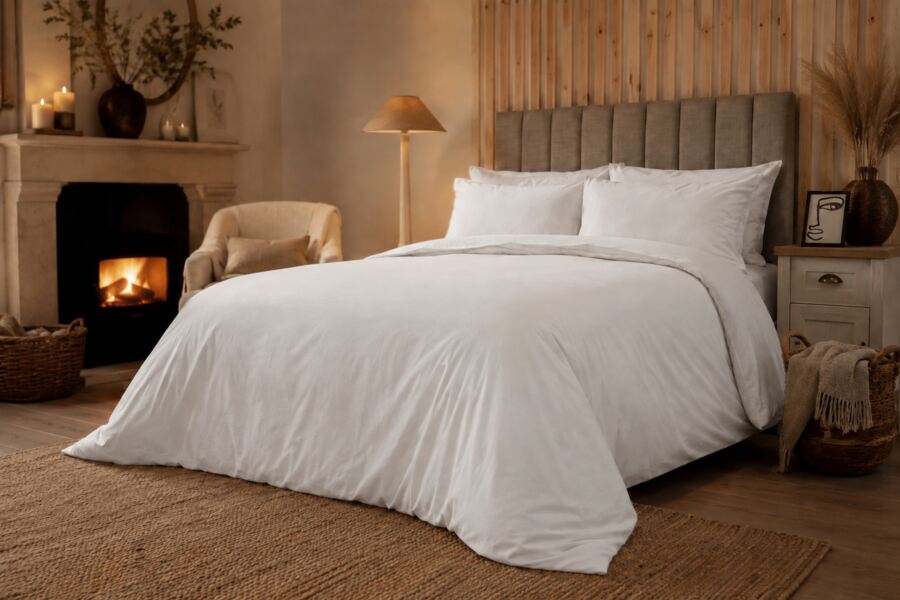
Tog is the UK measure of that insulating ability. It is a measure of thermal resistance, running from a 1.5 tog summer cover to a 13.5 tog winter duvet, and the useful thing about it for a power cut is that tog ratings broadly add up when layers are stacked. An all-seasons duvet works on exactly this principle: a 4.5 tog and a 9 tog clipped together give 13.5 tog. So a 13.5 tog winter duvet with a 1.7 tog fleece blanket laid over it is roughly a 15 tog bed, which is more than enough for an unheated room, provided the layers stay lofted. Our duvet tog guide explains the scale in more detail.
Loft is the caveat. Anything heavy pressing down on a down or feather duvet squeezes the air out of it and cuts its warmth, so heavy blankets belong underneath the body or at the foot of the bed, not on top of the duvet. A lighter fleece or faux fur throw on top is different: it adds its own trapped air and holds in the warm air rising off the duvet without flattening it.
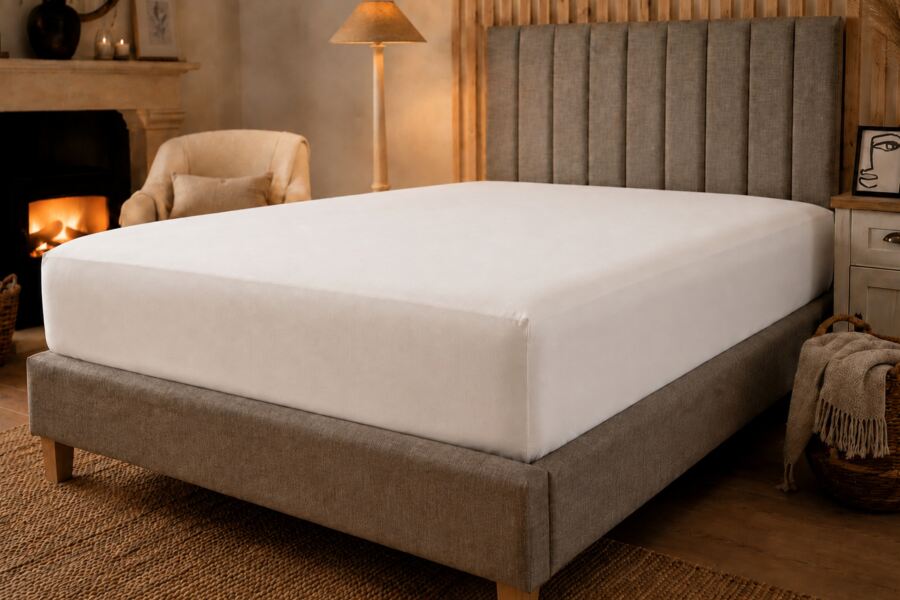
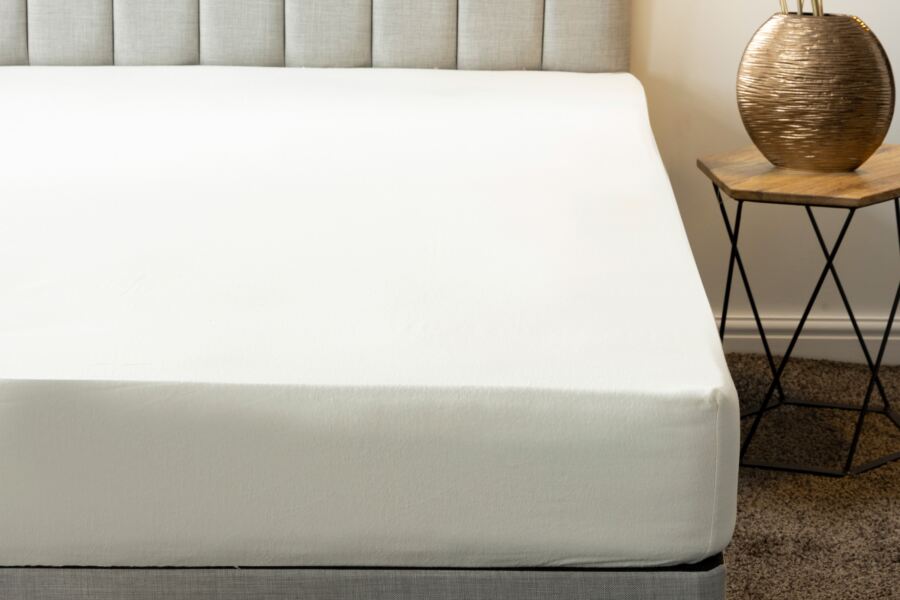
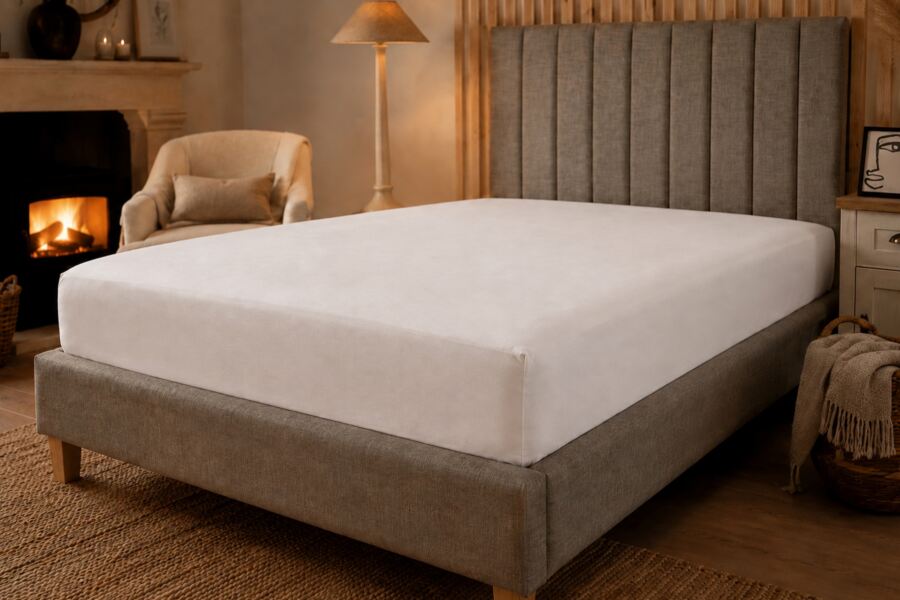
The layer underneath is the one most people forget. A cold mattress draws heat downward all night. A mattress topper, or a folded blanket laid under the fitted sheet, makes a noticeable difference, in the same way that a sleeping mat matters more than a sleeping bag to anyone who has camped in October.
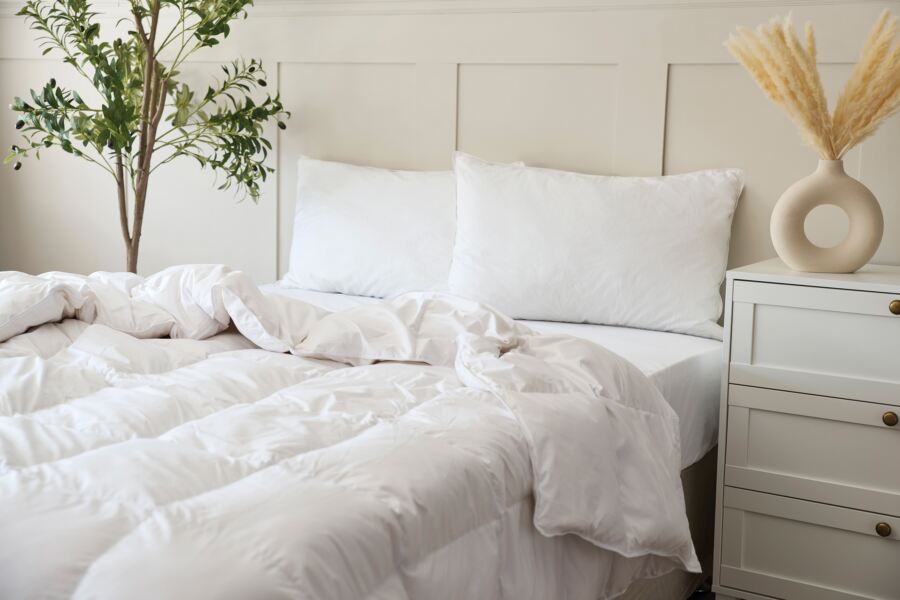

The Bedroom First: Make One Warm Room
Heating a house by candlelight is not possible, but keeping one room comfortable is. Choose the smallest bedroom with the best curtains, close the door, draw the curtains at dusk and roll a towel along the gap under the door. If it is very cold, the whole household sleeping in one room is a sensible old habit worth reviving. Each person is a small heater, and a child in the bed will have no complaints.
The NHS advises that anyone aged 65 or over, or living with a heart or lung condition, should keep the rooms they use at 18°C or above, and that a bedroom should ideally hold 18°C through the night. An unheated room in January will not manage that, which is precisely why the bed itself has to make up the difference. A healthy adult under 65 can be comfortable in a cooler room, as long as they are warm in bed.
A hot water bottle filled before the kettle loses its last charge, or from a pan on a gas hob lit with a match, is the single most effective thing to put in a cold bed. Fill a flask at the same time. A warm drink and something to eat before bed matter more than they sound: the NHS notes that eating regularly helps the body keep itself warm.
One safety line that bears repeating. Never bring a barbecue, camping stove, patio heater or generator indoors, however cold it gets. The carbon monoxide risk is real and it is the most common serious harm in a winter power cut. Candles should stay well away from bedding, and in a bedroom a torch is the better light. GOV.UK covers all of this and is the authority to follow.
What to Wear to Bed in a Cold House
The same principle that governs bedding governs clothing: several thin layers trap more air than one thick one. A cotton or wool base layer, a long-sleeved top, soft trousers and a pair of dry socks will keep most people comfortable under the layered bed described above.
Change out of the day’s clothes first. Fabric worn all day holds moisture, and damp fabric pulls heat away from the skin far faster than dry fabric does. For the same reason, it is possible to overdo it. Someone who gets into a 15 tog bed wearing a coat will sweat, the sweat will cool, and they will wake cold at 2am wondering what went wrong. Enough to be comfortable, no more.
A hat is a small thing with a large effect in bed. The head is usually the only part of the body left uncovered by the duvet, and an uncovered head loses heat like any other uncovered part of the body. A soft beanie, nothing tight, solves it.
The Layers That Do the Work
With the principles clear, here is how we would make up a bed for a cold room, in the order the layers go on.
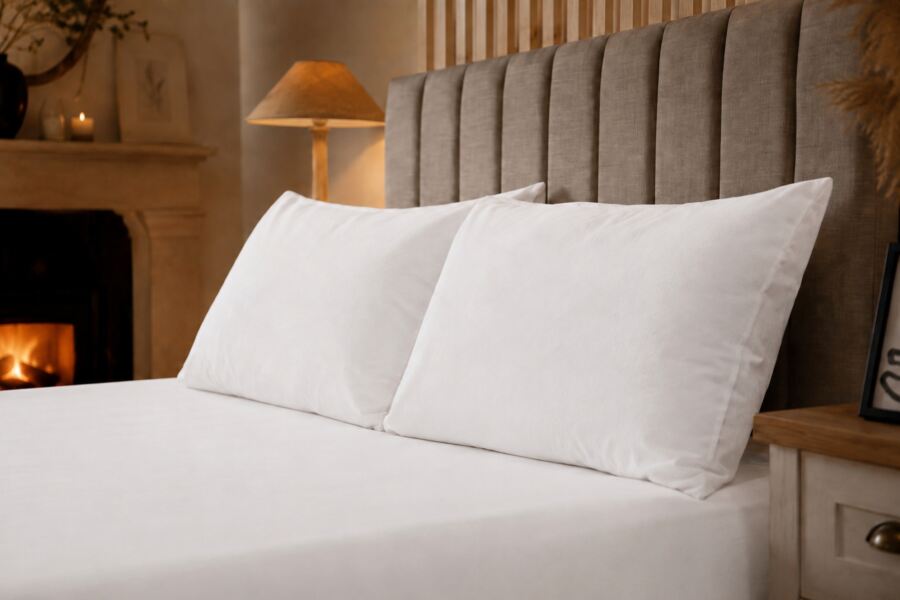
Against the skin, brushed cotton. Our brushed cotton flannelette sheets are woven from a 165gsm cotton, heavier than a standard percale, and then brushed on both sides to raise the fibres. Those raised fibres are what trap air, which is why the sheet feels warm the second you slide between the layers rather than cold for the first ten minutes. Because it is 100% cotton it still breathes and wicks, so there is none of the clammy feel that synthetic winter sheets can give. In a power cut, the sheet is the layer that decides how cold the bed feels getting in. This is the one to get right.
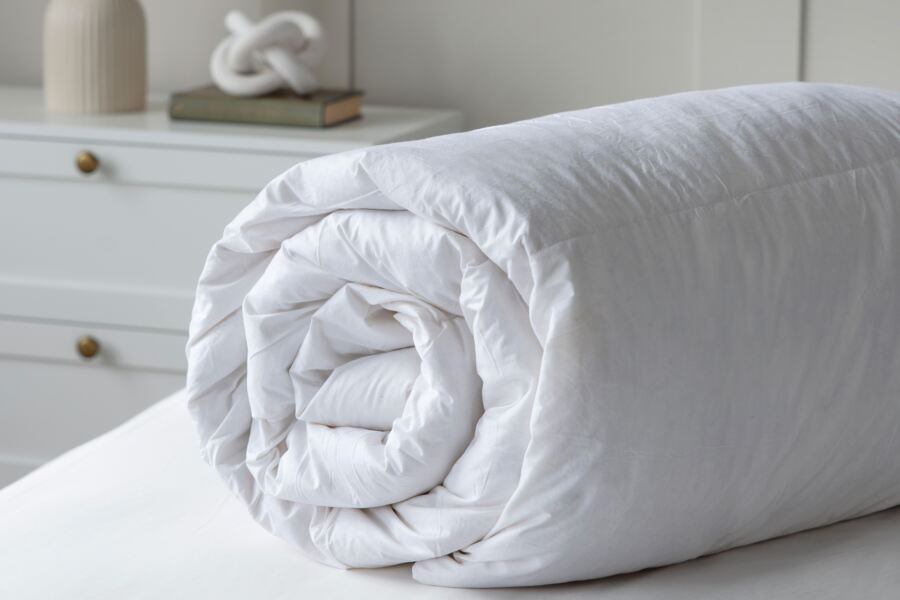
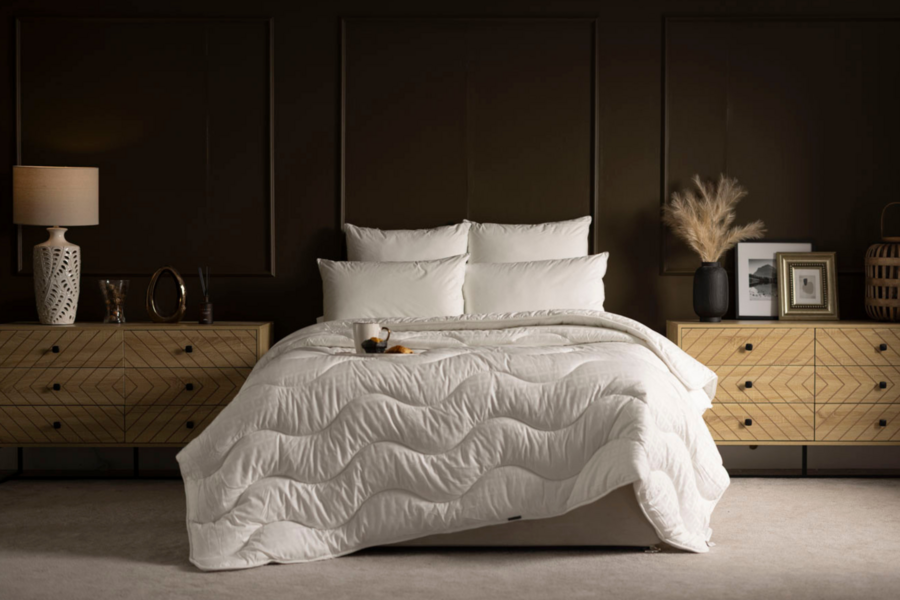
Over that, a winter duvet. A 13.5 tog duvet is the warmest rating we make, and it is the one to keep in the cupboard for cold snaps and power cuts even if a 10.5 tog is the usual winter choice in a heated house. Duck down and feather holds the most air for its weight, so it feels light for its warmth; a microfibre filling gives the same tog in a duvet that can go through a 40°C wash afterwards, which is worth having if the bedding has been slept in for three nights by a whole family.
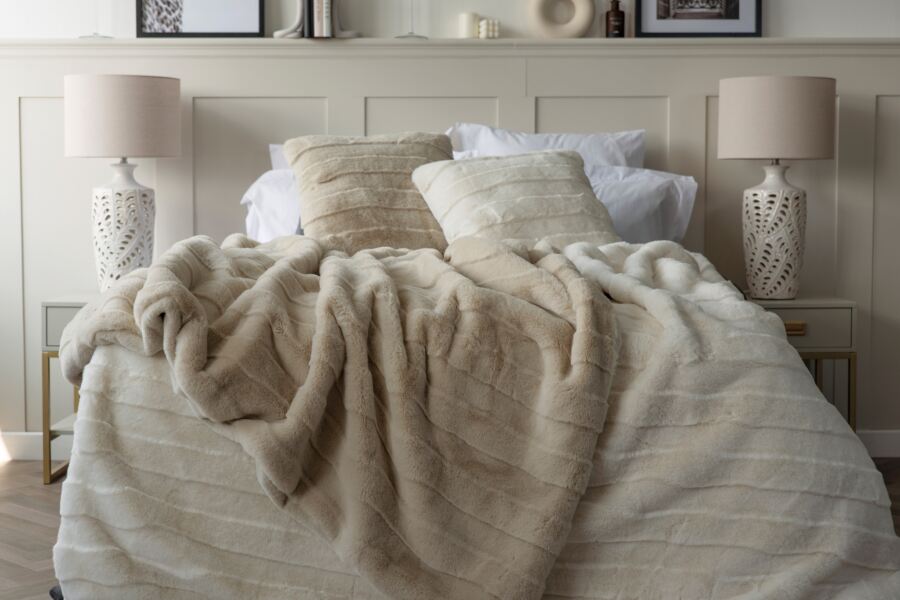
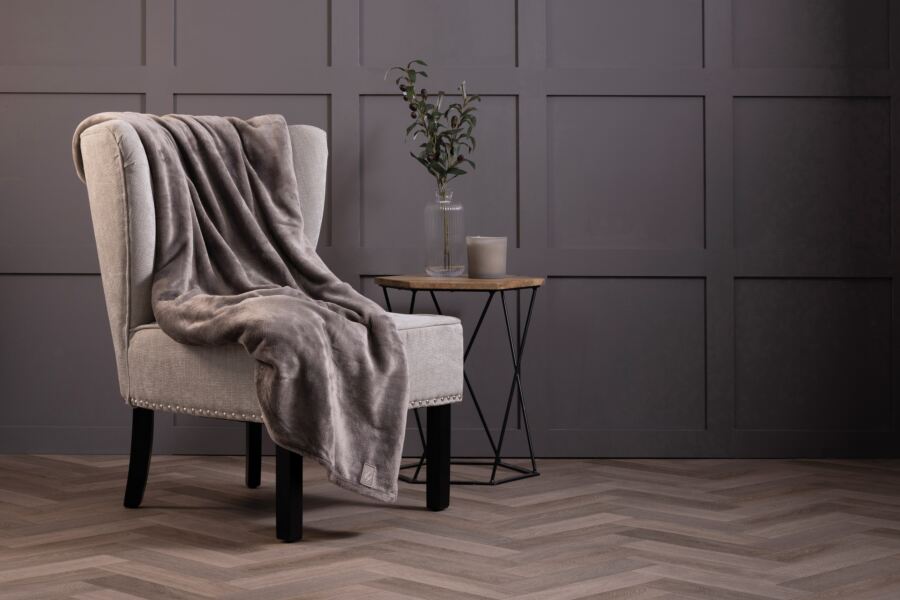
On top, a throw. The Heat Holders fleece blanket is the one we would reach for first, because it is the only one of our throws with an official tog rating, 1.7 tog, and it is cut generously at 180cm by 200cm, with a 240cm by 270cm size in some colours that will cover a super king. The fleece has a smooth face and a brushed thermal reverse, it weighs very little, and it washes at 40°C and dries quickly. Laid over the duvet it adds its own insulation without flattening the loft beneath. In the day, it goes round the shoulders on the sofa.
Faux fur throws earn their place for the same reason. The Alaska fur throw, at 150cm by 200cm, is large enough to lie across a double bed and its deep pile holds a good deal of air. The Alberta faux fur throw is smaller, at 127cm by 152cm, with an 850gsm faux fur face and a velvet reverse, which makes it a dense, substantial lap throw for the daytime rather than a bed layer. Both are machine washable. The full range is at throws.
A Simple Routine for a Cold Night
Most of this is best done while there is still daylight.
• Make the bed up with the full set of layers before dark, so nobody is hunting for a blanket by torchlight.
• Fill a hot water bottle and a flask while there is a way to boil water safely.
• Draw the curtains, close the bedroom door and block the draught beneath it.
• Eat something warm and have a hot drink before bed.
• Keep a torch and a charged power bank by the bed, not a candle.
• Check on older neighbours before you turn in. The Be Ready advice to swap contact details with neighbours is one of its better ideas.
When the Power Comes Back
Open the window for ten minutes once the heating is running again, because a cold, closed room with several people breathing in it will have put a good deal of moisture into the air and into the bedding. Wash and fully dry anything that feels damp. Natural duvets are better aired than washed; synthetic ones can go in the machine.
Once the heating is back, the NHS advises using either a hot water bottle or an electric blanket in bed, never both at the same time. And it is a sensible moment to restock whatever got used and put the six-month reminder in the diary, as Be Ready suggests.
Power Cut Warmth FAQs
Does a higher tog duvet keep you warm without heating?
Yes, within limits. A 13.5 tog duvet on its own will keep a healthy adult warm in a bedroom that has cooled well below its usual temperature, but it will not do it in a room approaching freezing. Tog measures thermal resistance, and ratings broadly add up when layers are stacked, so a 13.5 tog duvet with a 1.7 tog fleece blanket over it gives roughly 15 tog of insulation. What the duvet cannot do is stop heat loss into a cold mattress, which is why a topper or a folded blanket under the fitted sheet matters as much as the duvet on top.
Do brushed cotton sheets actually make a difference?
Yes, and mainly in the first ten minutes. Brushed cotton feels warm on contact, where a smooth percale sheet feels cold until body heat has warmed it through. The brushing raises the cotton fibres on both sides of the fabric, and the raised fibres trap a layer of air against the skin. Belledorm’s brushed cotton is woven at 165gsm, heavier than a standard sheet, and because it is still 100% cotton it continues to breathe and wick moisture, so it avoids the clamminess of synthetic thermal sheets.
How many blankets do you need per person?
There is no official number, and the GOV.UK Be Ready checklist does not give one. A sensible minimum is one blanket or throw per person on top of normal winter bedding, plus one spare per bed. In practice that means a winter duvet, a sheet and one throw for each sleeper, with a second throw available for the daytime or for a cold snap that outlasts the hot water bottle. Children and older adults lose heat faster than healthy adults and should be given the spare first.
Wool or fleece: which holds warmth better?
Fleece gives more warmth for its weight; wool keeps more of its warmth when damp. A polyester fleece such as the 1.7 tog Heat Holders blanket traps a great deal of air for very little weight, dries quickly and can be washed easily after a few nights’ use. Wool absorbs moisture without feeling wet and still insulates when it does, and it is naturally resistant to catching fire, which is worth bearing in mind in a house lit by candles. For a short power cut, a light fleece over the duvet is the more practical choice; a wool blanket is the better one to lay underneath the body or over the feet.
How do you layer bedding for a cold room?
Start underneath and work up, with the lofty layer in the middle and the lightest layer on top. A mattress topper or folded blanket goes under the fitted sheet, then a brushed cotton sheet against the skin, then the winter duvet, then a light fleece or faux fur throw over the duvet. Heavy blankets should not go on top of a down or feather duvet, because their weight compresses the filling and squeezes out the air that does the insulating. A hot water bottle placed at the feet before getting in warms the whole stack from inside.
Does central heating work in a power cut?
Usually not. A gas boiler needs electricity for its pump, fan and controls, so the heating stops even though the gas supply is unaffected. Oil boilers, heat pumps and electric heating all stop too. A real fire or a wood-burning stove will still work, but any gas fire with an electric ignition may not. Power cuts can be reported on 105 in England, Scotland and Wales, free from any phone, and on 03457 643643 in Northern Ireland.
What temperature should a bedroom be in winter?
The NHS recommends at least 18°C for anyone aged 65 or over or living with a heart or lung condition, and suggests keeping a bedroom at 18°C through the night where possible. Healthy adults under 65 can safely sleep in a cooler room as long as they are comfortable. In a power cut the room will fall below this, so the bed has to make up the difference with layers, a hot water bottle and a warm head covering. In normal conditions, our partners at The Sleep Charity recommend a cool bedroom of 16 to 18°C with a warm bed, rather than an overheated room.
Is it safe to use a camping stove or candles to warm a room?
No for stoves, and only with care for candles. Barbecues, camping stoves, patio heaters and generators must never be used indoors, because they produce carbon monoxide, which is odourless and can be fatal in a closed room. Candles give almost no useful heat and should be kept well away from bedding, curtains and throws, and never left burning in a bedroom. A torch and a charged power bank, both on the GOV.UK Be Ready checklist, are the safer sources of light.
Three nights without power is uncomfortable, but it is not something to fear. A warm bed does not depend on the heating. It depends on a few layers chosen for how they hold air, put on in the right order, and a household that has taken ten minutes in October to make sure they are in the cupboard.