Platinum trusted service award

Table of Contents
- Why does the bedroom need to be cool?
- Why the temperature under the duvet matters as much as the room
- What raises your body temperature before bed?
- Why do women feel the cold more than men?
- Finding the right temperature for you
- Which duvet is right for you?
- Should couples sleep under separate duvets?
- Other ways to regulate your temperature at night
- Separate duvets and sleep temperature FAQs
The bedroom environment plays a major role in good sleep, and temperature is one of the most important factors. However, there seems to be a lot of misunderstanding about temperature and sleep.
Why does the bedroom need to be cool?
Many experts say the ideal bedroom temperature is around 16 to 18°C. However, for most people, that is difficult to achieve. Even the most sophisticated air-conditioning system would struggle to maintain a stable 18°C overnight, let alone 16°C on a hot night. And on a cold night, you might spend a lot of energy heating the whole house just to warm the bedroom.
The reason the bedroom needs to be cool is that during the night the body needs to lose about 1°C. This heat is ordinarily lost mainly through the head and face, as they are the only bits that usually stick out from under the duvet, and so a cool bedroom helps this heat loss along.
If the room is too hot, it becomes harder to lose body heat, which can disrupt sleep. Equally, if the room is too cold, you will lose too much heat, which can also disrupt sleep. So while the bedroom should be cool, the exact temperature is a matter of personal preference.

Why the temperature under the duvet matters as much as the room
Importantly, it is not just the room temperature that matters for getting good sleep. The temperature in your direct sleeping environment, that is, under the duvet, is equally important. This should be close to a thermoneutral temperature of approximately 29°C.
On most nights, your body will act like one big, fleshy hot water bottle and will ordinarily heat the space under the duvet to this temperature just by being in bed. The problem is that your bed partner also produces heat, so sleeping under the same duvet can be uncomfortable.
One main issue is that many people sleep in a standard UK double bed, which is 4ft 6in wide. This means you and your bed partner each have 2ft 3in of space to sleep in, so you are very close to each other. The single bed your children sleep in is either 2ft 6in or 3ft wide, which means that, as an adult, you each have either 3in or 9in less space to sleep in than your child. This can significantly affect the temperature of the sleeping environment.
What raises your body temperature before bed?
Other factors that can affect your body temperature before you go to bed include eating a large, fatty, sugary meal too late at night or drinking a lot of alcohol. This is because your body has to burn off these calories as it digests them, which raises your body temperature. This means there is additional body heat for you to lose, and this can affect your ability to sleep well.
In some rooms this might not be too much of a problem, but in others you may spend the night tossing and turning. If you are too hot under the duvet, your body has a harder time losing this heat, which can again disrupt sleep. The same is true if you are too cold, as the body has to work hard to maintain its optimal temperature.
Why do women feel the cold more than men?
Another consideration is that individuals often experience temperature differently, with women seemingly more sensitive to cold. Interestingly, some biological differences between men and women may explain why they perceive heat differently. These factors include hormone levels, metabolic rate, muscle mass, body fat distribution and body surface area. Other factors that can affect your body's temperature regulation include the medication you take, the time of day and stress levels.
It is recognised that women generally have a slightly higher core body temperature than men, which would suggest they should feel warmer. However, the opposite is true. If your body is warm, chilly air can feel even colder in contrast. Studies have shown that while men typically feel comfortable in rooms at around 22°C, the average woman's ideal temperature is 25°C. And although women's core body temperature may be higher, some evidence suggests that women's hands can be as much as 1.5°C colder than men's, which may also make them more likely to feel cold.


Hormones and metabolic rate
Higher oestrogen levels can make women feel colder, so women on hormonal birth control containing oestrogen may have a greater experience of the cold. Body temperature also fluctuates across the menstrual cycle as oestrogen and progesterone levels change.
A high metabolic rate means you burn food faster to fuel the body, which increases body temperature. On average, men's metabolic rate is 23% higher than women's.
Menopause and hot flushes
Finally, one major influence of temperature on sleep can be seen in women going through menopause. Hot flushes are thought to occur in 60 to 80% of women during menopause. They cause a sensation of heat in the upper body, particularly the face, neck and head. A person may feel hot and sweaty, with palpitations and flushing. This can lead to anxiety and may even cause chills, despite feeling hot.
So it is not surprising that many women report disturbed sleep due to night-time awakenings from hot flushes. The frequency of flushes can vary widely, with some women experiencing them as often as every hour, while others experience them as infrequently as once a week or fortnight. Belledorm has written separately about bedding for perimenopause, and much of what follows applies just as well.
Finding the right temperature for you
Getting the right temperature means finding the right combination of air temperature, duvets and bedclothes to achieve the right result. If that means you wear bed socks (don't laugh; wearing bed socks has been shown to help sleep when it is cold) but keep the window open, so be it.
As mentioned, your bed partner can also complicate the right temperature, as they will no doubt need a different combination of bedding and window opening than you to reach their comfortable sleep temperature. This can lead to arguments about whether the window is open or closed, how warm the duvet is, and whether pyjamas are worn.
Should you sleep with the window open?
Some people insist on keeping the window open even on the coldest nights, and science supports this. The bedroom shouldn't be stuffy; fresh air helps with sleep. Opening the window lowers carbon dioxide levels in the air, which has been shown to improve sleep quality.
What to wear in bed when you are too hot
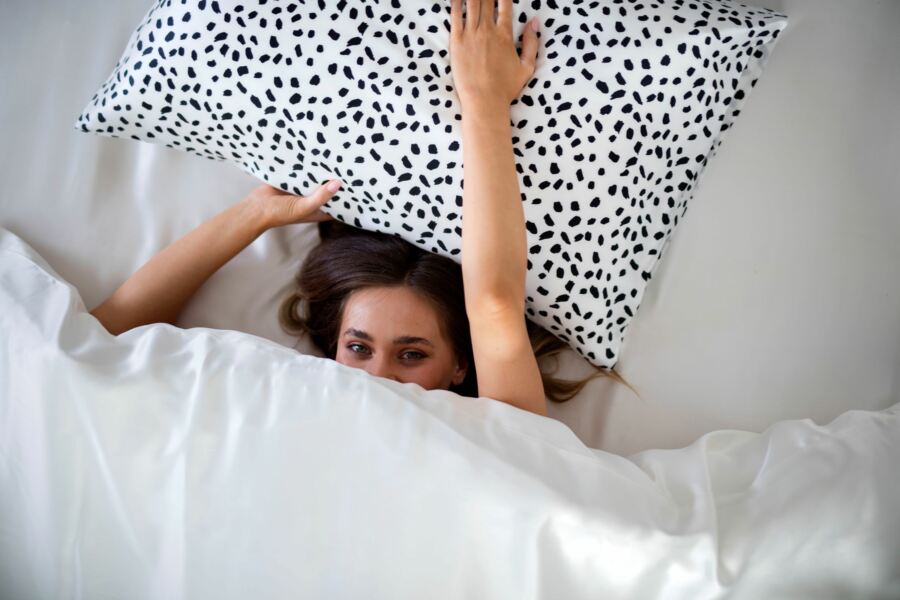
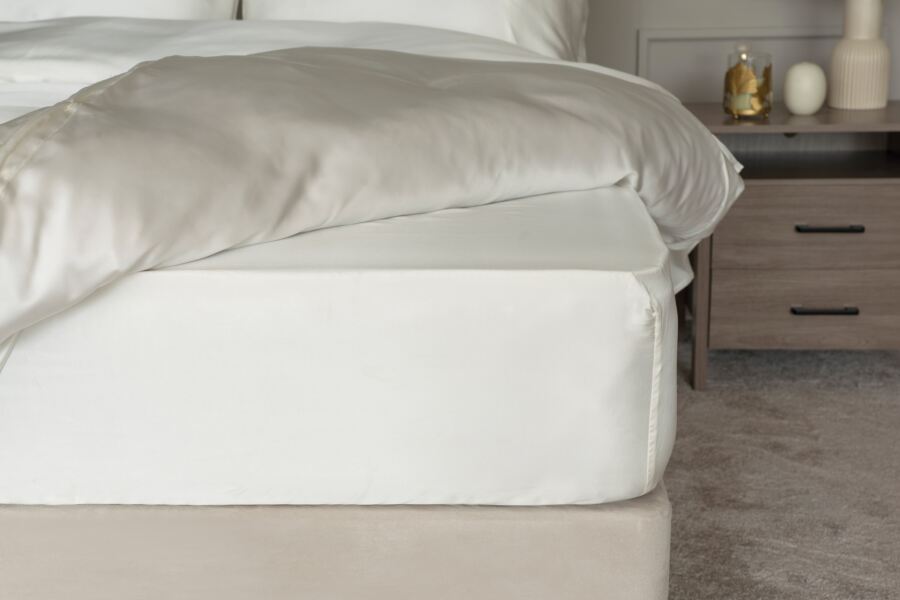
Although it may seem counterintuitive, wearing pyjamas made from natural fibres is a good way to deal with the heat. Sweating is part of the body's cooling mechanism; however, if sweat stays on the skin, as it would if you slept naked, it could shut down this mechanism. Natural fibres help moisture evaporate from the skin, helping the body's natural cooling mechanism to keep working optimally. For similar reasons, natural fibre sheets, whether cotton, silk or bamboo, will wick away moisture and so help regulate temperature.

Choose pillows that let heat escape
Because a lot of your heat is lost through your head and face, you don't want your pillows to make it difficult to lose heat and regulate body temperature. Foam and synthetic fillings can feel very warm for some.
Which duvet is right for you?
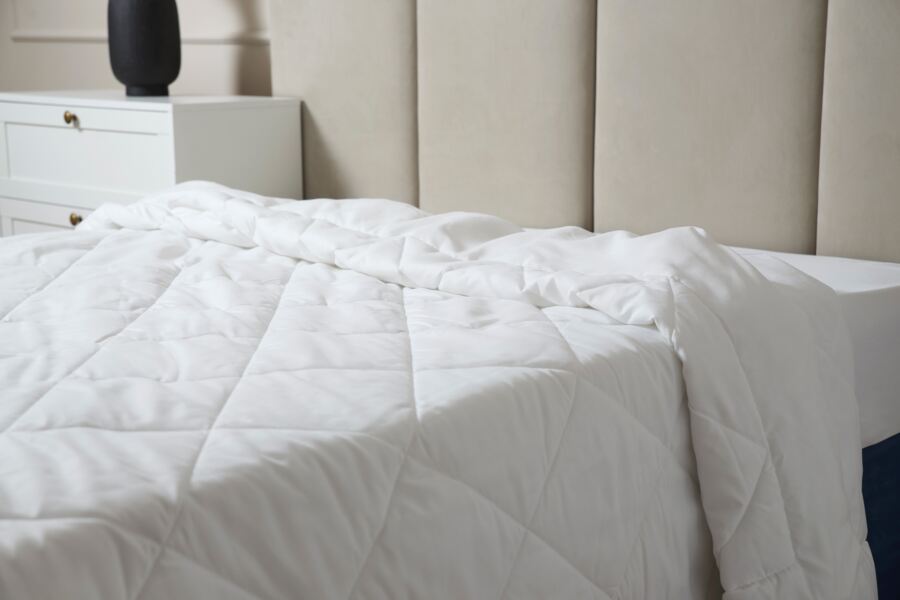
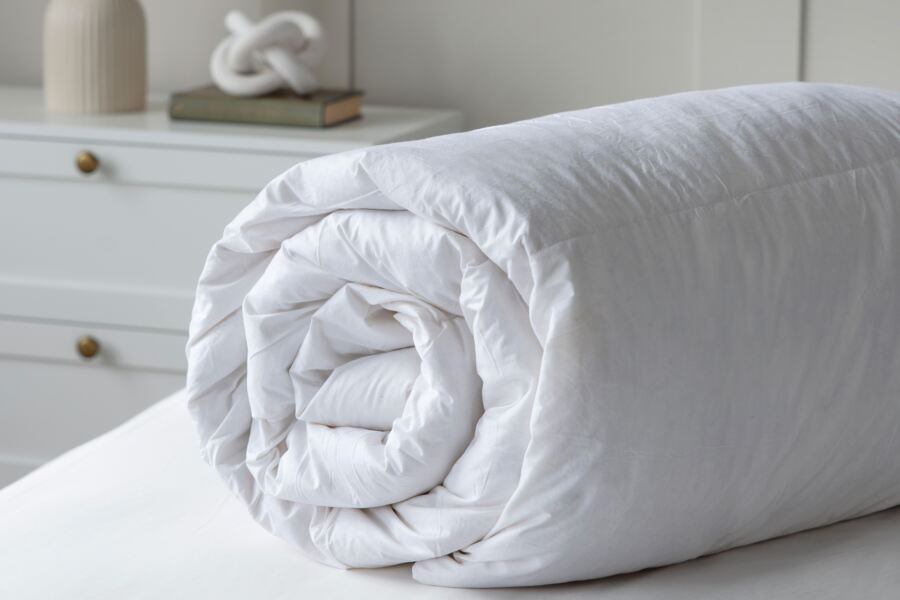
A duvet that is too warm or too cool can affect how much heat your body loses at night, making it harder to sleep well. Most duvets use a standard, meaningful classification system, the tog rating, so for most fillings you know a particular tog is designed to provide a particular level of warmth. However, wool duvets are usually sold by the weight of their filling or warmth rather than a specific tog, so you will see them described as 'heavy weight', 'autumn/winter', 'light weight' or 'spring/summer' versions.
Should couples sleep under separate duvets?
Again, these can be points of contention between partners, with each partner wanting different levels of warmth or different fibre and filling preferences. Some companies offer duvets that have different tog ratings on each side.
However, a better solution, as it avoids that cold air channel down the middle of the bed, is to use individual duvets on a double bed. This lets each person have the optimal cover while avoiding middle-of-the-night duvet tussles between bed partners.
Using two duvets on a bed is common in countries like the Netherlands, Denmark, Austria and Switzerland, and you may have come across them if you have stayed in hotels there. It may seem odd that we still use just one large duvet, forcing both parties to compromise on their ideal sleep environment.
Other ways to regulate your temperature at night
Finally, there are a few other things that you can do to help regulate temperature.
● Leave three to four hours between your last big meal and your intended bedtime.
● Don't drink too much alcohol.
● If you exercise, let your body temperature and heart rate return to normal before bed.
Although it may seem counterintuitive on a hot night, a warm bath or shower before bed can help you sleep, because heating the skin tells the body not to produce additional heat. A cool shower or bath would signal that more heat is needed, the exact opposite of what is needed for good sleep.
On a cold night, one of the most effective, cheapest and most energy-efficient ways to stay warm is to wear a nightcap, coupled with bed socks. It may seem old-fashioned, but it is highly effective at regulating heat loss and doesn't require you to heat the whole house.
Finding the right temperature for optimal sleep may seem complex, but it can lead to better, longer sleep, so finding a solution that works for both of you can be very beneficial.
Separate duvets and sleep temperature FAQs
Should couples sleep under separate duvets?
For many couples, yes. Two people under one duvet produce twice the heat in a confined space, and each will have a different idea of what feels comfortable. Separate duvets allow each person to choose their own warmth and filling, and they put an end to the duvet being pulled away in the night. It is a long-established habit in countries such as the Netherlands, Denmark, Austria and Switzerland, where it is considered entirely normal.
What is the Scandinavian sleep method?
The Scandinavian sleep method is simply the practice of two people sharing a bed but each sleeping under their own single duvet, rather than one large duvet across the whole bed. The name has become popular online in recent years, but the habit itself is common across much of northern and central Europe. Its appeal is practical: each sleeper controls their own temperature, and neither is woken by the other moving or taking the covers.
Why is my partner always hot when I am cold in bed?
Men and women often perceive temperature differently, and the reasons are largely biological. Hormone levels, metabolic rate, muscle mass, body fat distribution and body surface area all play a part. Men typically have a higher metabolic rate, which generates more heat, while women's hands can be noticeably colder than men's. Add in a bed where two people are lying a few inches apart, and it is not surprising that one feels too warm while the other feels chilly.
What size duvets do you need for two duvets on one bed?
Two single duvets are the usual choice for a double or king size bed. Each measures around 135cm wide, so there is plenty to tuck in or drape over the side, and the two sit comfortably next to each other without a wide gap. Single duvet covers are widely available, so each person can also choose their own fabric and weight of cover.
Does sleeping with the window open help you sleep?
A stuffy bedroom is not good for sleep, and there is evidence that fresh air helps. Opening a window lowers the level of carbon dioxide in the room, and studies have found that lower carbon dioxide levels are associated with better sleep quality. On a cold night, the answer is to keep the air fresh while warming the bed rather than the room, with a suitable duvet, bed socks and natural fibre nightwear.
Do bed socks really help you sleep?
They do, particularly on cold nights. Warming the feet helps the blood vessels in the skin to open, which allows the body to lose the small amount of core heat it needs to lose in order to fall asleep. Research has found that wearing socks in bed can help people fall asleep faster and wake less often in a cool room. Combined with a nightcap, it is also one of the cheapest and most energy-efficient ways of staying warm without heating the whole house.