 Platinum trusted service award
Table of Contents
- Temperature: the biggest single factor
- Fabric: what touches your skin matters
- The duvet: tog, filling and weight
- Pillows: support, loft and replacement
- Allergies and skin irritation
- Hygiene: how clean bedding shapes sleep
- Signs your bedding needs replacing
- Does bedding affect sleep quality FAQs
Most conversations about better sleep start with screens, caffeine and stress. These are real factors, but they are also the obvious ones. The less obvious factor is the one a person lies in for roughly a third of every 24 hours: the bed itself, and specifically, the bedding on it.
A 2024 systematic review published in the Journal of Sleep Research examined how different fibre types in sleepwear and bedding affect sleep quality. The findings confirmed what textile specialists and sleep researchers have long suspected: the material next to the skin, the filling inside the duvet, and the conditions they create around the body measurably influence sleep onset, sleep depth, and the number of times a person wakes in the night.
Bedding is not the whole story. But it is the part of the sleep environment most easily changed, and often the part changed least often. What follows is a practical look at the five ways bedding affects sleep, and what to do about each one.
Temperature: the biggest single factor
Body temperature follows a predictable curve through the night. It drops as sleep begins, reaches its lowest point in the early hours, and rises again toward waking. For deep, restorative sleep to happen, the body needs that drop to proceed without interruption. The Sleep Charity recommends a bedroom temperature of 16 to 18°C as the range most conducive to sleep.
Bedding sits at the centre of this. A duvet that traps too much heat pushes core temperature up and pulls the sleeper into lighter sleep stages or full waking. A sheet that does not breathe holds moisture against the skin, creating a clammy, unsettled feeling that the body reads as a signal to wake.
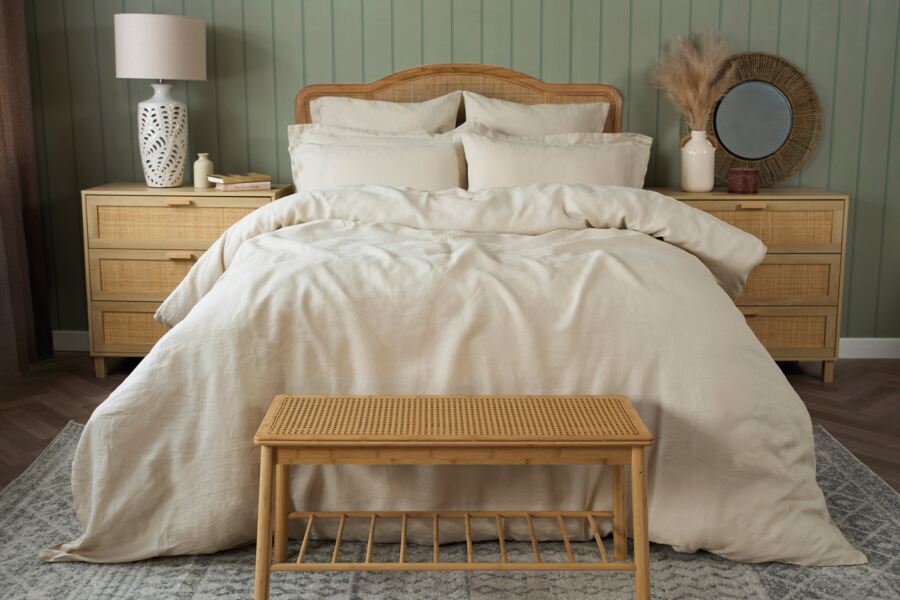
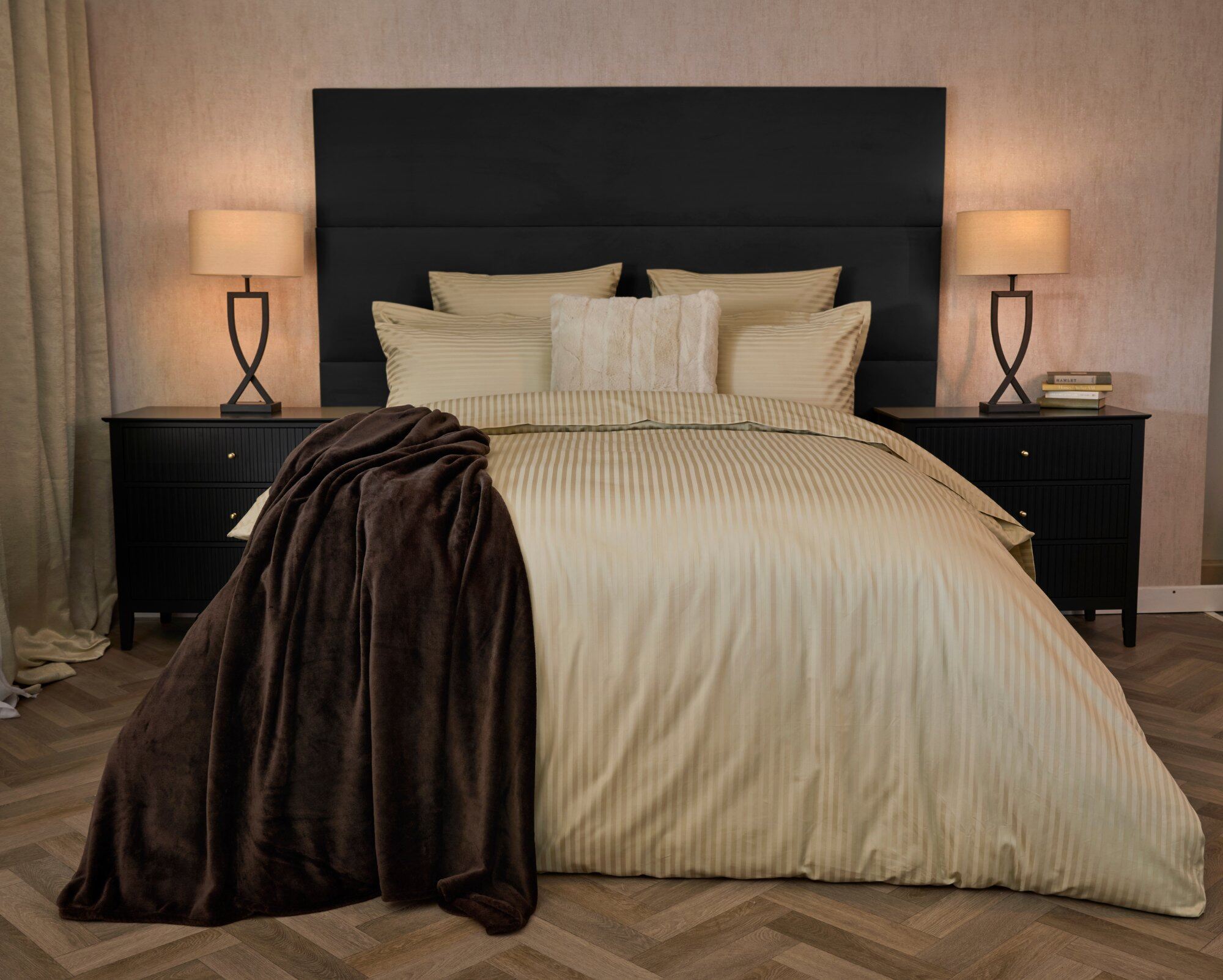
The practical levers are straightforward: the tog rating of the duvet, the fabric of the sheets, and whether the bed is layered in a way that allows adjustment through the night. A sleeper who wakes hot at 2am and kicks the duvet off entirely is managing temperature badly. A sleeper who pushes a throw to the foot of the bed and stays under a lighter layer is managing it well.
For a fuller guide to temperature and bedding, our article on why you wake up hot covers the science and the solutions in more detail.
Fabric: what touches your skin matters
The sheet is the layer of bedding in direct contact with the skin for the longest period. Its fabric determines how that contact feels: cool or warm, smooth or textured, dry or clammy. Over the course of a seven or eight-hour night, these differences are not subtle.
Natural fibres, including cotton, bamboo, linen and silk, breathe. They absorb moisture from the skin, release it into the air, and allow warm air to move away from the body. The Journal of Sleep Research review found that linen bedsheets improved sleep quality under warm conditions compared with cotton, with fewer awakenings and less time in light-stage sleep.
Synthetic fabrics, particularly cheaper polyester, behave differently. They resist moisture rather than absorbing it, which means sweat stays on the skin rather than being drawn away. The bed feels warmer, the sleeper moves more, and the disruption compounds through the night.
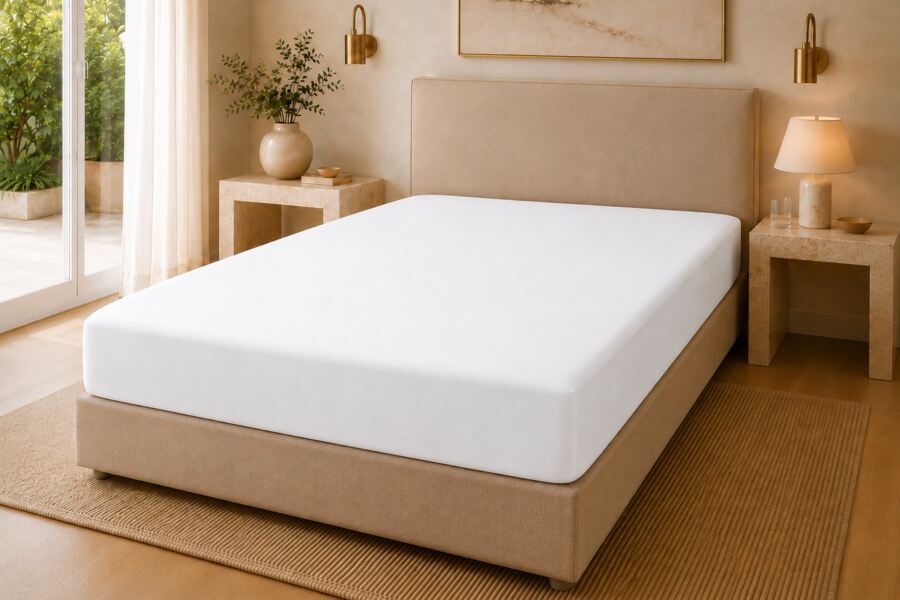
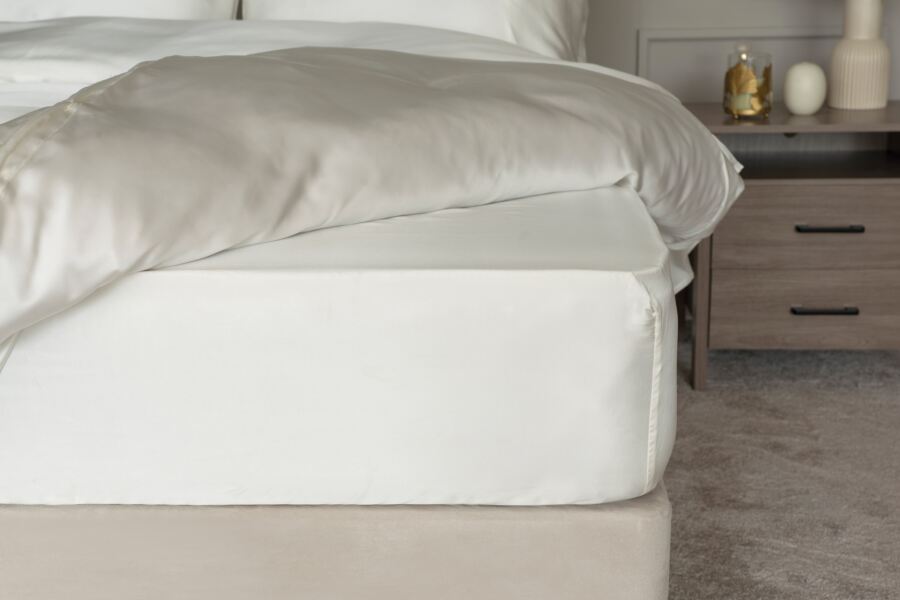
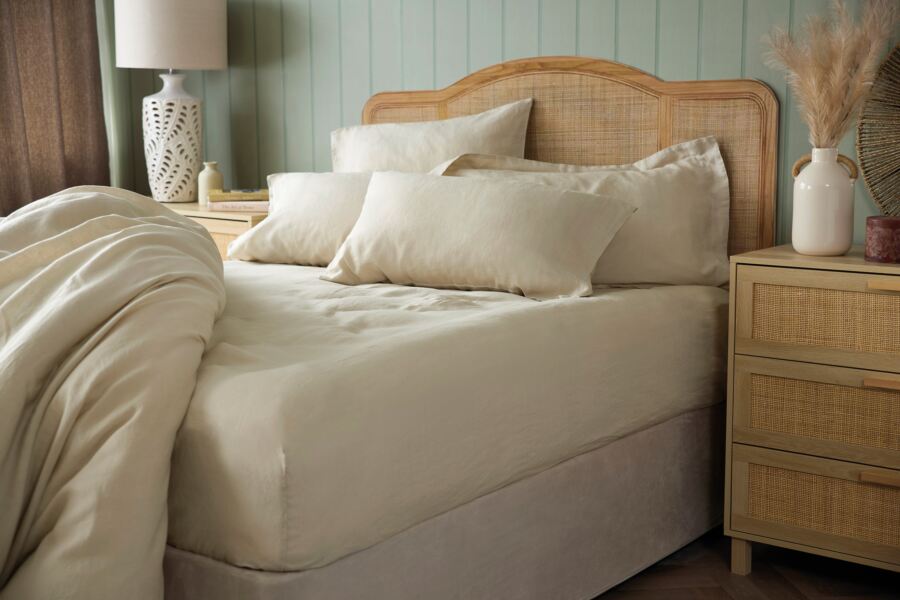
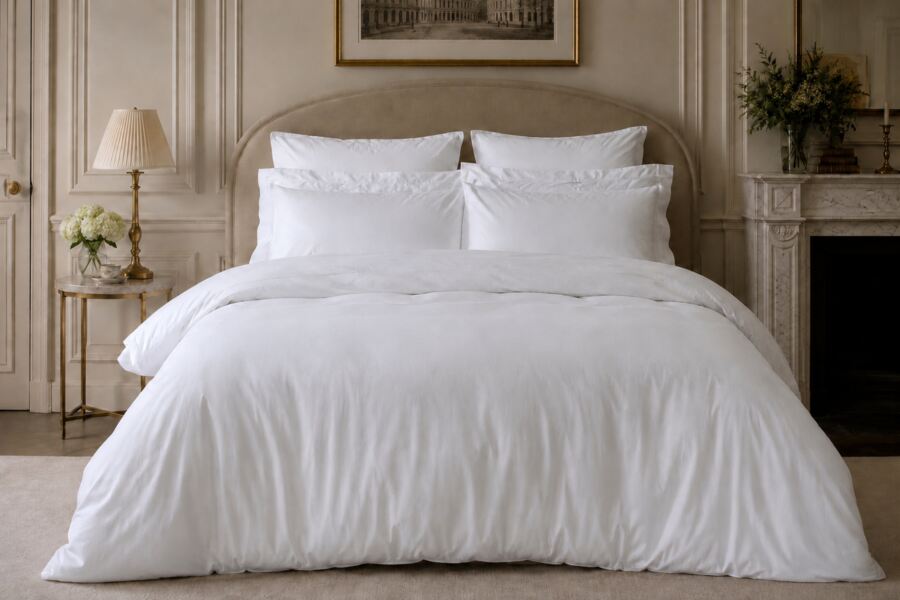
Weave matters as much as fibre
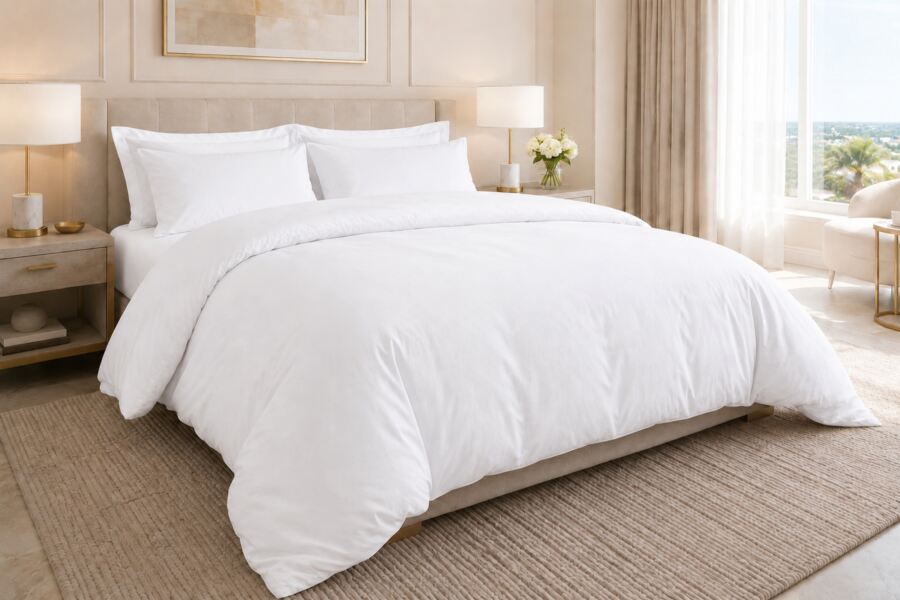
Two sheets made from the same cotton, at the same thread count, can feel entirely different depending on the weave. Percale, a one-over-one weave, feels crisp and cool, with more airflow between the threads. Sateen, a four-over-one weave, feels smoother, denser and slightly warmer. Neither is better in the abstract; percale suits warmer sleepers and warmer months, sateen suits cooler sleepers and cooler months.
Thread count in context
Thread count measures how densely threads are woven into a square inch of fabric. Higher counts produce denser, smoother fabric, but the relationship with sleep quality is not straightforward. A well-made 200 or 400 thread count sheet in long-staple cotton will often breathe better and sleep cooler than a 1000 thread count sheet that sacrifices airflow for weight. For most sleepers, the fibre quality and the weave matter more than the number.
For a deeper look at how different fabrics perform through the night, our guide to natural fabrics and sleep quality covers cotton, Egyptian cotton, bamboo, linen and silk in detail.
The duvet: tog, filling and weight
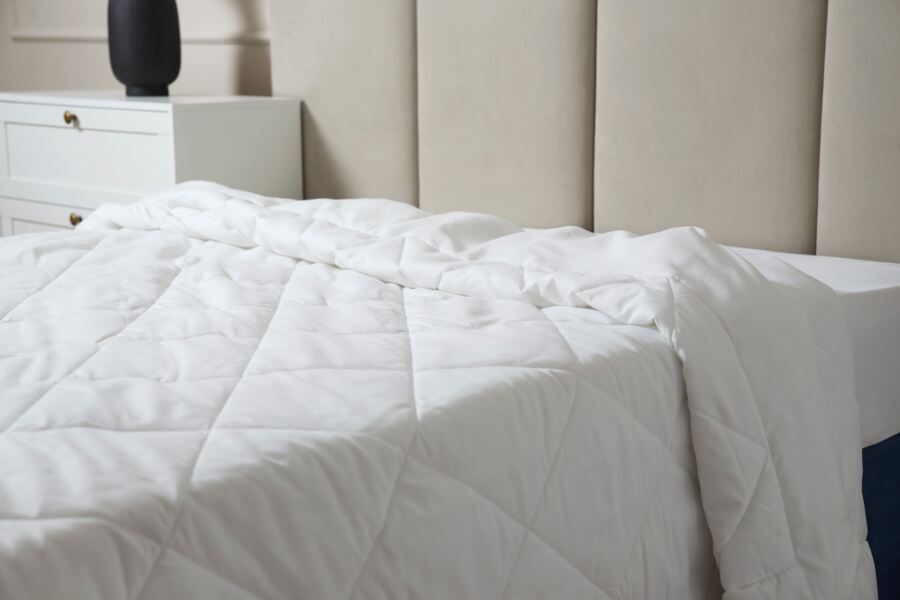
The duvet provides the bulk of the bed's insulation, and tog rating is the measure of how much. Tog measures thermal resistance, not weight, so a high-tog duvet is not necessarily heavy; it simply retains more of the body's heat.
As a seasonal guide: 4.5 tog for summer, 10.5 tog for spring and autumn, and 13.5 tog for winter. Sleeping under a 13.5 tog duvet in May is one of the most common, and most easily fixed, causes of overheating at night.
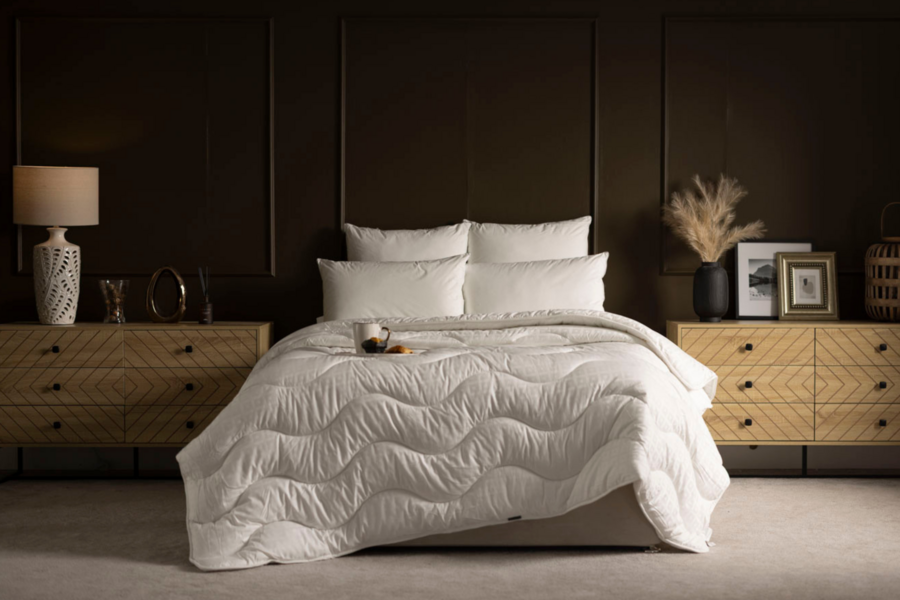
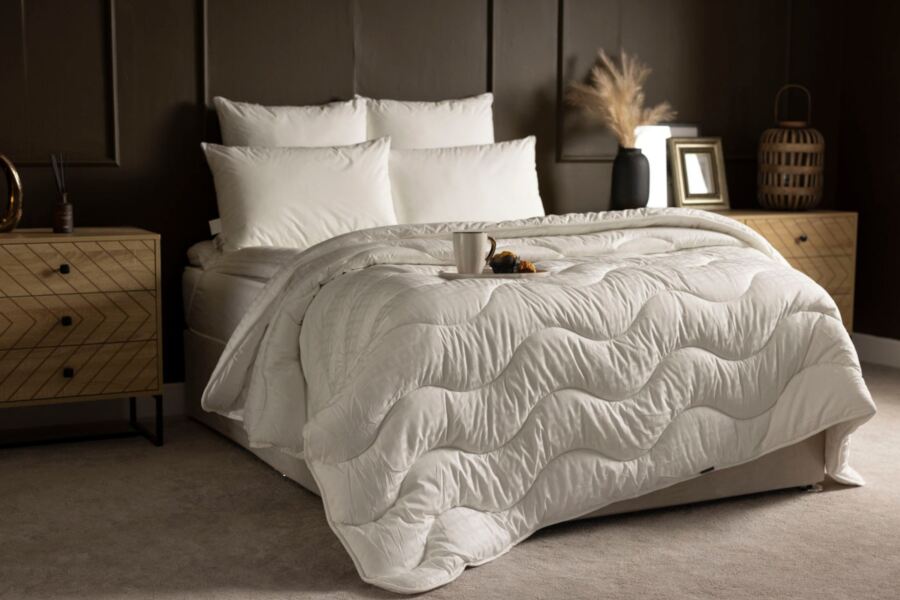
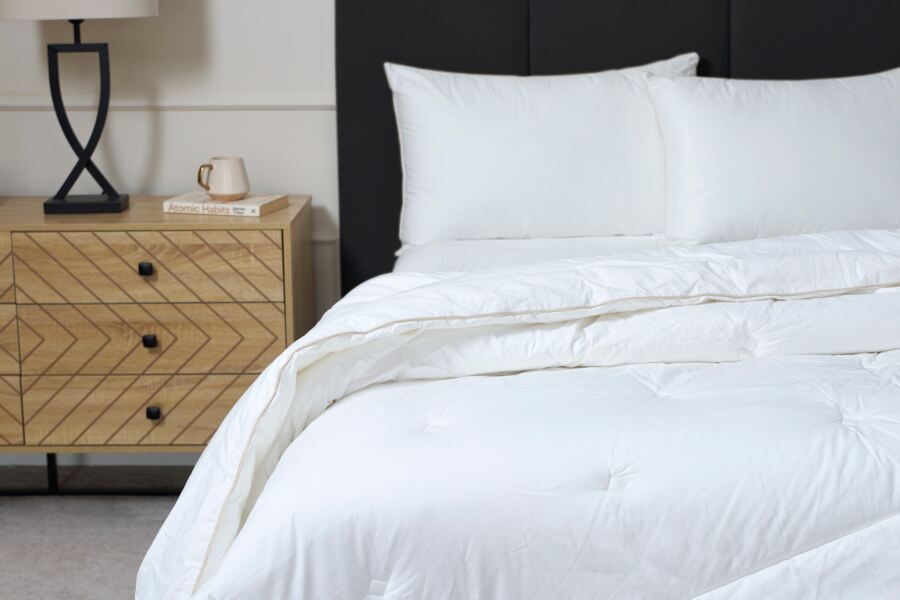
Filling affects how the duvet responds to the body. Natural fillings, including wool, down and silk, regulate temperature more responsively than synthetics: they warm when the body is cool and release heat when it is warm. Synthetic microfibre fillings are lighter, easier to wash, and better suited to allergy-prone households. Both do the job; the choice is one of practicality and preference.
Weight is the quieter variable. Some sleepers find a heavier duvet calming, in much the same way a weighted blanket works. Others find weight uncomfortable and prefer a lighter duvet with additional layers, a throw or blanket, that can be added or removed. There is no correct answer here, only the one that lets the individual sleeper stay asleep.
For a practical guide to building a layered bed that adapts to the season, the bed layering guide covers the formula in full.
Pillows: support, loft and replacement
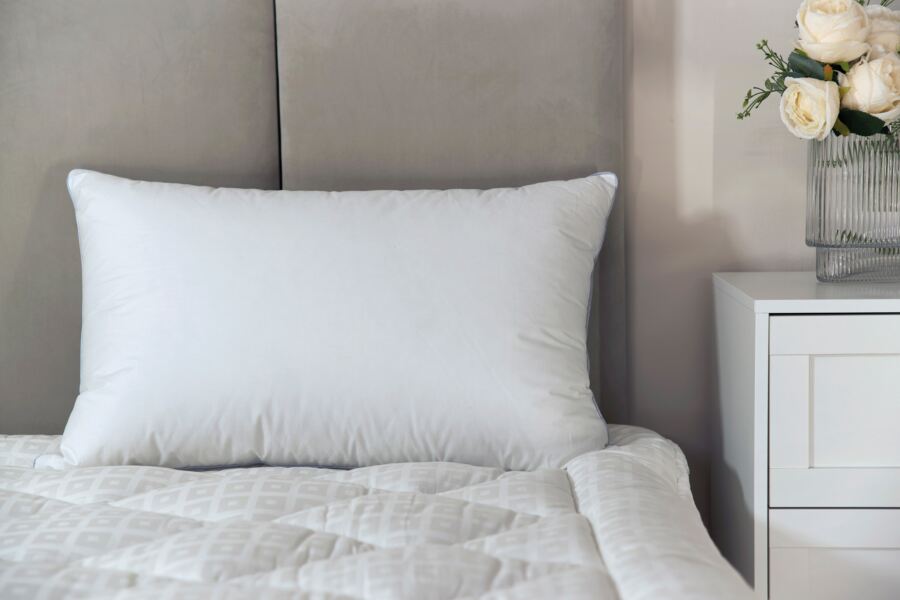
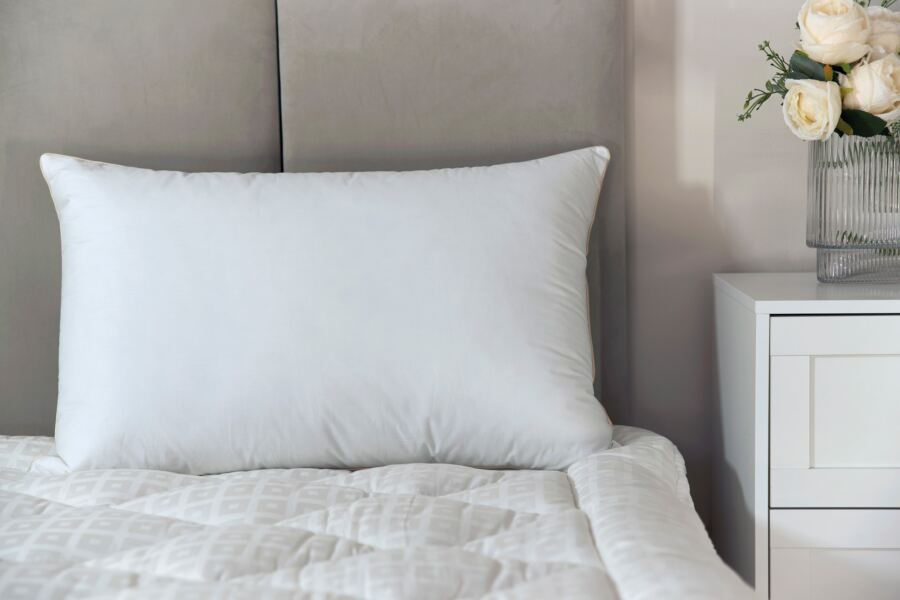
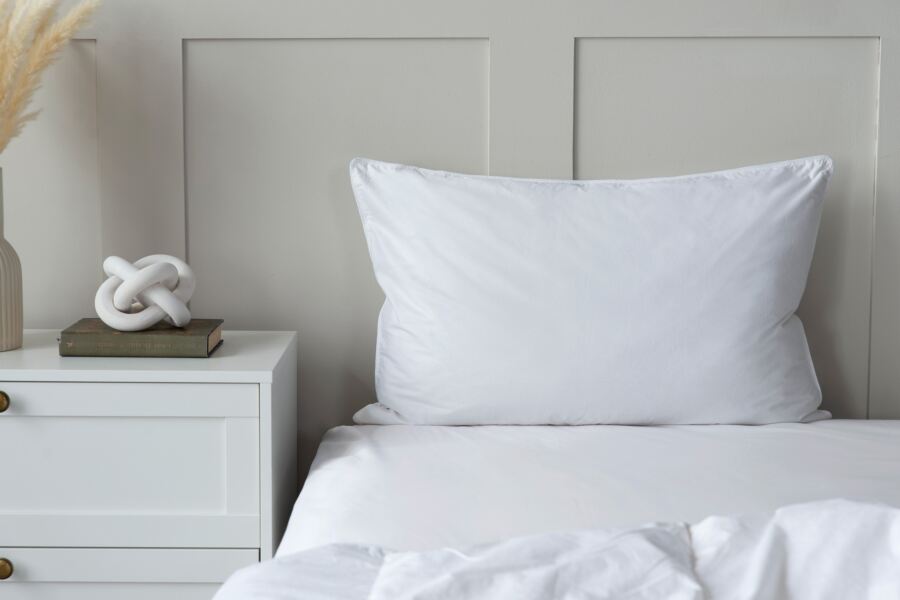
The pillow is the piece of bedding closest to the airways and the cervical spine, which makes it disproportionately important relative to its size. A pillow that has lost its loft forces the neck into a position that strains the muscles and ligaments on one side while compressing those on the other. The NHS notes that one of the most common causes of neck pain is the neck being held in an awkward position during sleep.
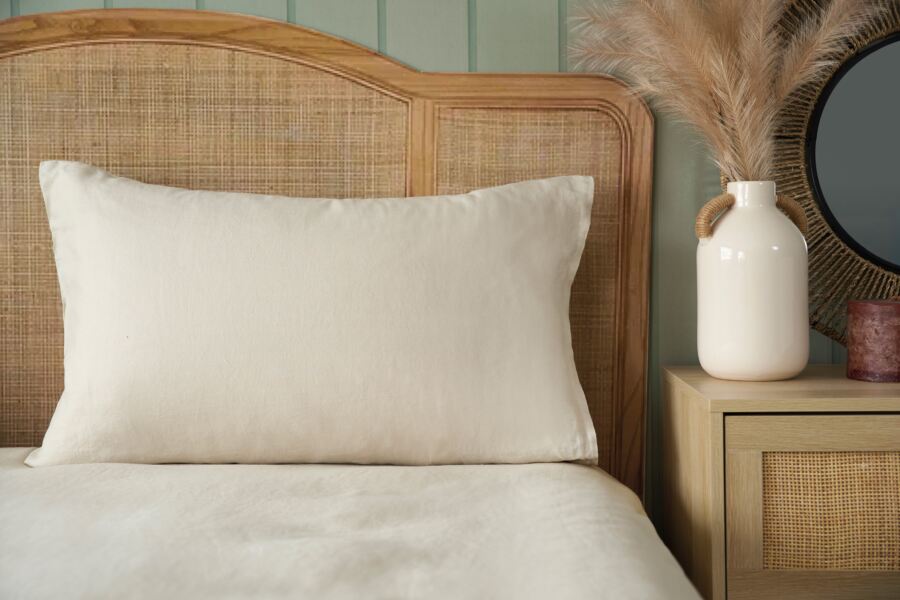
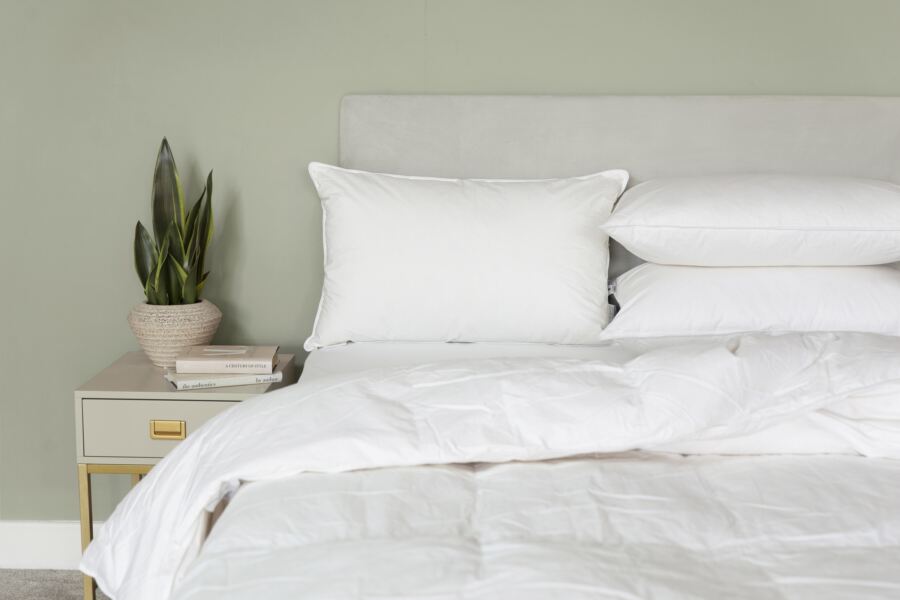
The right pillow depends on sleeping position. Side sleepers generally need a firmer, higher-loft pillow to fill the gap between the shoulder and the ear. Back sleepers need a medium loft that supports the natural curve of the neck without pushing the head forward. Stomach sleepers need the thinnest pillow possible, or none at all. Belledorm's pillow guide covers the options in more detail.
Replacement is the part most people neglect. Pillows accumulate dust mite allergen, skin cells and moisture over time, and the filling compresses. A pillow that felt right two years ago is unlikely to be providing the same support or the same level of hygiene today. As a general rule, pillows should be replaced every one to two years, with a pillow protector underneath the pillowcase extending that lifespan and keeping allergen away from the filling.
Allergies and skin irritation
Dust mites, mould spores, pet dander and pollen all accumulate in bedding, and for sleepers with allergies, eczema or asthma, the effect on sleep quality can be significant. Itching, sneezing, nasal congestion and skin irritation are all forms of disruption that pull the sleeper out of deeper sleep stages, even when they do not fully wake.
The most effective defences are practical rather than expensive. Hypoallergenic bedding made from tightly woven natural fibres creates a surface that is less hospitable to dust mites and gentler against sensitive skin. A cotton or bamboo sheet with a dense weave physically restricts how easily allergens can settle into the fabric.
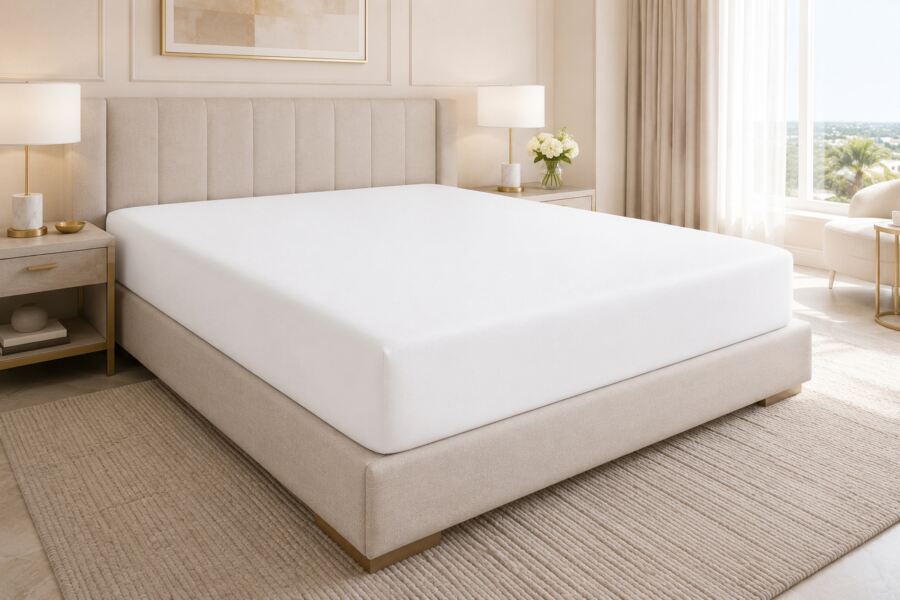
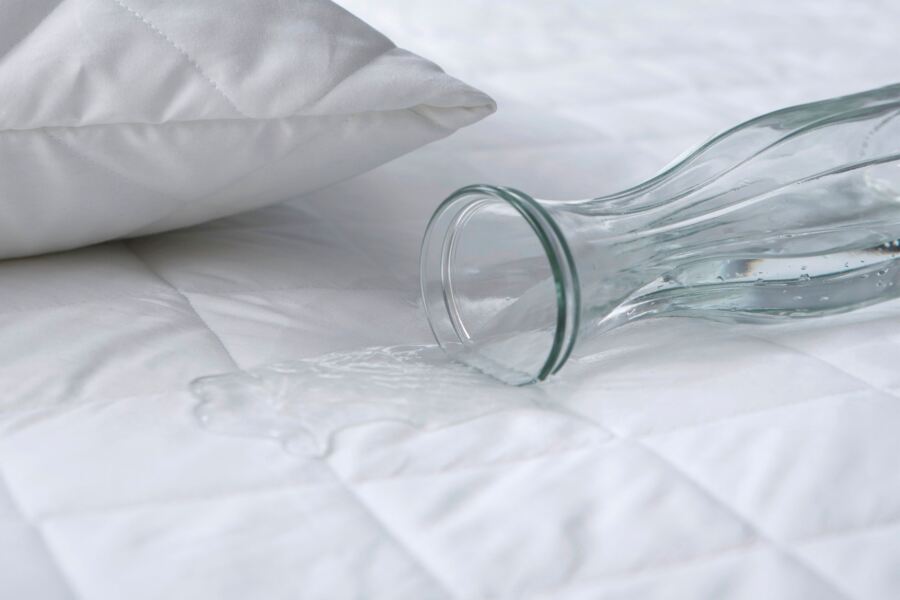
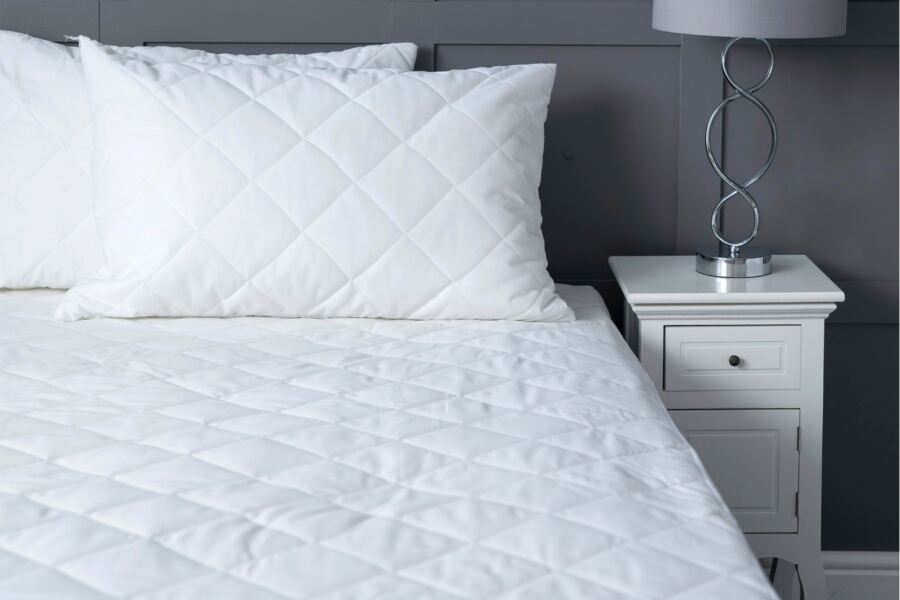
Beneath the sheet, mattress protectors and pillow protectors create a barrier that keeps allergen inside the mattress and pillow rather than migrating upwards into the sleep surface. Washing bedding weekly at 60°C, as Allergy UK recommends, kills dust mites rather than simply rinsing them away.
For a fuller guide to allergy-proofing the bedroom, the allergy season guide covers washing temperatures, fabric choices and cleaning routines in detail.
Hygiene: how clean bedding shapes sleep
A YouGov survey found that only 28% of Britons wash their bed sheets weekly. A further 36% wash them fortnightly, and a meaningful minority leave it three weeks or longer.
Clean bedding is not only a hygiene concern; it is a comfort one. Sheets that have been on the bed for two or three weeks feel different from fresh ones. They hold more moisture, more body oil, more of the microscopic debris that builds up night after night. The cumulative effect is a sleep surface that breathes less well, feels less comfortable against the skin, and creates conditions that dust mites and bacteria thrive in.
Weekly washing at 40°C is the minimum for freshness; 60°C is the standard for allergy sufferers. Duvets and pillows should be washed every three to six months, and more frequently during pollen season. Our bedding care guide covers temperatures, detergents and drying in detail, and the guide to how often you should change your bedding sets out a practical schedule.
It is also worth noting that fabric quality affects how well bedding holds up to frequent washing. A well-made long-staple cotton sheet will tolerate weekly 60°C washes for years without losing its softness. Cheaper, shorter-staple fabrics tend to pill, thin and roughen within months under the same routine. For allergy sufferers in particular, the initial cost of better fabric is repaid in longevity.
Signs your bedding needs replacing
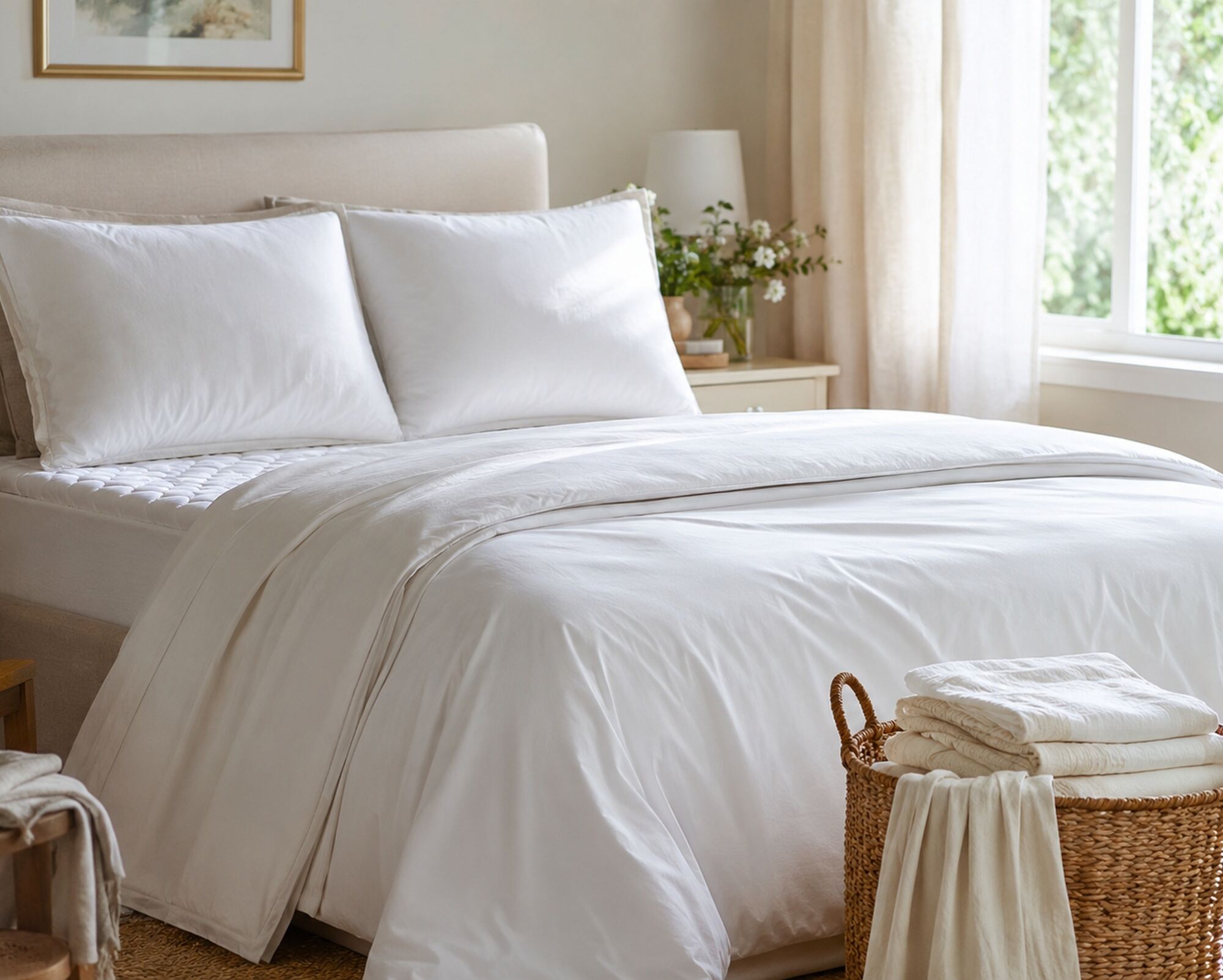
Bedding rarely fails dramatically. It deteriorates gradually, and the sleeper acclimatises to each small decline without noticing. A few signs worth watching for:
Pilling on sheets or duvet covers. Small bobbles of tangled fibre on the surface are a sign that the fabric is breaking down. Pilled fabric feels rougher against the skin, traps more heat, and does not breathe as well as it once did.
Pillows that no longer hold their shape. The fold test is a simple check: fold the pillow in half and let go. If it springs back, the filling still has life. If it stays folded, it is no longer providing meaningful support.
A duvet that feels uneven. Fillings migrate over time, particularly in cheaper quilted constructions, leaving thin patches that let cold air through and thick patches that trap heat. If the duvet is noticeably lumpy or if cold spots have appeared, it is time to replace it.
Sheets that feel stiff or scratchy after washing. This is often a sign that the fabric has been washed beyond its useful life, or that a lower-quality fibre has reached its limit. A good cotton sheet should soften with washing, not harden.
Persistent odour after washing. If bedding smells musty even after a fresh wash, moisture and bacteria have likely built up beyond what laundering can address.
Bedding does not make or break sleep on its own. A person who is stressed, caffeinated, staring at a screen until midnight, and sleeping in a room at 22°C will not solve their sleep problems with a new fitted sheet. But for the sleeper who has addressed the obvious factors and still wakes unrested, uncomfortable, hot, or congested, the bedding is almost always worth examining.
The changes are practical, not extravagant: the right tog for the season, a fabric that breathes, a pillow that still supports, sheets that are washed often enough, and a protector underneath to keep the mattress clean. Done together, they create the physical conditions the body needs to stay asleep, and staying asleep is where the real benefit lies.
Does bedding affect sleep quality FAQs
Does bedding really affect how well you sleep?
Yes. Research published in the Journal of Sleep Research in 2024 confirmed that the fibre type of bedding measurably affects sleep quality, particularly temperature regulation and the number of overnight awakenings. Fabric, weave, tog rating, pillow support, and cleanliness all contribute to the physical conditions the body needs for deep, unbroken sleep. No single piece of bedding is a cure for poor sleep, but the cumulative effect of the right setup is significant.
What is the best bedding material for sleep?
Natural fibres, including cotton, Egyptian cotton, bamboo viscose, linen and silk, consistently outperform synthetic fabrics for sleep. They breathe better, manage moisture more effectively, and work with the body's temperature cycle rather than against it. Among these, the best choice depends on individual preference: percale cotton and bamboo for warm sleepers, sateen cotton for cooler sleepers, and linen for those in consistently warm bedrooms. The key is 100% natural fibre rather than a synthetic blend.
Does thread count affect sleep quality?
Thread count affects the density, smoothness and weight of the fabric, all of which influence how a sheet feels and breathes. A higher thread count is not automatically better for sleep. For most sleepers, a well-made 200 to 600 thread count sheet in long-staple cotton strikes the best balance between comfort, breathability and durability. Very high thread counts can feel heavier and warmer, which suits some preferences but not all.
How often should I wash my bedding for better sleep?
Weekly washing is the standard recommendation. A YouGov survey found that only 28% of Britons wash their sheets this frequently, yet experts consistently recommend it for both hygiene and comfort. Washing at 40°C removes surface oils and freshens the fabric; washing at 60°C also kills dust mites, which matters for allergy sufferers. Pillows and duvets should be washed every three to six months, with protectors washed monthly.
Can the wrong pillow cause neck pain?
Yes. The NHS identifies sleeping in an awkward neck position as one of the most common causes of neck and shoulder pain. A pillow that is too high, too low, or too flat forces the cervical spine out of its natural alignment, straining muscles and ligaments over the course of a full night. The right pillow height depends on sleeping position: higher and firmer for side sleepers, medium for back sleepers, and thin or flat for stomach sleepers. Replacing pillows every one to two years ensures the filling still provides adequate support.
What bedding is best for night sweats?
Sheets and duvet covers made from natural, moisture-wicking fibres, particularly bamboo viscose, linen and cotton percale, help manage night sweats by drawing moisture away from the skin and allowing it to evaporate. A lower-tog duvet, ideally 4.5 to 10.5 tog depending on the season, reduces the amount of heat trapped against the body. Layering the bed with a flat sheet and a lighter throw, rather than relying on a single heavy duvet, gives the sleeper the ability to adjust temperature through the night without fully waking.