 Platinum trusted service award
Table of Contents
- What Happens When You Don’t Sleep Well
- Why Modern Life Is Working Against Your Sleep
- The Mindset Problem: When Worrying About Sleep Makes It Worse
- Sleep Hygiene That Starts in the Morning
- The Wind-Down: Preparing Your Body and Bedroom for Sleep
- When Poor Sleep Becomes Something More
- A Technique Worth Trying: Cognitive Shuffling
- Your Bedroom, Your Sleep Environment
- FAQs
What Happens When You Don’t Sleep Well
The short answer: more than most people realise. The familiar effects are easy to list. Irritability. Poor concentration. That foggy, slow feeling that makes even simple decisions feel effortful. Anyone who has had a young baby, worked shifts, or simply spent a restless night staring at the ceiling will recognise these symptoms.
But the deeper consequences are less visible. Sleep deprivation activates the body’s stress response, the same fight-or-flight system that evolved to keep our ancestors alert when danger was nearby. Adrenaline and cortisol rise. Blood pressure increases. Blood sugar is mobilised. The immune system ramps up and, over time, becomes exhausted from the constant state of readiness.
Research published in the journal Health Data Science found significant associations between poor sleep patterns and 172 different diseases, from cardiovascular conditions and diabetes to mental health disorders. That number alone puts sleep firmly alongside diet and exercise as one of the most consequential health behaviours we have.
Sleep also plays a role in emotional regulation that is easy to underestimate. Studies show that sleep-deprived couples are not just more likely to argue; they tend to be more accusatory and less constructive in how they approach disagreements. Our perception of threat increases when we are tired, which means small frustrations feel larger, and the people around us may seem less reasonable than they actually are.
It is worth saying clearly: none of this is inevitable. Poor sleep increases risk over time, but a few rough nights do not cause lasting harm. The point is not to create anxiety. It is to understand that sleep is worth protecting, not because something terrible will happen if you don’t, but because so much works better when you do.
Why Modern Life Is Working Against Your Sleep
Humans have had artificial light for well over a century. We have had shift work, busy schedules, and noisy neighbours for longer still. So what has changed in the last two decades that has made poor sleep so much more widespread?
The honest answer, according to sleep researchers, is the smartphone. Not because of the blue light (that effect is often overstated) but because of what the device does to our attention. Our brains are wired to seek information. Every notification, every scroll, every quick check of the news delivers a small dopamine hit that keeps us engaged and alert. The phone is designed to be difficult to put down, and at least one in four adults report withdrawal-like symptoms when separated from their device.
The result is a population that is always on. We move from task to task, screen to screen, without the gaps that used to exist naturally in our days. We are increasingly poor at simply being still, at sitting without input, at allowing the mind to idle. And yet that capacity to rest during the day, to pause and do nothing in particular, appears to be closely connected to the ability to rest well at night.
Research bears this out. When study participants had mobile internet access switched off but could still make calls, they spent more time socialising in person and exercising. Both of those activities are strongly associated with better sleep quality.
Modern life has also made us more sedentary. We know that physical activity during the day helps regulate the body clock, builds sleep pressure (the chemical drive that makes us feel drowsy by evening), and moderates the stress response. A less active body is a body that often struggles to wind down.
The Mindset Problem: When Worrying About Sleep Makes It Worse
Here is one of the more counterintuitive findings in sleep science: the harder you try to sleep well, the worse your sleep tends to become.
If you go to bed thinking I absolutely must get a good night’s sleep tonight, the pressure of that thought alone can keep you awake. A rigid belief that tomorrow will be a disaster without eight solid hours creates tension, and tension is the enemy of sleep. The smallest disruption, a noise, a warm bedroom, a partner shifting position, becomes a trigger for worry rather than something the brain simply passes over.
Sleep researchers describe this as a hallmark pattern of insomnia. The anxiety about not sleeping becomes the very thing that prevents sleep. And for many people, the worry compounds over weeks and months until it becomes the dominant force in their relationship with bedtime.
The parallel with nutrition is helpful here. Rigid, all-or-nothing thinking about food (I must eat perfectly or I have failed) tends to backfire. The same is true of sleep. A more relaxed, curious attitude, treating sleep habits as experiments rather than rules, tends to produce better results than perfectionism.
One sleep scientist shared the example of a client who slept terribly at home despite being deeply anxious about his sleep habits. On holiday, with the same habits (still scrolling his phone before bed, still not exercising), he slept through the night. Nothing had changed except the pressure. The work stress was gone, the belief that he had to sleep well was gone, and his body did the rest.
Sleep Hygiene That Starts in the Morning
Most people think of sleep hygiene as something that happens at bedtime. In reality, the groundwork for a good night begins first thing in the morning. The following habits are supported by sleep science research and are simple enough to put into practice this week.
Wake at the same time each day
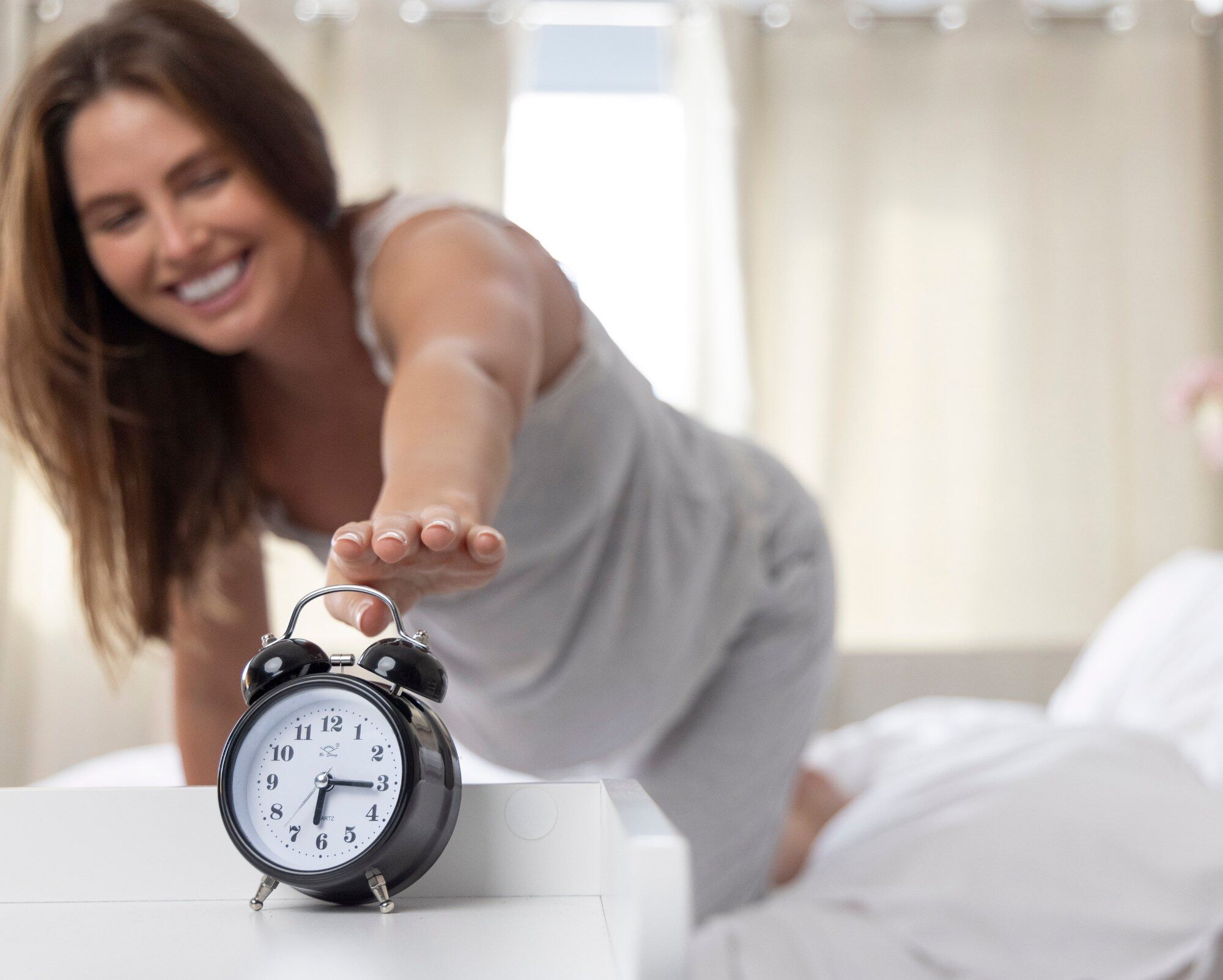
A consistent wake-up time is one of the strongest signals you can give your circadian rhythm, the internal clock that governs when your body feels alert and when it feels sleepy. After a week or two of consistency, many people find they no longer need an alarm. This applies at weekends too, as tempting as a Sunday lie-in might be.
Get natural light early
Natural daylight within the first hour of waking helps suppress melatonin (the hormone that makes you feel drowsy) and resets your body clock for the day ahead. The benefit works in reverse too: by anchoring your alertness in the morning, you naturally begin to feel sleepy 15 to 16 hours later. Even a short walk or a few minutes by an open window makes a difference.
Move your body during the day
Exercise supports sleep through three separate mechanisms. It helps regulate circadian rhythms by sending an alerting signal to the brain during the day. It builds adenosine, the chemical that accumulates while we are awake and creates the feeling of drowsiness by evening. And it moderates the stress response, reducing cortisol and helping the body relax more easily at night. Interestingly, recent research has suggested that yoga may be among the best forms of exercise for sleep quality, though any regular movement helps.
Take time to pause during the day
This one sounds simple, and it is, but it is also the habit most people skip. Even 15 minutes of genuine rest during the day, sitting still without a screen, walking without a podcast, simply letting the mind idle, helps lower the baseline level of stress arousal. If you spend your entire day moving at pace from one task to the next, your nervous system is unlikely to switch off the moment your head touches the pillow.
The Wind-Down: Preparing Your Body and Bedroom for Sleep
The transition from wakefulness to sleep does not happen like flicking a switch. The body needs a runway, and the more stimulated you have been during the day, the longer that runway needs to be. Sleep researchers recommend at least an hour of wind-down time before bed, though the specific activities matter less than the principle of consistency.
During that hour, the aim is to move from doing to being. Prepare what you need for tomorrow so your mind can let go of logistics. Read, listen to music, take a warm bath, stretch, or spend time with a partner or family. Social connection before bed, often overlooked in sleep advice, has a genuinely calming effect on the nervous system.
This is also the time to separate yourself from your phone. Sleep researchers are clear on this: ideally, the phone does not come into the bedroom at all. A simple alarm clock without smart functions removes the temptation. For families, making the bedroom a phone-free zone for everyone, adults included, normalises the habit and removes it as a point of friction.
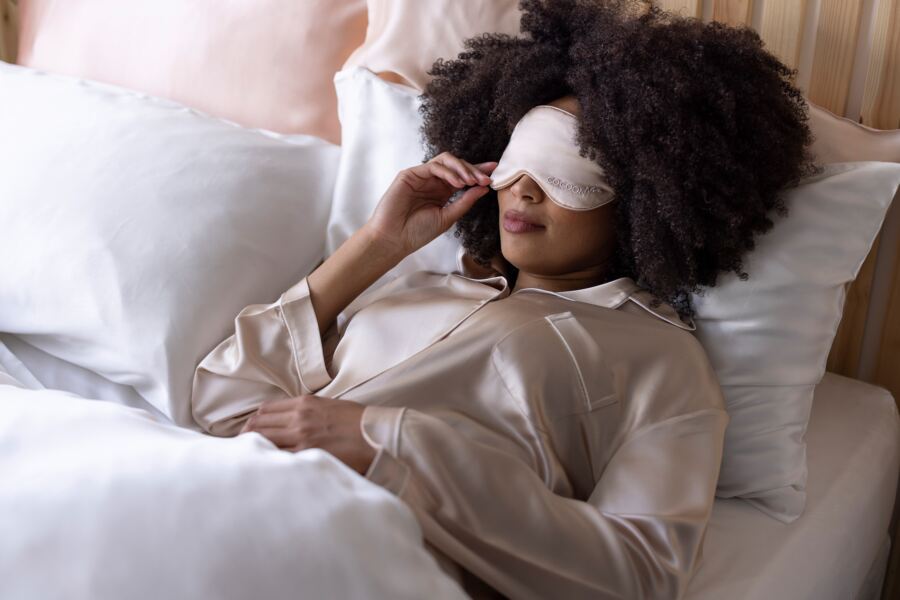
In the bedroom itself, darkness matters. An eye mask or blackout blinds can make a significant difference to both falling asleep and staying asleep through lighter summer mornings. Keeping the room cool, ideally between 16 and 18°C, supports the body’s natural temperature drop during sleep.
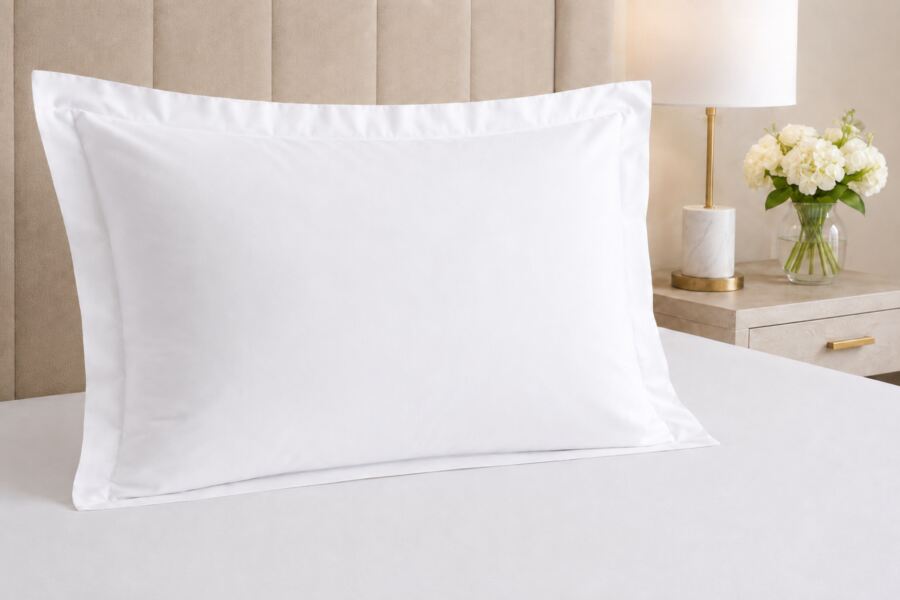
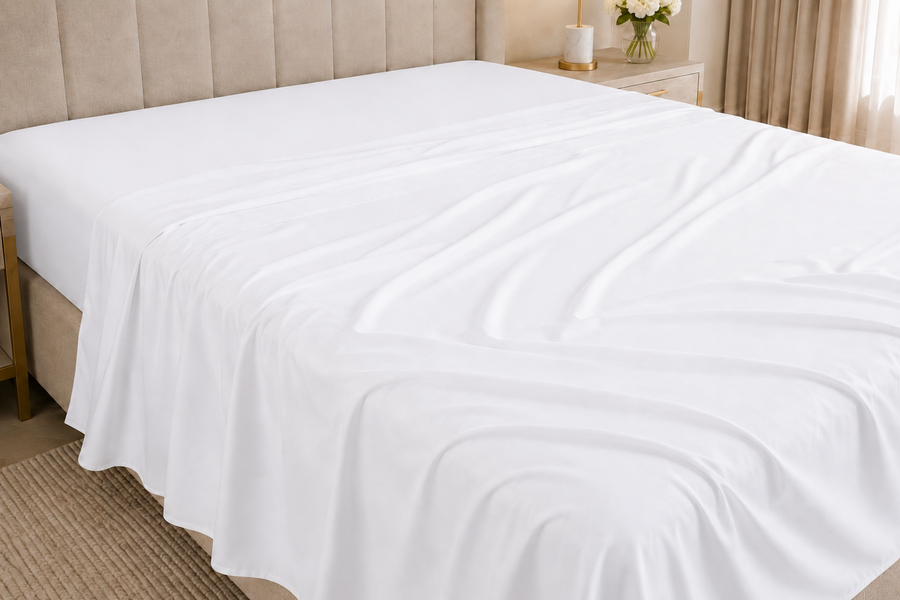
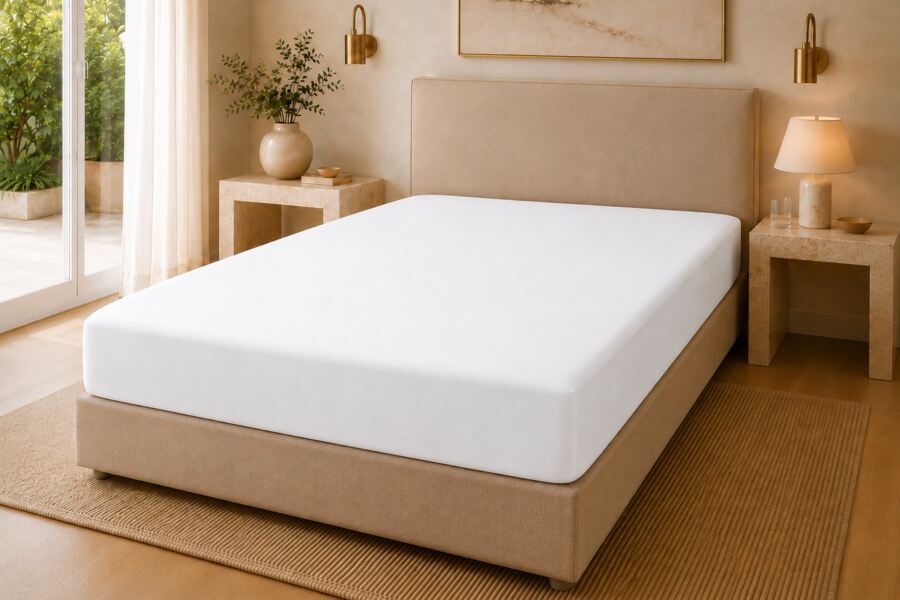
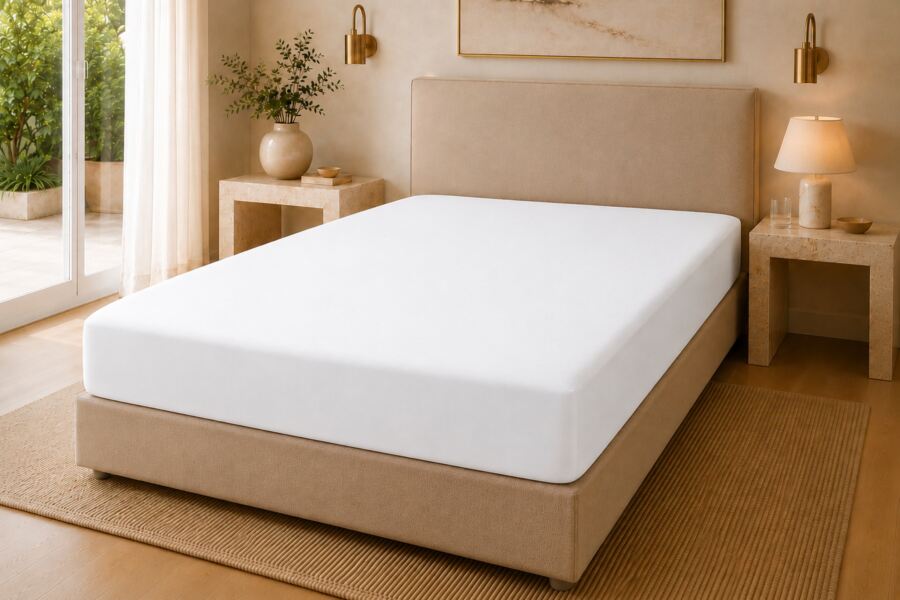
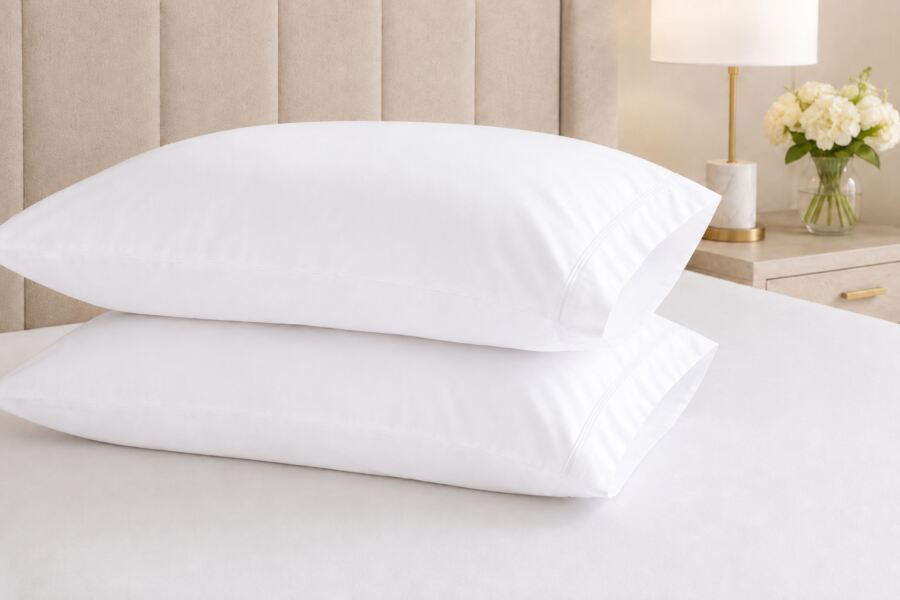
Bedding plays a quieter role than most people expect. Fabric choice affects how well heat and moisture move away from the body overnight. Natural fibres like cotton and bamboo allow air to circulate more freely than synthetics, which can trap warmth against the skin and lead to restless, fragmented sleep. If you are waking in the night feeling hot or uncomfortable, the bedding itself, rather than the room temperature, may be contributing. Our bamboo bedding range and breathable cotton sheets are worth considering if temperature regulation is something you notice disturbing your rest.


When Poor Sleep Becomes Something More
There is an important distinction between the roughly 50 to 60 per cent of us who experience occasional poor sleep and the 10 to 20 per cent who live with clinical insomnia. Understanding which group you fall into can change how you approach the problem.
The clinical definition of insomnia requires three things: difficulty sleeping at least three nights per week, lasting for three months or more, with a noticeable negative impact on daytime functioning. If you have poor sleep but cope well during the day, that is not insomnia. If you are a new parent surviving on fragments of sleep because a baby keeps waking you, that is not insomnia either. That is simply having inadequate opportunity to sleep.
For those who do meet the clinical threshold, the most effective long-term treatment is not a sleeping pill. It is cognitive behavioural therapy for insomnia, often abbreviated to CBT-I. This is a structured approach that combines practical sleep techniques (including something called sleep restriction therapy, which counterintuitively involves going to bed later) with cognitive strategies to address the unhelpful beliefs and thought patterns that sustain insomnia.
CBT-I is recommended by the NHS and NICE as the first-line treatment for persistent insomnia in adults. Research consistently shows that it produces more lasting improvements than medication, without the risk of dependency or the grogginess that often follows a sleeping pill.
For the rest of us, the good news is that better sleep habits, a more relaxed attitude, and a few practical adjustments to the bedroom environment can make a real difference without any clinical intervention at all.
A Technique Worth Trying: Cognitive Shuffling
If you have ever lain awake while your mind cycles through plans, worries, and to-do lists, this technique is worth a go. Cognitive shuffling is based on research into how good sleepers and poor sleepers differ in the moments before they fall asleep.
Good sleepers tend to experience random, visual, unconnected images as they drift off. Poor sleepers tend to experience structured, logical, planning-type thoughts. Cognitive shuffling aims to push your mind towards the first pattern.
The method is simple: think of any word. For each letter of that word, think of another random word beginning with that letter, and as you do, try to visualise it. If your word is garden, you might picture a giraffe, then an apple, then a rowing boat, then a doorbell, and so on. There is no right answer, no pressure, no goal other than letting your mind wander through disconnected images. Most people are asleep before they reach the end of the word.
Your Bedroom, Your Sleep Environment
Sleep science points consistently to the same environmental factors: darkness, cool temperature, quiet, and comfort. Getting these right does not require spending a fortune, but it does require some thought.
Your bed is the foundation, and within it, the bedding is the layer you feel most directly. Sheets that trap heat, pillows that have lost their support, a duvet that is too heavy for the season, all of these can contribute to restless nights without the sleeper ever connecting the two. A seasonal review of your bedding, switching to a lighter tog as warmer months approach, checking that your pillows still support your neck properly, and choosing fabrics that breathe, is one of the simplest changes with the clearest effect.
Sleep is not something that can be forced or bought. It responds to consistency, calm, and the right conditions. Protecting those conditions, day and night, is one of the most worthwhile investments any of us can make in our own health.
FAQs
How many hours of sleep do adults actually need?
Most adults require between seven and nine hours of sleep per night for optimal physical and mental functioning, according to NHS and Sleep Foundation guidance. Individual needs vary, and some people genuinely function well on slightly less, though consistently sleeping fewer than six hours is associated with increased health risks. The quality of those hours matters as much as the quantity. Unbroken sleep through a full cycle of light, deep, and REM stages is more restorative than a longer but fragmented night.
Does alcohol help or hinder sleep?
Alcohol can make it easier to fall asleep initially because it has a sedative effect, but it significantly disrupts the quality of sleep that follows. It suppresses REM sleep (the stage associated with emotional regulation and memory consolidation), leading to more fragmented rest and earlier waking. As we age, the body becomes less resilient to these effects, and even a single glass of wine in the evening can reduce sleep quality noticeably. If sleep is a concern, reducing alcohol intake or drinking earlier in the day is one of the most straightforward experiments to try.
Is blue light from screens really that bad for sleep?
The effect of blue light from phones and tablets on sleep is often overstated. While bright light in the evening can suppress melatonin production and delay the onset of sleepiness, the greater problem with screens at bedtime is the mental stimulation they provide. Scrolling social media, reading news, or responding to messages keeps the brain in an engaged, alert state that is difficult to switch off. Sleep researchers recommend limiting screen use in the hour before bed, not primarily because of the light, but because of the cognitive arousal it creates.
What is the best bedroom temperature for sleep?
The widely recommended range for adult sleep is between 16 and 18°C. The body’s core temperature naturally drops as part of the process of falling asleep, and a room that is too warm can interfere with this. Bedding choice plays a supporting role: natural fabrics such as cotton and bamboo allow heat and moisture to dissipate more effectively than synthetic materials, helping to maintain a stable temperature through the night. If you frequently wake feeling hot, adjusting both the room temperature and the fabric of your sheets and duvet cover may help.
Can exercise improve sleep quality?
Regular physical activity is one of the most consistently supported ways to improve sleep. Exercise helps to regulate the circadian rhythm, build sleep pressure through adenosine accumulation, and reduce the activation of the stress response system. The form of exercise matters less than the consistency; recent research has found yoga to be particularly beneficial for sleep, though walking, cycling, and other moderate activities all contribute. The main caveat is timing: very intense exercise within three to four hours of bedtime can raise core body temperature and delay the onset of sleep.
Should I take melatonin or magnesium supplements to improve my sleep?
Melatonin is a prescription-only medication in the UK, primarily prescribed for adults over 55 with insomnia or for circadian rhythm disorders. It is not a general sleep aid and is unlikely to help with insomnia in younger adults. Over-the-counter melatonin products available in other countries have been found to vary widely in their actual dosage, so professional guidance on timing and dose is advisable. Magnesium is more widely used and some evidence suggests it may help people fall asleep slightly faster, particularly those who are deficient due to chronic stress, intense exercise, or hormonal changes such as perimenopause. It is generally considered safe, though anyone with existing health conditions should consult their GP before supplementing.
Related Articles
• What Happens When You Sleep? The Science Your Body Doesn’t Tell You About
• How to Reset Your Sleep Routine for Spring
• 9 Non-Negotiable Sleep Tips from Experts